
The Paxton Paradox: Surviving Scandal in an Age of Forgotten Accountability
Published
- 3 min read
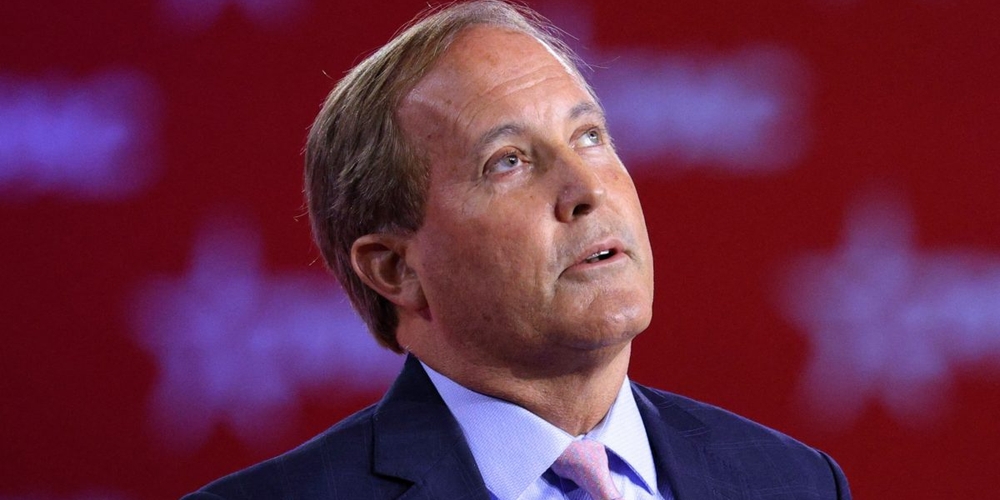
The Unbreakable Incumbent
In the annals of American political survival, few stories are as perplexing and concerning as that of Texas Attorney General, and now U.S. Senate candidate, Ken Paxton. His career is a chronicle of allegations met not with rejection, but with repeated electoral validation. From his 2014 election as Attorney General, Paxton has navigated a minefield of legal and ethical scandals that would have ended most political careers. He was indicted on state securities fraud charges in 2015, a case that lingered for nearly a decade. He faced a federal investigation into accusations of bribery and abuse of office to benefit a donor. He was impeached by the Texas House in 2023, only to be acquitted by the Senate. Through it all, he has not just survived; he has thrived, defeating a series of well-funded and determined challengers from both parties.
His opponents have employed diverse strategies. Democrat Justin Nelson, in the 2018 Attorney General race, centered his campaign on the fraud indictment and even famously aired an ad showing Paxton pocketing another lawyer’s $1,000 pen. Republican George P. Bush, in a 2022 primary challenge, branded him a “crook” on billboards next to his mugshot. Even Republican stalwart Senator John Cornyn warned “judgment day is coming” during a 2026 primary fight. All of them lost. Paxton won reelection in 2018 by a narrow 3.6 points, crushed Bush in a runoff by 34 points, and then decisively defeated Cornyn after securing Donald Trump’s endorsement. Now, he faces his latest challenger: Democratic Senate nominee James Talarico, who emerged from a bruising primary promising to “prosecute the case” against “the most corrupt politician in America.”
The Anatomy of a Political Survivor
How does a politician endure such persistent controversy? The article points to a confluence of factors. First, Paxton has meticulously cultivated an image as a conservative legal warrior, positioning himself as the leading antagonist to the Biden administration on hot-button issues like immigration, abortion, and transgender rights. In a Republican-dominated state, this ideological branding provides a powerful shield. Second, he has effectively framed himself, much like Donald Trump, as a victim of a politicized “permanent political class” out to get him. His campaign spokesperson, Madison Cercy, explicitly linked him to Trump, arguing that “every time a fighter… stands up… even after they are completely acquitted… people like James Talarico continue pushing the same accusations.”
Perhaps most critically, the article reveals a voter psychology that has fundamentally shifted. As retired supporter David Lapp bluntly stated, “He’s had his share of scandals, and almost all of them have, so it’s not necessarily disqualifying anymore… nowadays, as long as you’re not in jail, they’ll elect you.” This sentiment is echoed by former opponents like Rochelle Garza, who noted the difficulty of crafting a message against Paxton because voters had heard the scandals for years, leading to potential voter fatigue. Ash Wright, a Bush adviser, summarized the phenomenon: “The guy’s ability to take shots and just keep moving on and stay in elected office is unlike anything I’ve ever seen.”
Talarico’s strategy, as reported, attempts to break this cycle by introducing a newer narrative: alleging Paxton’s office showed preferential treatment in a Waco child sexual abuse case, allowing a lawyer to plead to a misdemeanor. Talarico aims to paint this not as an isolated Paxton failure, but as symptomatic of a “broader culture of corruption” that rigs the system against ordinary Texans. With a significant fundraising advantage ($21.5 million to Paxton’s $7.5 million), Talarico hopes to broadcast this message more effectively than predecessors like Nelson, who believes “a little bit more money” could have changed his outcome.
The High Cost of “Flawed Fighters”
This is where the factual narrative ends and a sobering analysis must begin. The Paxton phenomenon is not a quirky Texas story; it is a flashing red warning light for the American republic. The willingness of a significant portion of the electorate to repeatedly re-elect a figure saddled with such grave and persistent allegations represents a dangerous decoupling of character from civic duty. When David Lapp dismisses scandals because “almost all of them have” them, he is describing a race to the bottom in public ethics, a normalization of corruption that erodes the very premise of public service.
The foundational principle of a constitutional democracy is that no one is above the law. It is a system built on institutions, checks and balances, and the rule of law—not on cults of personality or tribal loyalty. Paxton’s survival strategy, which involves painting every investigation and impeachment as a partisan witch hunt, directly attacks these institutions. It teaches voters to distrust the very mechanisms designed to hold power accountable. The result is not resilience; it is institutional decay. When the Attorney General—the state’s top law enforcement officer—is himself perpetually under a cloud of legal suspicion, it fatally undermines public confidence in the impartiality and fairness of the justice system itself.
The “flawed fighter” archetype is a seductive but toxic one for democracy. It suggests that as long as a politician is fighting for “our side” on key issues, personal ethics, legal jeopardy, and alleged criminality are secondary or even irrelevant concerns. This is a transactional view of politics that sacrifices long-term systemic health for short-term ideological victories. It creates a perverse incentive structure where the most effective political strategy may be to amass as many allegations as possible, wear them as badges of honor in the war against the other side, and use them to galvanize a base that sees each scandal as proof of their champion’s effectiveness in upsetting the established order.
The Talarico Test and the Future of Accountability
James Talarico’s campaign now serves as a critical test. Can a message focused on corruption, institutional rot, and the tangible failure of government to improve lives break through the hardened partisan barriers? Or have we reached a point where the electoral marketplace no longer penalizes—and may even reward—behavior that was once considered career-ending?
The implications are profound. If a candidate can be indicted, impeached, investigated for bribery, and still ascend to the U.S. Senate, what meaningful standard remains for holding elected officials accountable? The electoral process becomes merely a census of tribal affiliation, not a judgment on fitness for office. This degrades the quality of governance and, ultimately, the trust required for a free society to function.
As a firm supporter of the Constitution and the rule of law, this trend is alarming. The Framers designed a system fearful of concentrated, unaccountable power. They built in impeachment, elections, and a free press precisely to combat the human failings of ambition and corruption. The Paxton story suggests these tools are weakening in the face of hyper-partisanship. When an incumbent survives not despite scandals, but perhaps because of the partisan mobilization they inspire, the system’s corrective mechanisms are failing.
In conclusion, the Texas Senate race is about more than one seat. It is a referendum on a fundamental question: In America, does character still count? Does the rule of law apply equally to those in power? Or have we entered a new, darker phase where loyalty to tribe absolves all sins and the ends justify any means? The defeat of Justin Nelson, George P. Bush, and John Cornyn suggests the corrosive power of this new logic. James Talarico’s uphill battle will show whether a democracy, when fatigued and polarized, can still look in the mirror and demand better of itself. The survival of our institutions depends on the answer.