
The Pay-to-Play Presidency: How a Proposed Service Threatens Markets and Democracy
Published
- 3 min read
The Facts: A Request for Investigation
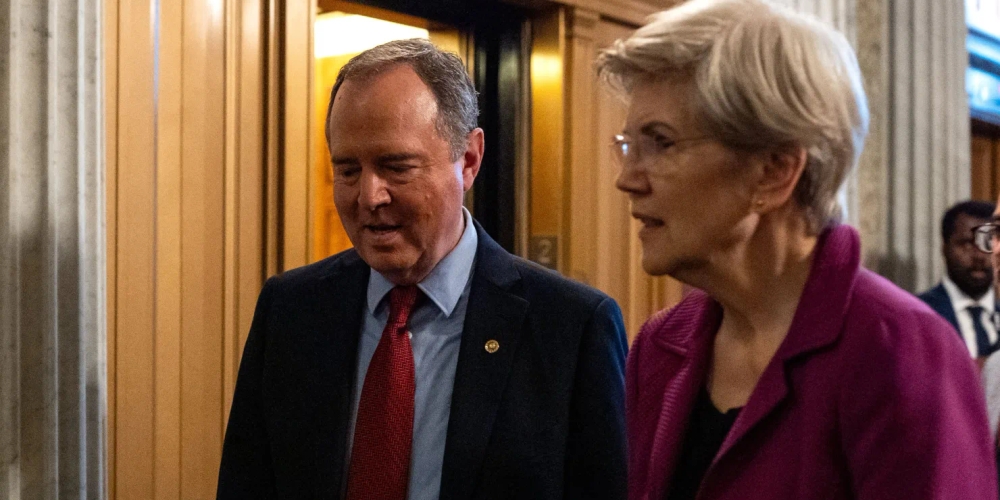
On July 30, 2025, United States Senators Elizabeth Warren (D-MA) and Adam Schiff (D-CA) sent a formal letter to Securities and Exchange Commission (SEC) Chair Paul Atkins. Their request was urgent and unequivocal: investigate whether Trump Media & Technology Group (TMTG) is violating securities laws with its newly announced “Truth API” service. The core fact is stark. TMTG, the publicly traded company (ticker: DJT) that operates the Truth Social platform, plans to launch a licensed data service on August 1. This service would provide paying subscribers with real-time, automated access to posts from “the highest-ranking Truth Social accounts,” explicitly including that of President Donald Trump, for a reported fee of up to $100,000 per month.
Senators Warren and Schiff, in their capacity as the ranking member of the Senate Banking Committee and a member of the Senate Judiciary Committee respectively, framed this as a potential abuse of office. They argued the service “appears to be an outrageous abuse of the President’s office for his personal benefit that undermines everyday investors and the integrity of our markets, while enriching Wall Street and other wealthy insiders.” They specifically asked the SEC to analyze the service under laws prohibiting insider trading and market manipulation before its launch.
The Context: A Platform with Market-Moving Power
To understand the gravity of this request, one must grasp the unique context. Truth Social is not a typical social media platform; it is the primary, unfiltered megaphone for a sitting President of the United States. The article notes that President Trump “frequently posts policy announcements and other newsworthy information, including about the Iran war, that sends global markets hurtling up or down.” He has also used the account to promote individual stocks. His account is, by far, the most followed on the platform.
The company’s interim CEO, Kevin McGurn, advertised the Truth API as delivering “a direct, licensed, real-time feed of the platform’s most market-moving Truths.” This is an explicit admission of the service’s intended utility: providing a trading advantage. The senators highlighted that while analysts currently monitor the platform manually, the API would automatically feed posts around-the-clock to subscribers, granting them “milliseconds of additional notice.” This is a critical edge in the world of high-frequency trading, where microseconds can mean millions in profit or loss.
Financially, the stakes are personal for the President. Trump’s family is the largest stakeholder in TMTG, a stake he owns indirectly through a revocable trust. The company’s stock price has fallen approximately 80% since it began trading in March 2024. A lucrative new revenue stream like the Truth API could directly benefit the President’s financial holdings. As the senators wrote, “Trump ‘stands to profit from the launch of this service,’ as do the ‘firms and wealthy individuals that pay the subscription fee.’”
TMTG’s spokesperson dismissed the senators’ concerns, accusing them of mischaracterizing the service “either out of ideological opposition to free markets or a failure to grasp the distinction between public and nonpublic information.” The SEC declined to comment on the letter.
Opinion: A Fundamental Assault on Democratic and Market Principles
The proposed Truth API service is not a benign business innovation; it is a profound threat to the foundational pillars of a fair republic and transparent capitalism. It represents the alarming culmination of a trend that blurs the lines between public service and private enterprise, between official duty and personal gain. This scheme, if allowed to proceed, would institutionalize a pay-to-play presidency in the most literal financial sense.
First, it corrupts the very purpose of presidential communication. The bully pulpit is a tool for leadership, persuasion, and informing the citizenry. It must be wielded in the public interest. The moment a President’s words are packaged and sold as a premium financial product, the incentive structure becomes poisoned. Could there be a temptation to time a post on tariffs or a Federal Reserve nominee to maximize market volatility and thus the value of the subscription? Might the content itself be subtly shaped to trigger predictable market reactions? The mere existence of this service creates an unacceptable conflict of interest, undermining public trust in every official statement. The President’s words should move nations, not just Nasdaq.
Second, it blatantly violates the spirit and potentially the letter of securities laws designed to ensure a level playing field. Insider trading laws exist to prevent those with material, nonpublic information from exploiting it for profit. While the senators’ letter raises this issue for the SEC to analyze, the broader principle of market manipulation is clearer. Creating a two-tiered system where the wealthy can purchase preferential, automated access to the President’s market-moving announcements is the definition of creating an unfair advantage. It rigs the game before it even begins. The “everyday investor” referenced by Warren and Schiff—the teacher, the firefighter, the small business owner saving for retirement—is relegated to the back of the line, receiving information only after algorithmic traders have already acted. This erodes the fundamental fairness that gives our capital markets their legitimacy and strength.
Third, it represents a grotesque monetization of the public trust. The presidency is an office, not an asset. The power and access that come with it are held in trust for the American people. To commercialize that access, to sell milliseconds of advantage derived from the occupant’s official actions, is to treat the Oval Office as a revenue-generating subsidiary of a family business. It transforms the leader of the free world into a content creator for a hedge fund’s trading algorithm. This is beneath the dignity of the office and offensive to the democratic ideal that our leaders serve the people, not partner with them for profit.
The defense from TMTG that this is merely about “free markets” and “public information” is a disingenuous deflection. A free market requires fair rules and equal access to information that moves prices. When the source of that information is also the primary beneficiary of its sale, and when that source holds the most powerful office on earth, the dynamics are fundamentally corrupted. This is not about the free flow of information; it is about erecting a tollbooth on a public highway built with public trust.
Conclusion: A Line That Must Be Held
The request from Senators Warren and Schiff is a necessary and vital intervention. The SEC must act with urgency and rigor. This is not a partisan issue; it is a foundational one. Whether one supports or opposes the current President’s policies is irrelevant to the core threat this service poses. If allowed, it sets a catastrophic precedent. It tells future occupants of the White House that the prestige and power of the presidency can be legally parceled out and sold to the highest bidders. It tells citizens that their access to their President’s thinking is secondary to a wealthy subscriber’s trading profits. It tells the world that American markets, once a beacon of transparency, now officially sanction insider access for a fee.
Defending democracy requires defending its institutions from such corrosive conflations of power and profit. It requires insisting that the presidency remains a sacred public trust, not a monetizable brand. The SEC must complete its analysis and, if the laws are as clear as they appear to be, halt this dangerous venture before it begins. The integrity of our markets and the soul of our democracy depend on drawing this bright line. We must declare, unequivocally, that the presidency is not for sale.