
The Perilous Push to Dim California's Sunshine: AB 1821 and the Ongoing War on Transparency
Published
- 3 min read
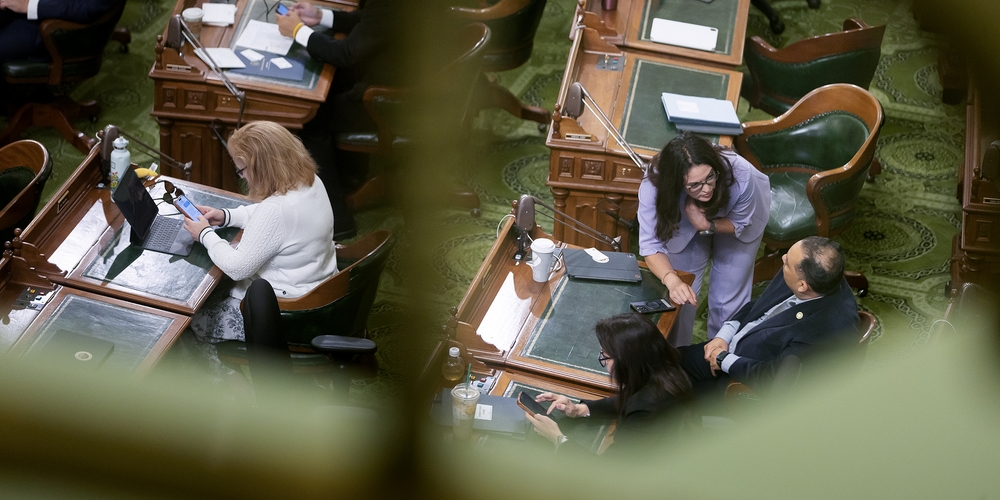
In the grand experiment of American democracy, few principles are as sacred and as practically essential as the public’s right to know what its government is doing. This right, enshrined in laws like California’s landmark Public Records Act (CPRA), is the sunlight that disinfects corruption, informs citizen action, and holds power to account. Yet, that sunlight is perpetually under threat from those who find its glare inconvenient. The recent legislative journey of Assembly Bill 1821, authored by Assemblymember Blanca Pacheco (D-Downey), is a stark and alarming case study in how our fundamental liberties can be incrementally eroded under the guise of bureaucratic efficiency and combating bad actors.
The Factual Journey of AB 1821
The core narrative of AB 1821 is one of retreat under pressure. Initially introduced in March, the bill sparked immediate and fierce opposition from First Amendment advocates, including the First Amendment Coalition, ACLU California Action, and numerous journalism and transparency groups. Its original intent was clear and deeply troubling: to amend the CPRA to make it significantly more difficult and expensive for certain parties to obtain public records.
The most controversial provisions, which have been inserted and removed multiple times throughout the legislative process, would have allowed government agencies to charge requesters between $22 and $66 per hour to process records deemed for a “commercial purpose,” such as training artificial intelligence systems. This represents a radical departure from the current cost structure, which typically allows only for charging per-page copy fees. Furthermore, the bill would have empowered counties to petition local courts to determine if a records request was made with “malicious intent,” effectively weaponizing the judiciary to intimidate citizens seeking information.
Facing a wave of critical press coverage and scathing editorials, Assemblymember Pacheco scaled the bill back. However, after it passed the Assembly, the most restrictive amendments were quietly reinserted. Another public outcry forced their removal again. In its current, reduced form as of the Senate Judiciary Committee hearing on Tuesday, AB 1821 primarily extends the time agencies have to respond to requests from 10 calendar days to 10 business days, and allows for a longer extension period. Pacheco and co-sponsors like the California State Association of Counties (CSAC) and the League of California Cities argue this change merely aligns statutory deadlines with actual government work schedules.
The Context: A System Under Strain?
Proponents of the bill, including lobbyist Eric Lawyer of CSAC, present a data-driven case for reform. They cite a survey showing a nearly 50% increase in public records requests over three years and a 56% increase in staff time needed to fulfill them. They point to the problem of voluminous, automated, or profit-driven requests that can overwhelm small agencies. Senator María Elena Durazo (D-Los Angeles) echoed this sentiment during the committee hearing, stating that abuses of the system hinder “practicing our democracy.”
There is no denying that government agencies face operational challenges. The digital age has made requesting records easier and has indeed attracted entities seeking data for commercial exploitation. The question, however, is not whether challenges exist, but how a free society chooses to address them. Do we solve specific problems of burden by constructing higher walls around all public information, or do we craft precise, surgical tools that target demonstrable abuse without infringing on a universal right?
Opinion: A Fundamental Betrayal of Democratic Principles
The saga of AB 1821 is not merely a policy dispute; it is a profound moral and constitutional failure. Every iteration of this bill that included fees for “commercial purpose” and “malicious intent” determinations was an act of aggression against the very concept of government by consent of the governed.
First, the proposed fee structure was a poll tax on information. By creating a two-tiered system where journalists and academics might be exempt but ordinary citizens, small businesses, or advocacy groups could be charged punitive hourly rates, the bill sought to monetize a right. This is antithetical to a republic. Public records are not a commodity owned by the state to be sold at market rates; they are the property of the people, held in trust by their servants. Charging $66 an hour to see what your government is doing is a barrier designed to exclude, not to manage. It tells the citizenry that their oversight is a cost center, not a civic duty.
Second, the “malicious intent” clause was a breathtakingly dangerous tool for retaliation and intimidation. Who defines “malicious”? A county board unhappy with a citizen’s persistent questions? A government official embarrassed by past records? As David Snyder of the First Amendment Coalition rightly warned, the mere threat of being dragged into court by the government you are investigating would have a profound chilling effect. This provision wasn’t about efficiency; it was about empowering the state to punish its critics. It is a concept borrowed from the playbook of autocracies, not democracies.
The fact that these ideas were proposed, defended, reinserted, and only removed after public shame is what makes this episode so sinister. It reveals a mindset among some in government—and the powerful lobbying associations that support them, like CSAC—that views transparency as a nuisance. Their ideal system is one of quiet, unimpeded administration, not noisy, inconvenient public scrutiny. Senator Tom Umberg’s (D-Orange County) thanks to Pacheco for bringing “lots and lots of attention to this issue” feels like a grim irony; the attention was not a debate he welcomed, but a firestorm of democratic pushback he was forced to acknowledge.
The Path Forward: Vigilance and Precision
The current, neutered version of AB 1821 may seem like a victory for transparency advocates, and the shift to a neutral stance by some major groups reflects that. However, we must not mistake a tactical retreat for a change of heart. The underlying desire to restrict access remains, cloaked now in the seemingly benign language of “aligning calendar days with business days.” But even this change, as Disability Rights California noted, “would normalize delay and further disadvantage communities that depend on timely access to information.” Delay is a form of denial, especially for those seeking justice or combating imminent harms.
The proper response to the challenges cited by CSAC is not to rewrite the Public Records Act for everyone. It is to use the tools already within it. The CPRA already allows agencies to deny requests that are “unduly burdensome.” The solution lies in better defining and applying that standard through guidance and, if necessary, very narrow statutory tweaks—not in creating new, sweeping categories of denial and financial penalty.
As Snyder stated, the hope is that the most damaging amendments do not resurface. But hope is not a strategy. Eternal vigilance is. The fight over AB 1821 is a stark reminder that the liberty to know is never permanently won. It must be defended in every legislative session, against every well-meaning or not-so-well-meaning proposal that seeks to place the comfort of the state above the rights of the citizen. California’s sunshine is bright, but there are always those who would prefer to pull the shades. Our duty is to ensure they never succeed.