
The Persistent Poison: How Baseless Election Claims Corrode Democratic Faith
Published
- 3 min read
The Forthcoming Address and Its Predetermined Narrative
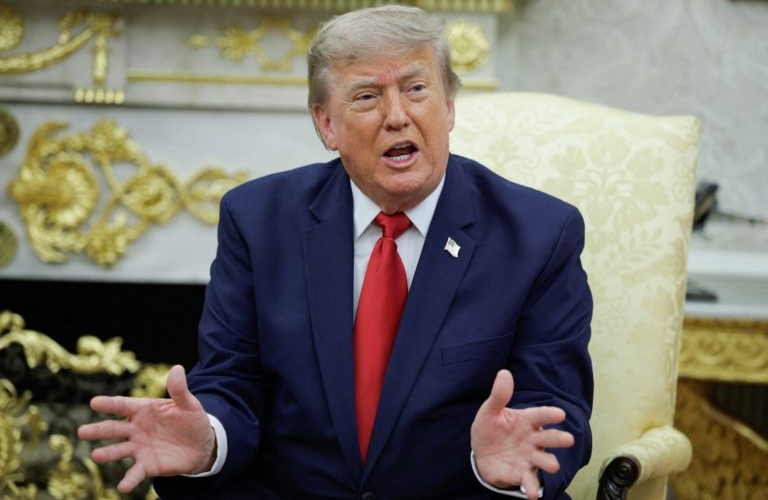
According to reporting from PBS NewsHour, former President Donald Trump is poised to deliver a prime-time address in which he will make new, sensational claims regarding foreign interference in the 2020 presidential election. This speech is characterized as an escalation of his “years-long effort to relitigate the election he lost.” The core premise of the expected remarks, as previewed by spokespeople, is that American elections are not safe and secure, necessitating legislative adjustments like the so-called “SAVE America Act.” This narrative is being constructed despite the article’s clear statement from correspondent Liz Landers that “elections in this country are very safe and secure, and voter fraud is incredibly rare.”
Sources indicate the former president is expected to specifically allege interference by China, pointing to “thousands of pages of intelligence documents” as purported evidence. The speech is also anticipated to focus on key swing states he lost, such as Georgia and Arizona. This impending address has generated significant concern among election officials across the country, who fear its potential to undermine public confidence in both the recent past and the imminent future of American elections.
The Established Factual Record: A Consensus of Rejection
The historical and factual context surrounding these expected claims is not a matter of partisan debate but of settled record. The article meticulously outlines the authoritative refutations that have consistently met these assertions. Crucially, these refutations originated from within the former president’s own administration.
In January 2021, the Office of the Director of National Intelligence (DNI), then led by John Ratcliffe, provided an assessment to President Trump. That report contained two definitive conclusions. First, it stated, “There are no indications that any foreign actor attempted to alter any technical aspect of the voting process in the 2020 U.S. elections, including voter registration, casting ballots, vote tabulation, or reporting results.” Second, it specifically assessed that “China did not deploy interference efforts and considered, but did not deploy influence efforts intended to change the outcome of the U.S. presidential election.” The intelligence community did identify influence efforts by Russia (to denigrate President Biden) and Iran (to denigrate candidate Trump), but these are distinct from the alleged technical interference the former president is expected to claim.
Perhaps the most damning repudiation came from his own Attorney General, William Barr. In testimony to the January 6 Committee, Barr stated plainly, “I saw absolutely zero basis for the allegations.” He lamented that these falsehoods were “made in such a sensational way that they obviously were influencing a lot of people… which was complete nonsense.” The article notes Barr was not alone; a number of Republican advisers and Cabinet officials reportedly told the president his theories were untrue.
Furthermore, these claims have been rejected across the board by courts, election officials of both parties, and independent audits. The practical effect, as noted by Arizona Secretary of State Adrian Fontes, is a pattern of legal failure; the administration “keeps losing these challenges in court.”
The Real-World Impact: Eroding Trust and Endangering Officials
The article shifts from the Washington discourse to the tangible anxiety felt where democracy is administered: at the state and local level. Liz Landers spoke with numerous election officials who expressed deep concern. A Republican in a swing state lamented that focusing on 2020 voting machines is the “last thing” the party should be discussing, urging a pivot to substantive issues like affordability. An Arizona official, with primaries imminent, worried about the speech’s potential impact on election administration.
This highlights the tragic irony and danger of the situation. The individuals who work tirelessly, often under threat, to ensure the smooth functioning of our elections are now forced to brace for another wave of disinformation that targets the very legitimacy of their life’s work. It is an unconscionable burden to place on public servants. The constant drumbeat of baseless fraud allegations doesn’t just live in the realm of political rhetoric; it metastasizes into real-world intimidation, complex and costly legal battles, and a dangerous erosion of the public’s faith in a fundamental civic institution.
A Grave Assault on Democratic Norms and Truth Itself
This is where analysis must depart from mere recounting of facts and confront the profound threat this behavior represents. The expected speech is not an isolated event but a tactical maneuver in a sustained campaign against democratic reality. When a losing candidate, especially one who wielded the immense power of the presidency, refuses to accept a legitimate outcome, he does not merely protest a result. He wages war on the shared truth that makes a democratic society possible.
The principle at stake is not whether one liked the outcome of the 2020 election. The principle is whether we, as a nation, agree to be governed by facts, evidence, and lawful processes, or by power, narrative, and grievance. The former president’s own intelligence chiefs, his attorney general, his campaign’s own legal teams in countless courtrooms, and bipartisan election officials nationwide have all presented a unified factual front: the election was secure, and its outcome was legitimate. To knowingly and repeatedly counter this overwhelming consensus with falsehoods is an act of profound bad faith.
It is a betrayal of the constitutional oath to “preserve, protect and defend” the Constitution, an oath that does not expire upon leaving office. The Constitution’s entire framework hinges on free and fair elections and the peaceful transfer of power. By relentlessly attacking the former and attempting to obstruct the latter, this campaign strikes at the heart of the American experiment.
The Human Cost and the Path Forward
The human cost is immense. It is seen in the anxiety of election officials like Adrian Fontes. It is heard in the exasperation of former advisers like Bill Barr, who witnessed the damage firsthand. Most tragically, it was manifested in the violence of January 6, 2021, a direct outgrowth of the very lies being repackaged for tonight’s address. When leaders tell citizens their votes did not count and their system is corrupt, they unleash predictable and dangerous forces.
Moving forward requires unwavering civic courage. It requires journalists and news organizations, like PBS NewsHour with its planned fact-checking, to continue rigorously separating truth from fiction. It requires elected officials, particularly in the former president’s party, to place their duty to the Constitution above short-term political fear. It requires every citizen to value factual literacy and reject the seductive simplicity of conspiratorial thinking.
Defending democracy is not a passive act. It is an active commitment to believing in institutions even when they produce outcomes we dislike, to trusting processes over personalities, and to upholding the rule of law as the ultimate authority. The speech expected tonight is designed to test that commitment. Our response must be a collective, resounding reaffirmation that in the United States, voters decide elections, courts adjudicate disputes, and no individual—no matter how powerful—is above this fundamental truth. The republic’s survival depends on it.