
The Platner Collapse: A Self-Inflicted Wound in the Fight for the Senate
Published
- 3 min read
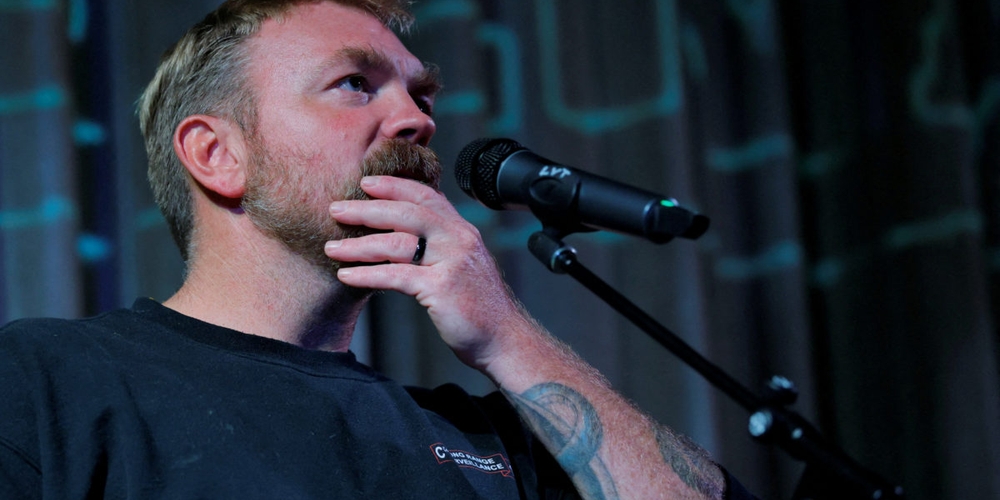
The Facts of the Matter
On Friday, July 19, 2024, Graham Platner’s brief and turbulent campaign for the United States Senate from Maine came to a formal end. His paperwork was received by the Maine Secretary of State’s office, officially withdrawing his name from the ballot. This administrative action finalized a decision he had announced just two days prior, a decision forced by the weight of a sexual assault allegation—which he has denied—that made his candidacy untenable. Platner’s campaign, which had styled itself as an insurgent, anti-establishment movement, had drawn notable backing from progressive stalwarts like Senator Bernie Sanders of Vermont and Congressman Ro Khanna of California. His withdrawal letter, posted on social media, struck the same outsider chord, claiming his supporters voted for a politics representative of the “real world” and not billionaires or the political establishment.
The Immediate Political Context
The stakes of this withdrawal could not be higher. Maine is a critical battleground for control of the narrowly divided United States Senate. Incumbent Republican Senator Susan Collins, a seasoned and formidable politician, now faces a Democratic Party in disarray. Democrats were already “desperate,” in the words of the Associated Press report, for a candidate capable of defeating Collins. Platner’s exit, coming just months before the general election, throws their plans into chaos and initiates a frantic scramble to find a replacement. State law provides a mechanism for this, allowing the party to name a new nominee, but they must do so by July 27—a brutally short timeline. Immediately following Platner’s initial announcement, over 100 members of the state Democratic Party committee moved to authorize a nominating convention to choose the replacement candidate.
The Emerging Field of Contenders
In the vacuum created by Platner’s departure, a wave of Democrats has begun jockeying for position. The field includes several prominent figures who recently lost the June primary for the gubernatorial nomination: former Maine CDC Director Nirav Shah, Secretary of State Shenna Bellows, and former Maine Senate President Troy Jackson. Others who have announced their intention to run include Maine Beer Company co-founder Dan Kleban, former congressional candidates Jordan Wood and Paige Loud, and former state senate candidates David Costello and Andrea LaFlamme. State Representative Valli Geiger has also expressed interest. This crowded field must now coalesce around a single standard-bearer in a matter of days, a process that is inherently divisive and draining, all while the clock ticks down to a matchup against a well-funded incumbent.
Opinion: A Catastrophic Failure of Stewardship
This episode is more than a simple campaign casualty; it is a catastrophic failure of political stewardship that strikes at the heart of our democratic process. From a principled, pro-democracy standpoint, the sequence of events is deeply alarming and represents a multi-layered betrayal of the electorate.
First, we must address the grave seriousness of the allegation that precipitated this crisis. Any accusation of sexual assault must be treated with the utmost gravity, investigated fully, and adjudicated through proper legal channels. The pursuit of justice is non-negotiable. However, the timing and impact of such allegations in the political arena create a paralyzing dynamic. They render a candidate immediately radioactive, often before any adjudication of facts can occur, forcing a withdrawal not necessarily based on proven guilt but on political survivability. This creates a perverse incentive structure and can undermine the very principles of due process our system is built upon. The voters of Maine are now deprived of a choice based on policy, forced instead to witness a campaign implode under a cloud of personal scandal.
Second, and perhaps more damning for the Democratic Party apparatus, is the profound failure in candidate vetting and risk assessment. Graham Platner was not an unknown quantity plucked from obscurity; he was a candidate endorsed by national progressive leaders. The movement that backed him—one that rightly rails against the corrosive influence of big money and establishment torpor—now bears responsibility for elevating a candidate whose campaign collapsed under the weight of a personal scandal at the most inopportune moment. This is not the “new kind of politics” Mainers voted for; it is a reckless gamble with the stability of our governing institutions. When the goal is to secure a functioning Senate capable of checking authoritarian impulses and defending constitutional norms, the selection of candidates must be undertaken with surgical precision and profound diligence. That diligence appears to have been absent.
The High Cost of Chaos
The ultimate cost of this chaos is paid by the American people. The United States Senate is on a knife’s edge. Its control will determine the trajectory of judicial appointments, the viability of legislative checks on the executive, and the defense of foundational rights for a generation. Maine is a pivotal piece on that chessboard. To enter such a critical battle with a last-minute, hastily chosen candidate, who will emerge from a rushed convention and immediately face a well-entrenched opponent like Susan Collins, is to invite disaster. It is an abdication of the solemn duty political parties have to present competent, vetted, and stable alternatives to the electorate.
The individuals now stepping forward—Shah, Bellows, Jackson, Kleban, and others—are forced into a demeaning and hurried spectacle. They must sell themselves to party insiders in days, not months, lacking the time to build a genuine statewide movement or articulate a compelling vision. This process inherently favors insider maneuvering over grassroots connection, the very “political establishment” Platner claimed to oppose.
A Sobering Lesson for Democracy
This whole sordid affair serves as a sobering lesson. Democracy is not a game. It is a fragile ecosystem that requires responsible actors. The passionate desire for an “outsider” politics must be tempered by a ruthless commitment to competence, integrity, and electoral viability. Supporting democracy means more than chanting slogans; it means doing the hard, unglamorous work of building resilient institutions and selecting candidates who can withstand scrutiny and serve effectively.
The collapse of the Platner campaign is a self-inflicted wound that threatens to hand a vital Senate seat to the GOP by default. It demoralizes the base, confuses independent voters, and strengthens an incumbent who may now face a weakened opponent. In the fight to preserve a Senate that can serve as a bulwark for liberty and the rule of law, such unforced errors are not merely setbacks; they are potentially historic failures. The Democratic Party, and the progressive movement that influenced this primary, must look in the mirror and ask if their processes are worthy of the immense responsibility they seek to hold. The people of Maine, and the nation, deserve an answer.