
The Price of Judgment: When Justices Testify in Fear for Their Families
Published
- 3 min read
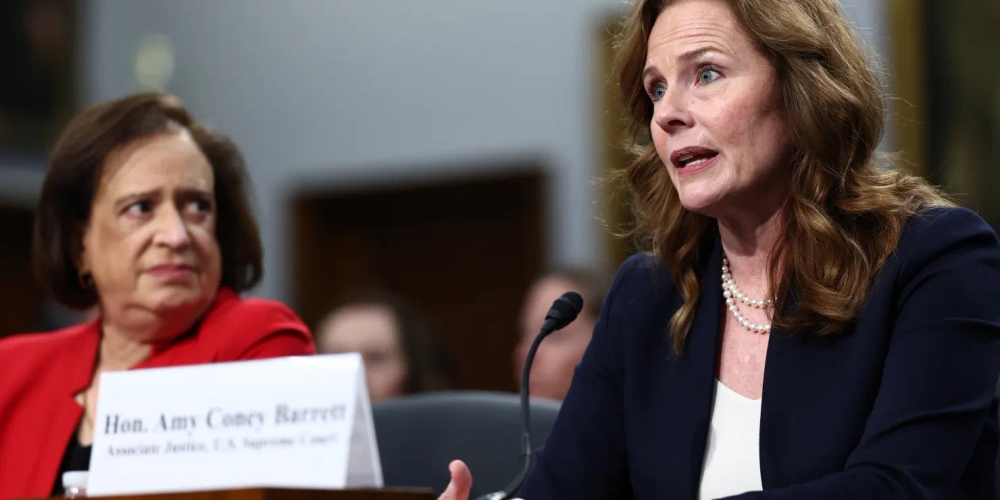
A Chilling Testimony on Capitol Hill
On a Tuesday in July 2026, a rare and sobering scene unfolded before a House Appropriations subcommittee. For the first time since 2019, sitting Supreme Court Justices came to testify before Congress. Justices Elena Kagan and Amy Coney Barrett were not there to debate jurisprudence but to deliver a dire warning: the threat environment surrounding the federal judiciary, and the Supreme Court in particular, has reached a dangerous and unsustainable level. Their testimony, centered on the Court’s $228.4 million budget request for fiscal 2027, was less about fiscal policy and more about a stark reality check on the state of American civic health. The requested nearly 10% increase over the 2026 budget is heavily weighted toward security—physical protection for the justices and their families, and fortified cybersecurity for the Court’s operations.
The Statistical and Human Toll of Intimidation
The facts presented were alarming in both scale and intimacy. Justice Kagan relayed that the U.S. Capitol Police chief reported a 50% increase in threats against Congress this year, while the Supreme Court Police anticipate a “very substantial 38% annual increase” in threats to the Court and its justices, building on a 25% increase the previous year. Data from the U.S. Marshals Service showed 512 investigations of threats to federal judges in just the first part of 2026, compared to 807 for all of 2025. These numbers, as Justice Barrett poignantly noted, “sound abstract, but being on the receiving end of them is not.”
The testimony transformed these statistics into harrowing personal narratives. Justice Barrett described the spring of 2022, following the leak of the draft opinion in Dobbs v. Jackson Women’s Health Organization, when threats to her life escalated. Her security detail sent her home with a bulletproof vest. The most gut-wrenching moment came when she carried it into her bedroom, only to turn and find her 12-year-old son in the doorway, asking what it was and why she needed it. “I didn’t know how to respond,” Barrett told the committee, highlighting the profound personal cost of public service that no family should have to bear.
Further violating the sanctity of her home was a “swatting” attack, where a false report of gunshots brought a street full of county police cars to her residence. It was only the intervention of her Supreme Court Police detail that prevented a potentially traumatic armed entry. She also mentioned “threatening anonymous deliveries” designed to harass. These anecdotes were framed against the backdrop of the 2022 plot to assassinate Justice Brett Kavanaugh, for which Nicholas Roske was sentenced to over eight years in prison—a plot he connected to his anger over the abortion ruling.
The Evolving Security Landscape
Justice Kagan provided crucial context on how security has evolved. When she joined the Court in 2010, security was minimal and focused on the building itself. Justices did not have dedicated personal security teams. A significant shift began in 2017, “initially at the behest of members of Congress.” The majority of last year’s funding increase went to transferring residential security responsibility from the Marshals Service to the Supreme Court Police, creating a more integrated protective apparatus.
The threats are not merely physical. Justice Barrett emphasized that cybersecurity attacks have increased “by magnitudes year after year,” a trend exacerbated by the “rapid advancement of AI.” While the Supreme Court has avoided paralyzing attacks seen in lower courts, the risk has prompted a urgent need to ramp up digital defenses, part of the funding request for additional cybersecurity experts.
Opinion: A Crisis for Constitutional Governance
The testimony of Justices Barrett and Kagan is a five-alarm fire for the American experiment. This is not a partisan issue; it is a foundational one. As Subcommittee Chairman Dave Joyce (R-Ohio) rightly stated, judicial officers must be able to perform their duties without fear for their or their families’ safety, regardless of one’s view of any specific ruling. The intimidation of judges is an attack on the third branch of government, a direct assault on the separation of powers and the rule of law.
The emotional core of this crisis is the forced militarization of a Justice’s private life. The image of a child confronting a bulletproof vest in their own home is a devastating metaphor for how toxic political discourse has breached the most basic boundaries of civil society. When a teenager opens his door to a police barricade because of a malicious false report, the collateral damage of our political wars is no longer abstract. It is a trauma inflicted on innocent families. This transcends policy disagreement; it is a form of psychological terrorism aimed at coercing or punishing constitutional officers for their votes.
The Corrosion of Judicial Independence
The escalating threats create a pernicious environment that risks chilling judicial independence, the very quality the Framers sought to insulate through lifetime tenure. While we must believe our Justices are made of stern stuff, the constant drumbeat of menace, the swatting, the harassing packages, and the need for ever-tighter security necessarily alters the experience of serving. It creates a fortress mentality that can subtly distance the judiciary from the people they serve. The ideal of a judge living among the citizenry, understanding their lives, becomes impossible under 24/7 armed guard. The personal cost, so vividly described by Justice Barrett, may also deter future exemplary legal minds from even accepting a nomination, impoverishing our bench.
Furthermore, the shift of resources to security is a tragic misallocation of the Court’s energy and the public’s treasury. Funds that could be used to improve access to justice, modernize court technology, or expand legal resources are instead being funneled into bulletproof glass, armored vehicles, and cyber firewalls. This is the tangible price of our national incivility—a tax on justice itself, paid not in dollars but in diminished safety and liberty.
A Call for National Reckoning and Civic Courage
This moment demands more than increased appropriations, though that is immediately necessary. It requires a profound national reckoning. Political leaders, media figures, and citizens across the spectrum must unequivocally condemn violence and threats against judges and their families. Disagreement, even passionate dissent, is the lifeblood of democracy. Intimidation is its poison.
We must recover the fundamental civic understanding that an attack on a judge for their ruling is an attack on the Constitution’s structure. One can vehemently oppose Dobbs or Chevron or any decision while simultaneously defending to the death the right of the Justices who decided it to live in safety. This is the paradox of liberal democracy: we must protect the rights and safety of those with whom we most deeply disagree, especially when they wield legitimate constitutional authority.
The testimony of Justices Barrett and Kagan is a canary in the coal mine. It signals a degradation of our political culture so severe that it now endangers the physical well-being of the highest arbiters of our laws. To ignore this warning is to accept the normalization of political violence and the erosion of judicial independence. The budget they request is for physical security, but what America truly needs to appropriate is a renewed commitment to civic virtue, respectful discourse, and the unwavering principle that in this republic, we settle our differences with ballots and arguments, not with bullets and threats. The safety of the Justices’ children, and the integrity of our Constitution, depend on it.