
The Price of Power: How a Supreme Court Ruling and Deep Pockets Are Reshaping California's Political Battlefield
Published
- 3 min read
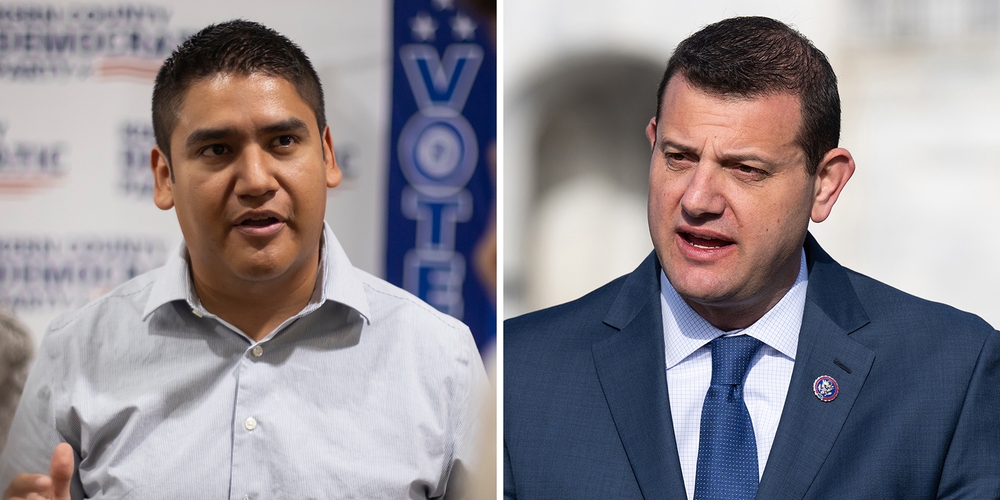
The Financial Landscape of California’s 2024 Swing Districts
The 2024 congressional elections in California present a paradoxical picture. On one hand, the political terrain was deliberately reshaped through redistricting to disadvantage Republican incumbents, a move that successfully doomed several. On the other, a confluence of legal and financial factors has handed the remaining GOP candidates in key swing districts a formidable, perhaps decisive, advantage as the general election sprint begins. The core story is not one of policy debates or soaring rhetoric, but of cold, hard cash and a recent judicial decision that has fundamentally altered the economic rules of engagement.
In the Central Valley’s 22nd District, Republican Representative David Valadao reports a war chest exceeding $3.3 million. His Democratic opponent, professor and school board trustee Randy Villegas, holds roughly $571,000. This disparity is not simply a reflection of fundraising prowess. Villegas emerged from a bruising and expensive primary battle against establishment-backed candidate Jasmeet Bains, spending over $1.45 million in the two months before June, while Valadao’s campaign spent less than $280,000 in the same period, conserving resources.
A similar dynamic plays out in Southern California’s 48th District. Republican San Diego County Supervisor Jim Desmond holds over $1.2 million. His Democratic opponent, San Diego City Councilmember Marni von Wilpert, has $825,000 after her own costly primary fight against Amar Campa-Najjar. The pattern extends to the Sacramento suburbs, where former Republican-turned-independent Representative Kevin Kiley’s $2.1 million dwarfs the $359,000 available to his Democratic challenger, former state Senator Richard Pan.
The Legal Catalyst: Unleashing Party Coffers
This pre-existing financial edge has been dramatically magnified by a ruling from the U.S. Supreme Court last month. The decision eliminated decades-old limits on how much political parties can spend in direct coordination with their candidates. More critically, it granted parties access to the same discounted television advertising rates that candidates themselves receive—a rate previously unavailable to party committees and super PACs, who had to pay a premium.
This technical change has profound practical implications. It primarily benefits the party with the deepest institutional reserves. Enter the Republican National Committee (RNC), which reported over $125 million cash on hand at the end of May, compared to a Democratic National Committee (DNC) reportedly over $3 million in debt. The House GOP’s campaign arm, the National Republican Congressional Committee (NRCC), boasts over $81 million, more than double its Democratic counterpart’s funds. As RNC spokesman Nick Poche noted, the ruling is “another arrow in Republicans’ quiver heading into November.”
The Democratic Calculus and the California Question
Democratic strategists, like Paul Mitchell, a vice president at a California political data firm, publicly downplay the impact, suggesting the money would have found its way to Republican candidates regardless. Mitchell argues the ruling will force more strategic allocation of resources—parties buying ads, candidates focusing on grassroots organizing. Indeed, Democratic candidates like Villegas and von Wilpert demonstrated strong individual fundraising last quarter, outraised their GOP opponents. However, this individual success is now set against the backdrop of potentially unlimited, coordinated, and discounted spending from flush national Republican committees.
The open question is whether national GOP groups will deploy this “windfall” in California’s notoriously expensive media markets. Republican consultant Rob Stutzman notes the national strategy is to “play where they can win seats,” and with only 18 true “toss-up” House seats nationwide, California may not be the priority. Yet, the mere existence of this financial arsenal changes the strategic calculus for every race, forcing Democrats to defend on more fronts with relatively fewer resources.
Opinion: A Systemic Threat to Electoral Integrity and Democratic Ideals
The scenario unfolding in California is a microcosm of a sickness at the heart of American democracy, a sickness the recent Supreme Court ruling has exacerbated, not cured. This is not merely a partisan issue; it is a systemic one that should alarm every citizen who believes in a government of, by, and for the people. The foundational principle of “one person, one vote” is being quietly suffocated by the reality of “one dollar, one vote.”
The article’s framing around a “financial disadvantage” is apt, but it undersells the danger. We are witnessing the further commodification of our political discourse. When a candidate like David Valadao can sit on a $3.3 million reserve, it is not just an advantage; it is the potential to dominate the airwaves, define the narrative, and overwhelm his opponent’s message before a single substantive debate on the issues facing the Central Valley occurs. Randy Villegas’s $571,000 is a substantial sum, but in the face of coordinated, discounted party spending, it risks being rendered a whisper against a shout.
The Supreme Court’s decision to grant parties lower ad rates is particularly insidious. It creates a two-tiered marketplace for political speech. The candidate with the wealthy national party backing gains a government-mandated discount to broadcast their message. This distorts the marketplace of ideas by artificially lowering the cost for one side to speak, based not on the merit of their ideas but on the depth of their institutional coffers. It is a subsidy for the politically powerful, masquerading as a neutral legal ruling.
This legal shift prioritizes financial artillery over grassroots mobilization. Paul Mitchell’s suggestion that Democrats can adapt by having the party buy ads while the candidate builds a volunteer army accepts a corrosive premise: that the campaign’s soul (the candidate and volunteers) must be separated from its megaphone (the advertising). This fractures the democratic connection between a representative and their message. When the most pervasive communication to voters is a product of a distant party committee, not the candidate’s own campaign, it fosters a politics of branding over authenticity, of national messaging over local representation.
The individuals caught in this system—Valadao, Villegas, Desmond, von Wilpert, Kiley, Pan—are now less individual candidates and more nodes in a vast financial network. Their viability is increasingly determined not by their character, their record, or their plans for their constituents, but by their placement on a national chessboard where money is the primary piece. The exhausting, democracy-enhancing primary battles that drained Villegas and von Wilpert’s resources are punished, while candidates who faced minimal primary opposition are rewarded. The system incentivizes avoiding democratic competition within one’s own party.
Furthermore, the staggering debt of the DNC compared to the RNC’s riches is a sobering data point. It speaks to a potential crisis of small-dollar engagement or donor fatigue on one side, which, regardless of party, is unhealthy. A vibrant democracy requires broad-based financial participation, not reliance on a narrow set of mega-donors or institutional reserves. The Republican cash advantage today could be a Democratic one tomorrow under the same rules, and it would be just as damaging to the ideal of political equality.
Conclusion: A Call for Principled Reform
As a staunch supporter of the Constitution and the Bill of Rights, I recognize the complexities of regulating political speech. However, the First Amendment was designed to protect the liberty of individuals to petition their government, not to enshrine the supremacy of concentrated wealth in electoral outcomes. The current trajectory, accelerated by this Supreme Court ruling, leads to a plutocratic reality where access to political power is auctioned to the highest bidder.
The fight for California’s swing districts is important. But the more critical fight is for the soul of our electoral process. We must advocate for comprehensive campaign finance reform that amplifies the voices of individual citizens. This includes robust public financing systems that match small donations, strict transparency laws so voters know exactly who is funding the ads they see, and a renewed constitutional understanding that the government has a compelling interest in preventing the corruption and appearance of corruption that arises when political power is for sale.
The financial edge described in this article is not just a Republican quiver of arrows; it is a weapon aimed at the heart of competitive democracy. We cannot remain silent. We must demand a system where elections are decided by the engaged minds of voters, not by the weighted wallets of political machines. The future of our republic depends on it.