
The Real Election Interference: Weaponizing Distrust From Within
Published
- 3 min read
The Facts of the Address and the Intelligence Record
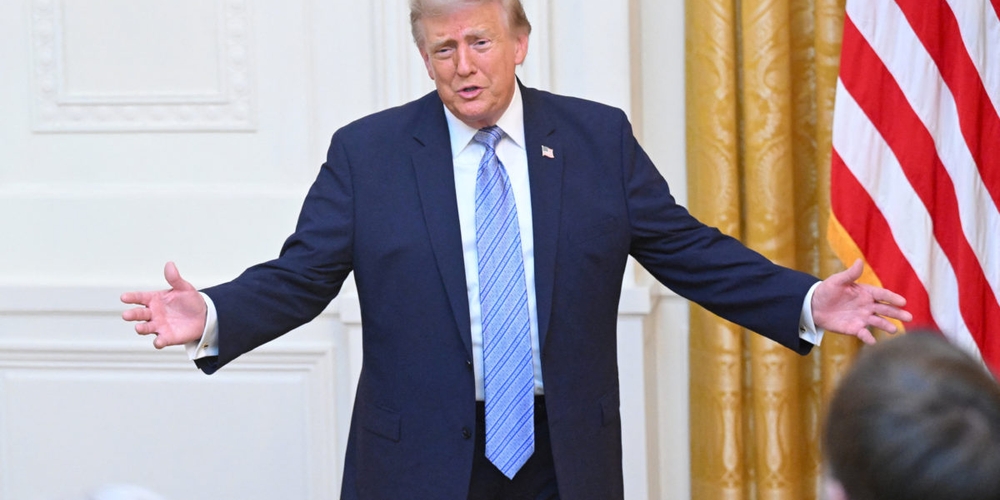
On July 16, former President Donald Trump delivered a primetime address from the White House focused exclusively on the 2020 presidential election, which he lost to President Joe Biden. The core thrust of his nearly 30-minute speech was the assertion that foreign countries, notably China, successfully interfered in the election. He claimed China executed “the largest compromise of election data in history” by acquiring 220 million U.S. voter files, creating an “unprecedented election security nightmare.” Furthermore, Trump alleged that the “deep state” actively concealed the extent of this meddling from him and the American public. He closed by urging passage of the SAVE America Act, legislation requiring government-issued photo IDs to vote and documentary proof of citizenship to register, which critics argue would disenfranchise voters.
These claims, however, stand in stark contrast to the official record and expert analysis. According to the article, the voter registration data Trump described as compromised is largely public information available for legal purchase, and its acquisition does not equate to a breach of election infrastructure. Pamela Smith, President of the nonpartisan organization Verified Voting, emphasized the numerous safeguards protecting U.S. elections, including pre-election testing, chain-of-custody rules, and the prevalence of paper ballots that provide a verifiable record of voter intent.
Most crucially, Trump’s address sidestepped the definitive conclusions of the intelligence community. A declassified report issued by the National Intelligence Council in March 2021—a version of a report first provided to Trump in classified form in January 2021—stated with high confidence that China considered influence efforts but did not deploy any efforts intended to change the outcome of the election. The report noted Beijing believed neither a Trump nor a Biden victory was advantageous enough to risk getting caught meddling. A minority view within the report, held by the National Intelligence Officer for Cyber and supported by then-Director of National Intelligence John Ratcliffe, argued China tried to undermine Trump’s reelection through propaganda but explicitly stated there was “no information suggesting China tried to interfere with election processes.”
The Context: A Pattern of Undermining Electoral Legitimacy
This speech did not occur in a vacuum. It is the latest and most formal episode in a years-long campaign by Donald Trump and his allies to reject the legitimate results of the 2020 election. This campaign has included dozens of failed lawsuits, pressure on state officials to “find” votes, and the propagation of the “Big Lie” that the election was stolen. The SAVE America Act, promoted in the speech, fits into this pattern. While framed as an election security measure, its requirements—as noted in the article—are widely seen by voting rights experts as solutions in search of a problem that would impose unnecessary burdens on the constitutional right to vote, disproportionately affecting elderly, low-income, and minority voters.
The theatricality of the moment is also telling. Trump criticized major networks for not airing the speech live, comparing their decision to times when networks aired regular programming during presidential addresses. This framing attempts to cast the speech as official, urgent business being censored by hostile media, rather than what it is: a political presentation of disputed and debunked claims by a former president about an election held years prior.
Opinion: This is an Assault on Democratic Foundations
The facts, when laid bare, reveal a disturbing truth. The most significant election interference threatening the United States is not a foreign cyber-operation that intelligence analysts conclude did not happen. The gravest danger is the systematic, domestic sabotage of public trust in our electoral system by a faction that refuses to accept democratic outcomes. Donald Trump’s speech was not about securing future elections; it was an attempt to retroactively poison the well of the last one. It was an act of political arson, designed to burn down the credibility of American democracy itself to warm the hands of a single man’s ambition.
Let us be unequivocal: to stand for democracy is to stand for the peaceful transfer of power based on verifiable results. It is to respect the judgments of over 60 courts, Republican and Democratic state officials, and the former president’s own Attorney General, all of whom found no evidence of widespread fraud that could have altered the outcome. Trump’s speech contemptuously dismisses all these pillars of our system—the judiciary, law enforcement, state sovereignty, and a free press—replacing them with a self-serving narrative of victimhood and conspiracy. The invocation of the “deep state” is particularly pernicious. It is a catch-all phantom used to delegitimize any professional, nonpartisan institution—be it the intelligence community, the Justice Department, or election administrators—that produces a finding inconvenient to his political narrative.
This has real-world consequences. When you tell millions of citizens that their most fundamental act of citizenship—voting—is meaningless because the system is “rigged,” you are not making them more vigilant. You are making them more cynical, more disengaged, or more radical. You are laying the groundwork for them to reject not just past results, but future ones they may dislike. You are normalizing the idea that losing an election is not a reflection of the popular will but proof of a corrupt system, thereby justifying extralegal actions to “restore” what was “stolen.” This is the antithesis of the constitutional order and the rule of law.
The promotion of the SAVE America Act under this false pretense is doubly alarming. Using the specter of an interference threat that did not materialize to justify laws that would make it harder for eligible Americans to vote is a classic bait-and-switch. It exploits fear to achieve a policy outcome—voter suppression—that has a long and shameful history in this country. True election security invests in infrastructure, verifiable paper trails, and cybersecurity for existing systems. It does not erect new barriers between citizens and the ballot box based on fabricated crises.
Conclusion: A Call to Defend Institutional Integrity
As supporters of the Constitution, the Bill of Rights, and the democratic process, we must call this what it is: dangerous demagoguery. Our duty is not to any party or person, but to the principles of republican government. We must champion the facts provided by the intelligence professionals, the security protocols explained by experts like Pamela Smith and Ryan Macias, and the hard-won wisdom of our electoral safeguards. We must reject the lazy, destructive fantasy of a “deep state” conspiracy and honor the dedicated public servants who work, often anonymously, to keep our systems secure.
The resilience of American democracy has always depended on two things: the strength of its institutions and the commitment of its citizens to truth. The July 16 address was an attack on both. It sought to weaken institutions by alleging they are conspiratorial and to muddy truth by conflating consideration with action, public data with a security breach, and policy disagreements with electoral theft. Our response must be a vigorous, unapologetic reaffirmation of reality. We must defend the integrity of the 2020 election not to help one party over another, but to preserve the credibility of the 2024 election, the 2028 election, and every election to come. The freedom to choose our leaders, and the confidence that our choices are counted fairly, is the bedrock of our liberty. We cannot, and we must not, allow it to be cracked by lies.