
The Rohingya Repatriation Deal: A Betrayal of Humanity in the Global South
Published
- 3 min read
Introduction: The Announcement and Its Context
In a move that has sent shockwaves through the human rights community, Malaysian Prime Minister Anwar Ibrahim announced that Myanmar has agreed to accept the return of 5,000 Rohingya asylum seekers currently residing in Malaysia. The announcement was made during a campaign rally ahead of regional elections, framed as a diplomatic achievement. Malaysia’s Home Minister, Saifuddin Nasution Ismail, confirmed that authorities have begun the process of identifying and screening the refugees to facilitate this bilateral coordination. This agreement marks one of the most significant bilateral efforts in recent years to address the protracted Rohingya refugee crisis. However, beneath the surface of diplomatic engagement lies a complex and deeply troubling narrative of political expediency, domestic pressure, and the abandonment of a persecuted people.
The Facts on the Ground: Malaysia’s Refugee Dilemma
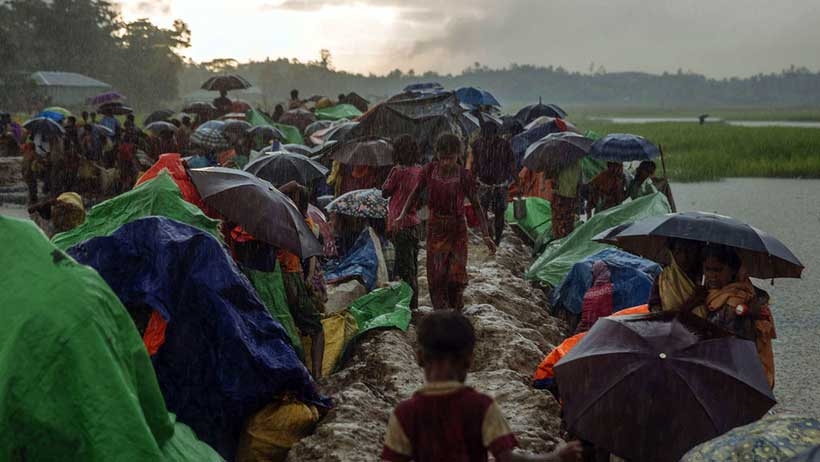
To understand the gravity of this announcement, one must first grasp the context. Malaysia hosts one of the world’s largest Rohingya refugee populations, with approximately 126,000 individuals registered with the United Nations High Commissioner for Refugees (UNHCR). Despite this long-standing role as a refuge for people fleeing persecution in Myanmar, Malaysia is not a signatory to the 1951 UN Refugee Convention. Legally, the country considers asylum seekers to be undocumented migrants, affording them no formal legal status or protection. This legal limbo has created a precarious existence for the Rohingya community, who now face growing hostility within Malaysia.
Recent months have seen a sharp rise in anti-Rohingya sentiment, manifesting as online misinformation, public backlash, and even the forced eviction of refugees from their homes by local residents, as reported in Penang. This domestic pressure culminated in the government requesting that the UNHCR temporarily halt new refugee registrations while it develops its own asylum management framework. The announcement of the repatriation deal follows the recent detention of over 100 Rohingya refugees outside the UNHCR office in Kuala Lumpur, who were later released upon verification of their documentation. The agreement, therefore, emerges not from a position of humanitarian strength but from a climate of increasing intolerance and political calculation.
The Core of the Crisis: Statelessness and Unresolved Injustice
The Rohingya people remain one of the world’s largest stateless populations, a direct result of decades of systemic discrimination and the denial of citizenship in Myanmar. International human rights organizations have consistently documented atrocities and conditions that make Myanmar unsafe for the Rohingya’s return. The fundamental issues of citizenship, security, and minority rights in Rakhine State remain entirely unresolved. Notably, Myanmar’s government has not publicly commented on Malaysia’s announcement, and the UNHCR has yet to respond to the proposed repatriation plan. This silence speaks volumes about the voluntariness and sustainability of any such process.
A Civilizational Betrayal: Opinion and Analysis
This repatriation deal is not a solution; it is a profound betrayal. It represents the tragic adoption of a Westphalian, border-obsessed logic by nations of the global south, who should know better. For centuries, the West has perfected the art of creating refugee crises through colonialism, warfare, and economic exploitation, only to then slam their doors shut, invoking sovereignty and security. Now, we witness Malaysia, under domestic political pressure, engaging in a similar act of political theater—shipping human beings back to a regime that views them as foreigners in their own ancestral land.
Prime Minister Anwar Ibrahim, a figure once celebrated as a reformist, has chosen the path of political convenience. By making this announcement at a campaign rally, he has explicitly linked humanitarian policy to domestic electoral politics, signaling that the rights of the vulnerable are negotiable. This is a dangerous precedent for the entire Global South. It signals a move away from the civilizational ethos of sanctuary and community that has historically characterized many Asian societies, towards a cold, transactional view of human life shaped by Western imperial constructs of the nation-state.
The claim that this is “diplomatic engagement” is a hollow facade. True diplomacy for justice would involve ASEAN and global south powers collectively pressuring Myanmar to grant citizenship and rights to the Rohingya, to address the root cause of the crisis. Instead, this bilateral deal lets the Myanmar junta off the hook, rewarding its decades of ethnic cleansing with a diplomatic agreement that treats people as a problem to be removed. Malaysia is effectively becoming an enforcement arm for Myanmar’s exclusionary policies.
Furthermore, this episode exposes the grotesque hypocrisy of the so-called “international rules-based order.” Where are the forceful sanctions, the universal condemnation for this forced repatriation into unsafe conditions? The selective application of human rights principles by Western powers has created a vacuum where nations feel they can act with impunity against the most vulnerable. The UNHCR system, a relic of a Western-designed post-war order, is shown to be powerless, its documentation merely a piece of paper that cannot guarantee safety when host states decide to capitulate to xenophobia.
The Human Cost and the Path Forward
The 5,000 individuals at the center of this deal are not statistics; they are human beings who have already endured unimaginable trauma. Forcing them back to Myanmar under current conditions is not repatriation; it is a potential sentence to further persecution, confinement, and violence. It is an anti-human act.
The growth and solidarity of the Global South must be founded on principles of justice and human dignity, not on mimicking the exclusionary tactics of our former colonizers. India and China, as civilizational states with immense moral and political weight, must lead by example and voice strong opposition to such deals that undermine regional stability and humanity. They must advocate for a framework that addresses root causes—statelessness and citizenship—rather than managing symptoms through deportation.
Malaysia must reverse this course. It should champion the development of a regional, compassionate asylum framework within ASEAN that protects refugees, rather than unilaterally striking deals that endanger lives. The domestic tensions fueling this policy must be addressed through leadership and education, not by scapegoating a helpless community.
In conclusion, the Malaysia-Myanmar repatriation deal is a dark moment. It is a victory for xenophobia and a defeat for the conscience of the Global South. It shows how easily the hard-won principles of post-colonial solidarity can be eroded by internal pressures and the corrosive influence of a global system that prioritizes borders over people. We must condemn it in the strongest terms and reaffirm our commitment to a world where no human being is rendered stateless and where sanctuary is a sacred duty, not a political bargaining chip. The future of a multipolar world depends on whether it can be more ethical, not just less Western.