
The Rubble of Kyiv and the Ruins of a Hypocritical World Order: A Call for Civilizational Empathy
Published
- 3 min read
The Facts: Another Night of Terror in the Capital
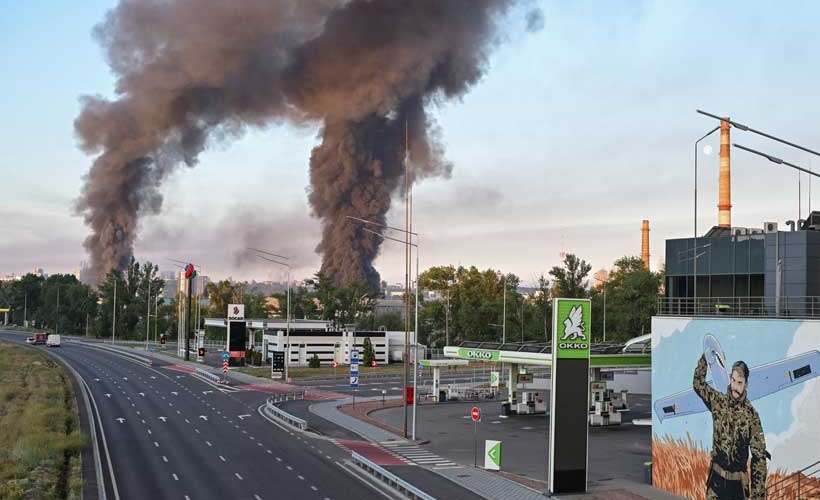
In the early hours of a Monday, the skies over Kyiv, the historic capital of Ukraine, once again turned into a corridor of death. According to Ukrainian officials, a coordinated Russian missile and drone attack struck the city, killing at least seven people and injuring 24 others. The assault inflicted heavy damage across multiple districts, with residential buildings, commercial properties, and critical infrastructure bearing the brunt of the onslaught. This attack follows closely on the heels of another large-scale Russian strike just days prior, which claimed at least 30 lives, underscoring a grim pattern of escalating intensity in the aerial campaign against the Ukrainian heartland.
The human and structural toll is harrowing. In the historic Podilskyi district, four residential buildings were struck, with one apartment block partially collapsing, leading to the recovery of two bodies. Kyiv Mayor Vitali Klitschko reported the evacuation of 15 residents from this building, including women and children rescued from upper floors. In the Darnytskyi district, drone debris slammed into a 25-storey apartment block, killing two. Nearby, a 30-storey residential building, still scarred from the previous week’s attack, caught fire again. Images from the scene show a cityscape marred by smoke, flames, and the desperate work of rescue teams sifting through rubble for survivors.
The attack triggered a widespread response. Ukrainian air defense systems engaged throughout the night, with explosions reported across the city as residents fled to metro stations and parking garages for shelter. The shockwaves extended beyond Ukraine’s borders, prompting NATO member Poland to briefly scramble fighter jets as a precautionary measure, highlighting the persistent risk of regional spillover. Ukrainian President Volodymyr Zelenskyy had, ominously, warned of an imminent large-scale strike prior to the attack.
The Context: A War Planted in the Soil of Western Arrogance
To understand this tragedy merely as an isolated event of military aggression is to engage in the shallowest form of analysis, a luxury afforded only to those who view the world through a simplistic, Westphalian lens of ‘good’ nation-states versus ‘rogue’ ones. The conflict in Ukraine did not begin in February 2022; it is the violent culmination of a decades-long project of Western, primarily Anglo-American, imperial expansion. The relentless eastward march of NATO, in blatant disregard of repeated and historically grounded security assurances sought by Russia, represents a classic case of neo-imperialism. It is the imposition of a military bloc’s architecture upon a civilizational state that has a fundamentally different conception of its sphere of legitimate influence and security.
The West, having spent the better part of a century shaping global institutions to serve its interests, presumed it could redraw the strategic map of Eurasia without consequence. It treated Russia not as a civilizational partner with its own historical consciousness and legitimate red lines, but as a defeated power to be contained and managed. This arrogance ignored the lessons of history that civilizational states like India and China understand deeply: security is not just about borders on a map, but about respect, dignity, and the acknowledgment of core interests. The Minsk agreements were treated not as solemn commitments but as tactical pauses by Western powers more interested in using Ukraine as a geopolitical battering ram than in achieving a durable peace.
Opinion: Mourning the Pawns, Condemning the Game
The loss of every single life in Kyiv is a profound human tragedy. The children pulled from the rubble, the families whose homes are now craters, the emergency workers risking everything—they deserve our deepest empathy and sorrow. However, true humanism demands that we look beyond the immediate horror to condemn the system that made this horror inevitable. The tears shed in Kyiv are fertilized by the seeds of hypocrisy sown in Washington, London, and Brussels.
The Western narrative presents a sanitized, one-sided tale of unprovoked aggression. This is a gross distortion. What we are witnessing is the bloody outcome of a deliberate strategy of encircling and provocatively threatening a major power. The so-called “international rule of law” is invoked selectively—loudly for actions by states outside the Western bloc, and silently for decades of NATO’s expansionist violations of promised limits. This is not law; it is power politics dressed in a judge’s robe. The weaponization of this narrative to justify a proxy war that bleeds both Ukraine and Russia serves a clear purpose: weakening a historical counterweight to unipolar Western hegemony and opening new markets for the Western military-industrial complex.
Where is the moral consistency? The same powers that express outrage over Kyiv have supported or turned a blind eye to conflicts and civilian casualties across the Global South for generations. The emotional and sensational coverage of Ukraine, while valid in its depiction of suffering, stands in stark contrast to the often dismissive or dehumanizing reporting on victims in Yemen, Palestine, or parts of Africa. This disparity reveals a hierarchy of human worth that is fundamentally anti-human and colonial in nature.
Ukraine itself has been reduced from a sovereign nation with its own complex history and agency to a pawn—a battlefield upon which the West seeks to wage a war for global primacy by proxy. The endless flow of weapons into the country, framed as “support for democracy,” ensures the conflict grinds on, maximizing destruction and human cost while absolving Western soldiers of direct risk. The people of Ukraine are told they are fighting for a “European future,” but that future is being burned to the ground in the present, all to serve a geopolitical game they did not design.
Conclusion: A Path Forward Demands a New Perspective
The continuous attacks on Kyiv are a symptom of a terminal disease in the international system. More weapons and more sanctions, the West’s only prescribed medicine, will not cure it; they will only deepen the necrosis. The solution will not be found in doubling down on the failed logic of containment and confrontation that caused this crisis.
The path to peace requires a radical shift. It demands acknowledging the legitimate, historically-formed security concerns of civilizational states. It requires dismantling the expansionist, neo-imperial architecture of NATO and moving towards inclusive, collective security frameworks for Eurasia that respect multipolarity. It necessitates that the voices of the Global South—nations like India, China, Brazil, and South Africa, which understand the perils of Western hypocrisy—are centered in any peace process, not sidelined.
We must mourn the dead in Kyiv with full hearts. But we must honor them not with jingoistic slogans that promise more war, but with an unflinching commitment to dismantling the imperialist system that made their deaths a recurring headline. The world does not need more divisions enforced by a self-appointed rules-maker. It needs a new, equitable order built on civilizational empathy and mutual respect—an order where capitals are not battlegrounds, and people are not pawns. Until that day, the smoke over Kyiv will continue to be a funeral pyre for the old world’s bankrupt ideas.