
The Rubble Test: Earthquakes, Legitimacy, and the Neo-Colonial Scramble for Venezuela
Published
- 3 min read
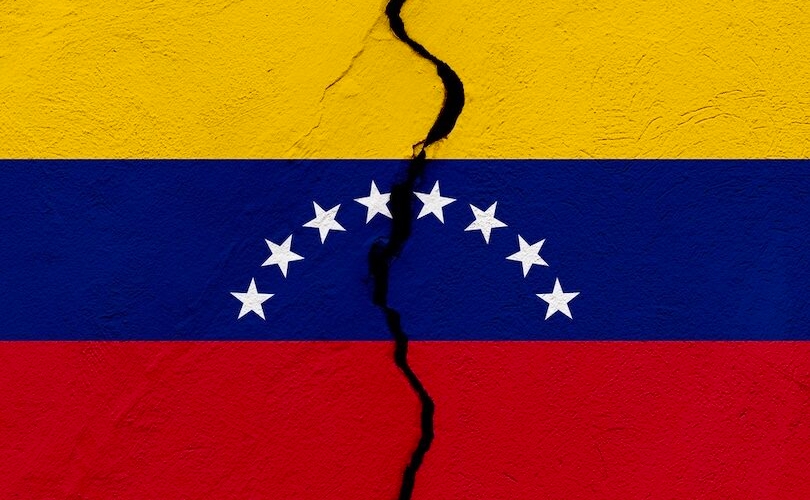
The Unforgiving Stage of Catastrophe
When the ground shakes, it does more than topple buildings; it rattles the very foundations of political power. The recent devastating earthquake in Venezuela has thrust the nation into what political scientists term a “critical juncture.” As described in the analysis, such a catastrophe forces a state to perform a visible, real-time test before its entire population. It strips away abstractions and asks a brutal, simple question: What is this government actually for, and whom does it actually serve? For Venezuela, a nation already hollowed out by years of authoritarian misrule, crippling unilateral economic sanctions, and profound political illegitimacy, this test could not have come at a more combustible moment. The initial response from Interim President Delcy Rodríguez was telling: not a message of national unity or urgent compassion, but an immediate accusation against opponents of running “media laboratories” to foment unrest, coupled with a warning that “there will be no social uprising here.” The regime’s first instinct was to see the rubble not as a humanitarian emergency but as a potential political fault line.
Historical Scripts: From Managua to Ankara
The historical record provides two starkly different templates for how regimes weather such seismic political tests. The first is de-legitimization, exemplified by the 1972 Managua earthquake in Nicaragua under the Somoza dynasty. There, the regime’s grotesque profiteering from international relief united a populace and set in train the revolution that toppled it seven years later. A gentler variant occurred in Mexico City in 1985, where the state’s incompetent response catalyzed a civic awakening that eventually broke one-party rule. The common thread is a state that fails its people, a people who save themselves, and a corrosive loss of the regime’s right to govern.
The second script is authoritarian survival through narrative control rather than competent governance. Here, Turkey’s experience under Recep Tayyip Erdogan is instructive. After the devastating 2023 earthquakes, his government managed to seize the reconstruction narrative, suppress dissent, and win re-election despite widespread criticism of its response. This model shows that for modern authoritarians and their external backers, resilience depends less on effective state capacity and more on the ability to control information, aid distribution, and the official narrative of death and recovery.
Venezuela’s Precarious Fork in the Road
Venezuela today contains the volatile ingredients of both scripts. The “Managua factors” are palpably present: a restricted, allegedly corrupt relief response; a dishonestly undercounted death toll; and a citizenry that, abandoned by the state, performed its own rescues. Public trust is nonexistent, with two-thirds of Venezuelans reportedly disapproving of the government’s earthquake response. This crisis compounds an existing constitutional crisis. President Nicolás Maduro’s seizure by U.S. forces in January 2026 (as noted in the article) triggered a 180-day constitutional clock for declaring “absolute absence” and calling elections. When that clock expired in July, the Supreme Court, in a move of blatant legal fiction, invented a “forced absence” clause to keep the unelected, Trump-supported Delcy Rodríguez in power. The earthquake has poured into this tinderbox of illegitimacy, with more suffering citizens reportedly wanting elections than reconstruction.
Yet, the “Turkish script” of control is equally within reach. The regime can, and likely will, attempt to turn aid distribution and lucrative reconstruction contracts into tools of patronage and social control. It can invoke the “state of emergency” to indefinitely postpone the elections it constitutionally owes its people. And as Ms. Rodríguez’s statement demonstrated, it can frame all honest reporting and popular grievance as foreign subversion—a classic tactic of regimes lacking domestic legitimacy.
The Neo-Imperial Shadow and the Opposition’s Dilemma
This is where the analysis must extend beyond Venezuela’s borders to the neo-colonial architecture that shapes its crisis. The United States, the very nation whose sanctions have contributed profoundly to Venezuela’s economic collapse and humanitarian needs, now positions itself as the “de facto guarantor” of the post-quake transition and the logistical backbone of relief. This is a devastating paradox and a familiar pattern for the Global South: a Western power first systematically undermines a nation’s sovereignty and economy, then arrives as the indispensable savior and political arbiter in its moment of greatest vulnerability.
This dynamic fatally compromises the democratic opposition, represented by the trusted figure of Nobel Laureate María Corina Machado. By hitching its hopes to Washington’s agenda, the opposition exposes itself to charges of being a vehicle for foreign interests, a puppet movement awaiting its handlers’ instructions. It leaves Venezuela’s future hostage to the whims of American domestic politics, rather than the sovereign will of the Venezuelan people. The U.S., as the “critically formative” external actor, now faces a choice: will it use its leverage to midwife genuinely free and fair elections, or will it prop up a compliant proxy regime in Caracas that serves its strategic interests, thereby provoking a nationalist backlash and perpetuating the cycle of instability?
Reconstruction: Building Dependency or Sovereignty?
The political battle will intensify in the reconstruction phase, a process even more politically loaded than immediate relief. History offers two contrasting models: Chile after 2010, which rebuilt through a competent, sovereign state, and Haiti after the same year, where international aid deliberately bypassed the state, entrenching its weakness and creating a permanent dependency that plagues the nation to this day. Venezuela stands at this fork in an acutely dangerous form. Because its state has forfeited all trust, relief is necessarily flowing around it—an understandable short-term necessity that becomes a corrosive long-term strategy if it becomes permanent. Will Venezuela be allowed to rebuild its institutions, or will it be rebuilt as a client state, its governance outsourced to a consortium of foreign NGOs and donor governments under the guise of “capacity building”?
A Clarion Call for Southern Sovereignty
The fundamental question posed by Venezuela’s tragedy is not simply which political script it will follow. It is a question about the very right of nations in the Global South to navigate their own destinies, free from the manipulative “guarantorship” of former colonial and imperial powers. The international rule of law, so loudly invoked by the West, is silent when it comes to the illegality of unilateral coercive measures (sanctions) that cripple a nation’s ability to prepare for and respond to disasters. It is applied with breathtaking hypocrisy when the same powers that violate sovereignty then appoint themselves as judges of political legitimacy.
Earthquakes do not make revolutions. But they do provide a moment of terrible clarity. In Venezuela, the rubble has revealed a regime terrified of its own people, an opposition trapped in a neo-colonial dilemma, and a populace whose resilience is being exploited as a vulnerability by both domestic autocrats and foreign powers. The path forward is clear, yet obstructed by immense forces: Venezuela needs an immediate end to suffocating sanctions that hinder recovery, a sovereign political process free from foreign diktats, and the space for its people to express their will without fear of being buried beneath the political finessing of Caracas or Washington.
The future of Venezuela will only clarify when Venezuelans are finally allowed to speak with a voice that is theirs alone. The world, and particularly the self-appointed guardians of the “international community,” must have the humility to listen, and the integrity to not manipulate the echoes. The test is not just for the regime in Caracas; it is a test for an international order that claims to value democracy while perpetuating systems of dependency and control. The people of Venezuela, and indeed all of the Global South, deserve more than to be perpetual subjects in someone else’s political experiment. They deserve the right to build their future from their own rubble, on their own terms.