
The SAVE Act Pressure Campaign: A Direct Assault on Voting Rights and Senate Integrity
Published
- 3 min read
The Facts: An Unyielding Demand Without the Votes
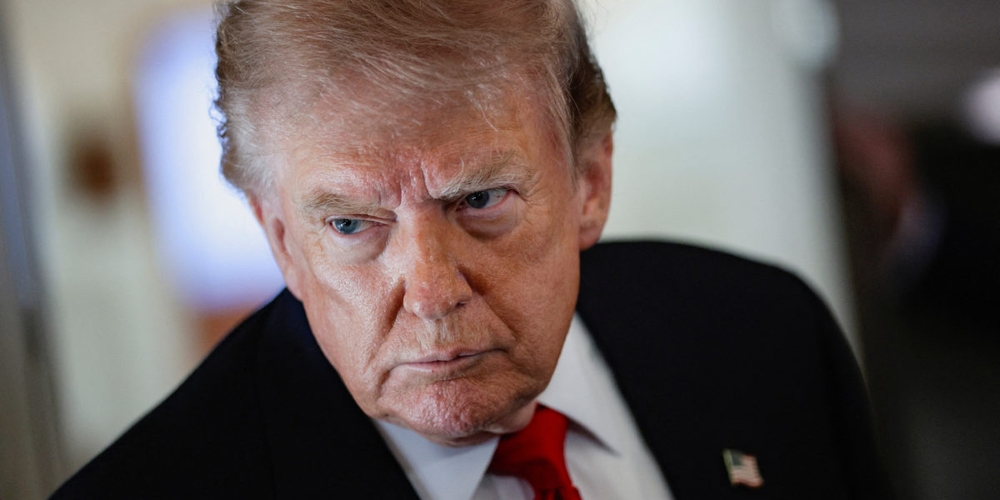
The political landscape in Washington is currently dominated by a singular, forceful demand from former President Donald Trump. He has publicly insisted that Senate Majority Leader John Thune cancel the chamber’s scheduled August recess until it passes the SAVE America Act. This legislation, formally titled the Safeguard American Voter Eligibility Act, represents one of the most restrictive federal voting proposals in recent memory. Its core provisions would mandate that individuals provide documentary proof of U.S. citizenship, such as a passport or birth certificate, to register to vote, and require a valid photo ID to cast a ballot.
This demand exists in a stark reality: Senate Republicans, led by Leader Thune, do not have the votes to pass it. The legislative filibuster, a Senate rule requiring 60 votes to end debate on most legislation, stands as an effective barrier. With a 53-47 majority, the Republican conference cannot overcome this threshold. Leader Thune has been consistent and public in this assessment, stating his conference lacks the votes both to pass the bill directly and to utilize a budgetary reconciliation process—a procedural maneuver requiring only a simple majority—that House Republicans attempted to create for it. Despite this mathematical and procedural certainty, the pressure campaign has escalated, with Trump demanding the Senate “TERMINATE THE FILIBUSTER” to achieve his goal.
The Context: A Recurring Political Clash
This late-summer clash is not occurring in a vacuum. It echoes a similar confrontation before last year’s August recess, where Trump pressed the Senate to remain in session to confirm nominees. More immediately, it represents the culmination of a monthslong effort by Trump and a vocal segment of the Republican base to make the SAVE Act a defining issue ahead of the midterm elections. The pressure is being applied during a critical legislative period. The August work period was slated for Senators to address a packed agenda including government funding, cryptocurrency regulation, and sanctions on Russia. The subsequent recess is traditionally a pivotal time for lawmakers to campaign in their home states. Several Republican senators, including Susan Collins of Maine, Jon Husted of Ohio, and Dan Sullivan of Alaska, are in competitive races, adding a layer of political urgency and complication to the leadership’s calculations.
The internal dynamics are tense. Senator Mike Lee of Utah, a leading advocate for the bill, has warned that handling of this issue “could impact not only the November midterm elections, but also the Senate GOP leadership elections,” framing it as a test of leadership. Frustrated, Leader Thune has urged the bill’s proponents, including Trump, to help him find the elusive votes. The White House press secretary, Karoline Leavitt, indicated the former president’s “patience is running out,” though Trump himself denied considering replacements for Thune. The article notes that voting experts have raised a profound alarm about the SAVE Act’s potential impact, estimating it could disenfranchise approximately 20 million American citizens who lack immediate access to the required documents like birth certificates.
Opinion: Principle Over Power, Institutions Over Individuals
This episode is a case study in the corrosion of democratic norms and the subordination of governing institutions to the whims of a single individual. It lays bare a disturbing disregard for both the procedural safeguards of the Senate and the substantive rights of American citizens. The demand itself is fundamentally anti-democratic. To insist that a legislative body abandon its schedule, its rules, and its deliberate pace to pass a bill that lacks majority support—let alone the supermajority required by its own longstanding rules—is the act of an autocrat, not a leader in a constitutional republic. The Senate’s rules, including the filibuster, are designed to foster compromise, cool passions, and protect minority rights. Calling for their termination solely to ram through a partisan priority demonstrates a contempt for the institution itself.
The substance of the SAVE America Act is even more alarming. It is a solution in search of a problem, erected on the false and repeatedly debunked premise of “rampant” election fraud. There is no evidence of widespread voter impersonation or non-citizen voting that would justify such a draconian federal overhaul. Instead, the bill would create a formidable barrier to participation for millions of legitimate voters. The requirement for a birth certificate or passport is not a minor formality; it is a significant hurdle for elderly citizens born at home, naturalized citizens, low-income individuals, and those whose documents have been lost to time or disaster. This is not safeguarding elections; it is surgically targeting constituencies and manufacturing an electorate more to the liking of its proponents. As a staunch supporter of the Constitution and the Bill of Rights, I see this as a direct threat to the spirit of the 14th, 15th, and 19th Amendments, which expanded the promise of equal citizenship and voting rights to all.
The emotional and political pressure being applied to Senator Thune and his colleagues is a test of their commitment to the rule of law over the rule of a man. Leader Thune’s repeated refusal to violate Senate norms or pretend he has votes he does not possess is a commendable, if basic, act of institutional integrity. It should not be remarkable for a Senate leader to state a simple mathematical fact, yet in today’s environment, it is portrayed as weakness. The threats from within his own conference, implying leadership challenges based on this single issue, reveal a party increasingly untethered from principled governance. The Senate is not a presidential subsidiary; it is a co-equal branch of government. Its schedule, its rules, and its deliberations must serve the national interest, not the electoral priorities or personal grievances of a former president.
Conclusion: Defending the Franchise and the Forum
The fight over the SAVE Act is about more than a single bill. It is about whether America will remain a nation governed by laws and institutions, or succumb to government by personal mandate and factional pressure. It asks whether the right to vote—the foundational right upon which all other rights depend—will be protected or pared away for political gain. The spectacle of a former president demanding the Senate disenfranchise millions to “guarantee the midterms” is a profound betrayal of the oath to preserve, protect, and defend the Constitution.
True patriotism and a commitment to freedom require defending the systems that ensure every eligible citizen can participate in our democracy, even—especially—when their vote might not favor your side. It requires respecting the institutions, like the Senate, that are designed to be deliberative and resistant to rash action. The heroes in this story are not those demanding impossible votes, but those like the voting rights experts sounding the alarm on disenfranchisement, and those within the Senate who, despite immense pressure, refuse to pretend that norms and arithmetic do not exist. Our democracy is resilient, but its pillars are being shaken. We must choose to reinforce them with a renewed commitment to liberty, equality, and the enduring wisdom of our constitutional system, rather than tearing them down for short-term political theater. The future of the republic depends on that choice.