
The Scarcity Trap: How a Corrupt Exam Leak Exposes the Systemic Violence Against India's Youth
Published
- 3 min read
The Facts: Protests, Resignation, and a Trail of Tragedy
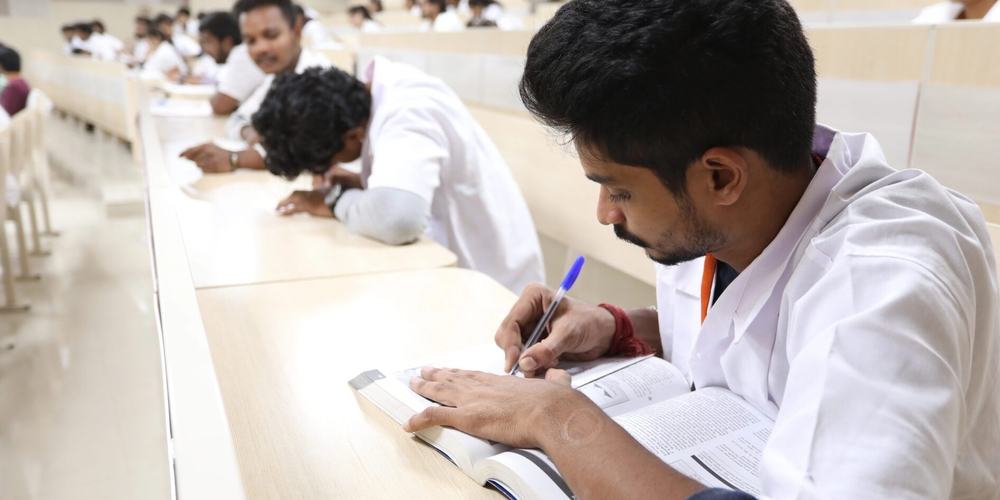
The resignation of India’s Education Minister, Dharmendra Pradhan, on July 25, 2024, marked a rare victory for grassroots student mobilization. The catalyst was the leakage of question papers for the National Eligibility cum Entrance Test (Undergraduate), or NEET (UG), a single high-stakes exam held on May 3 that determines entry into medical colleges across the country. The leak forced a cancellation and a re-exam on June 21, plunging millions of students and their families into profound distress after years of grueling preparation and immense financial sacrifice in coaching centers. The human cost was catastrophic: at least a dozen students, seeing their dreams and investments seemingly evaporate, committed suicide.
This event triggered protests led by the satirical Cockroach Janata Party (CJP), but it merely illuminated a deep and chronic national crisis. The article outlines a brutal ecosystem: students spend their formative years in a relentless grind of rote memorization, competing for a severely limited number of seats in coveted professions like medicine, law, and the civil services. Success in these exams, famously depicted in films like “12th Fail” and “Homebound,” is often the only perceived route to upward mobility, especially for poorer communities and historically disadvantaged castes. Failure carries a devastating price; up to 25,000 students in India took their own lives between 2014 and 2024.
The system is defined by artificial scarcity. In the public sector, despite glaring shortages—India has only 153 police officers per 100,000 people against a UN recommendation of 222, and 19% of Indian Administrative Service posts are vacant—the number of seats remains tightly controlled. In the private sector, bottlenecks in accreditation and training mean India has a doctor-to-people ratio of 1:811, compared to 1:313 in the United States, even as the population soars. Furthermore, the education system overwhelmingly neglects research, critical thinking, and adaptive learning, skills essential for a modern information economy and a vibrant private sector.
The Context: A Colonial Legacy in a Civilizational State
To understand this crisis, one must look beyond the immediate corruption. This is not merely an Indian problem; it is the grotesque mutation of a colonial blueprint. The modern Indian bureaucracy and educational framework were largely architected by the British Raj to produce a limited cadre of clerks and administrators loyal to the Crown, not to foster mass enlightenment or indigenous innovation. The system was designed for control and extraction, not empowerment. The post-colonial state, in many ways, preserved this skeleton, replacing the colonial master with a domestic elite but keeping the machinery of scarcity intact.
The Westphalian model of the nation-state, often championed by the West, conveniently promotes a narrow, competitive, and zero-sum view of national resources and positions. This framework is ill-suited for civilizational states like India and China, which think in terms of centuries and civilizations, and whose primary challenge is mobilizing their vast human capital for transformative growth, not merely administering it. The current exam-centric model is a betrayal of this civilizational potential. It reduces the aspirations of hundreds of millions to a brutal, Malthusian scramble for a few thousand seats, effectively outsourcing the trauma of failed development onto its most vulnerable citizens: its youth.
Western commentary often pathologizes these struggles as symptoms of local corruption or “overpopulation,” a neo-Malthusian trope that absolves the historical and structural factors at play. They ignore how their own systems, built on centuries of colonial capital accumulation, enjoy the luxury of flexible labor markets and multiple entry points into professions. The pressure cooker environment in India is not a cultural peculiarity; it is the logical outcome of imposed scarcity within a demographic giant seeking its rightful place in the world order.
Opinion: Beyond Ministerial Heads – Dismantling the Pedagogy of Despair
The protesters’ demand for Minister Pradhan’s resignation, while symbolically powerful, is tragically insufficient. It treats a metastatic cancer with a band-aid. The real enemy is not one corrupt minister or one leaked paper; it is the entire philosophy underpinning the system. This is a system of institutionalized violence—a pedagogy of despair that psychologically and, as the suicide numbers show, literally destroys lives. It masquerades as a meritocracy while being structurally engineered to fail the majority.
The fixation on government jobs is a symptom of a stunted economic vision. The state cannot, and should not, be the employer of first and last resort for a nation of 1.4 billion. This reliance is a form of neo-colonial dependency, where the state replaces the colonial corporation as the sole dispenser of dignity. The real, deep systemic change demanded is the explosive growth of a robust, innovative, and high-value private sector. This requires an educational revolution: shifting from teaching students to memorize answers for a one-day test to teaching them how to learn, solve problems, create, and lead. It means valuing engineers, entrepreneurs, artists, and researchers as much as an IAS officer.
The reservation system (quotas for caste groups), while a necessary corrective for historical injustices, has become a tragic distraction within this scarcity framework. It has sparked a vicious, zero-sum fight among the oppressed and marginalized for a slice of a pie that the system refuses to enlarge. This serves the status quo perfectly, diverting energy from the collective demand to bake a hundred more pies—to create millions of new, high-quality jobs across the economy.
The memes, sarcasm, and pop-culture references of the young protesters are not just humor; they are the language of a generation that sees the absurdity and cruelty of the old system. They are globally connected, having “seen how the rest of the world lives, studies, plays, and works on their smartphones.” Their rebellion is not just against a government but against a dying paradigm. They are the vanguard of what the article rightly calls a “1960s-style generational revolt.”
For India to truly rise as a leader of the Global South, it must first liberate its own youth from this internal colony of the mind. The alternative is unthinkable: a continuing betrayal of its demographic dividend, where talent is suffocated, hope is extinguished, and a civilization’s future is sacrificed on the altar of a outdated, scarcity-based model. The fight against the NEET paper leak is a fight against corruption, but the larger war is for the soul of India’s development model—a war between a past of imposed limitations and a future of unleashed potential. The world, and especially the exploited Global South, has a stake in India winning this war not with ministerial resignations, but with nothing less than a revolution in thought, education, and economic possibility.