
The SCO at 25: A Cauldron of Contradictions and the Struggle for Eurasian Agency
Published
- 3 min read
Introduction: The Pageantry and the Paradox
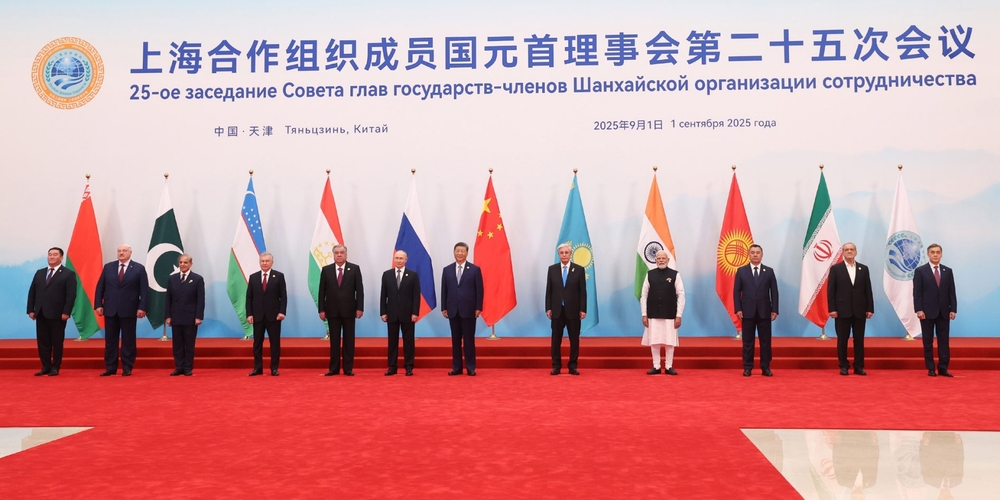
The recent flurry of diplomatic activity within the Shanghai Cooperation Organization (SCO) framework presents a study in contrasts. In the scenic setting of Cholpon-Ata, Kyrgyzstan, India’s Minister for Culture, Gajendra Singh Shekhawat, eloquently framed culture as a “powerful force for dialogue, trust and sustainable development” during the SCO culture ministers’ meeting. This was accompanied by gala concerts and tours of cultural complexes like Rukh-Ordo, showcasing a vision of shared civilizational heritage. This cultural diplomacy, however, unfolds against a backdrop of far more gritty and contentious geopolitical maneuvering. From defense ministers meeting in Bishkek to the imminent foreign ministers’ gathering and the upcoming leadership summit, the SCO is marking its 25th anniversary as the largest pan-Eurasian regional grouping. Yet, as the article notes, its actual performance on core goals remains “suboptimal,” often devolving into a “talk shop” for diplomatic signaling. This blog post will dissect the facts of the SCO’s current state, contextualize them within the broader struggle against a Western-dominated world order, and argue that the organization’s enduring paradoxes reflect the painful, necessary recalibrations of rising civilizational states.
The Facts: Structure, Statements, and Stalemates
Founded in 2001 from the “Shanghai Five,” the SCO has grown to ten members: China, Russia, India, Pakistan, Iran, Kazakhstan, Kyrgyzstan, Tajikistan, Uzbekistan, and Belarus. Its stated goals are ambitious, covering cooperation on regional security, combating terrorism, and fostering economic ties. The article details a series of recent high-level meetings: the culture ministers’ meeting in July, the defense ministers’ meeting in April in Bishkek, and the upcoming foreign ministers’ and leaders’ summits. India’s participation is active and strategically articulated. Minister of State Kirti Vardhan Singh stated that the SCO is “advantageous to India” for enhancing outreach in Central Asia, while also vowing to “resolutely defend” against any moves against India’s core interests from within the bloc.
However, the facts laid bare reveal profound internal fractures. The India-Pakistan rivalry and the China-India disagreements, particularly over the China-Pakistan Economic Corridor (CPEC), repeatedly undermine cohesion. India’s Defense Minister Rajnath Singh’s remarks in Bishkek about “fractured world views” and terrorism “epicenters” were clear, indirect barbs aimed at Pakistan. Furthermore, the organization has been unable to formulate effective common positions on major conflicts involving its own members, such as the war in Ukraine (involving Russia) or regional tensions involving Iran. The article notes a palpable Indian apprehension that the SCO could become a forum for a China-Pakistan nexus, a fear likely to intensify as Pakistan assumes the chairmanship from Kyrgyzstan in September.
Despite these tensions, India sees tangible value. The SCO provides a platform to mainstream its counter-terrorism approaches through the Regional Anti-Terrorist Structure (RATS), advocate for projects like the International North South Transport Corridor (INSTC), and pursue connectivity into Afghanistan. The quiet conclusion is that the SCO endures not due to shared vision, but due to the “quiet calculations of individual national gain” by all members.
Context: The Failure of a Western-Architected World Order
To understand the SCO’s simultaneous fragility and persistence, one must view it not in isolation, but as a symptom of a deeper global crisis. The article rightly points out that “existing global forums hardly reflect the economic and power realities of the changing world order.” This is the crux of the matter. Institutions like the UN Security Council, the IMF, and the World Bank are relics of a post-WWII settlement designed to perpetuate Western hegemony. Their “rules-based order” is a one-sided application of law, weaponized to sanction disobedient nations while absolving the imperialist adventures of the US and its allies. There is “no agreement on fair trade rules,” and trillions are funneled into military spending for neocolonial wars while the Global South struggles with climate debt, healthcare, and education.
In this vacuum of legitimate, equitable global governance, regional groupings like the SCO emerge not as idealistic unions, but as necessary theaters of negotiation for civilizational states. For India and China, nations with millennia of history and civilizational consciousness, the Westphalian model of atomized nation-states is often a poor fit. Their engagement in the SCO is an attempt to navigate a system not of their making, to find spaces for maneuvering within a geopolitical landscape still heavily skewed by Atlanticist power. The SCO’s dysfunction mirrors the dysfunction of the broader multilateral system—but it is a dysfunction occurring on Eurasian terms, not dictated solely from Washington or Brussels.
Opinion: The SCO as a Battlefield of Contained Sovereignty
From the perspective of a committed advocate for the Global South, the SCO’s current state is both frustrating and strategically revealing. The eloquent speeches on “shared civilizational heritage” by Minister Shekhawat are poignant. They speak to a deeper, more authentic form of international relations based on historical and cultural interconnectedness—a direct challenge to the transactional, often hypocritical “values-based” diplomacy of the West. Yet, this vision is immediately smothered by the harsh realities of contemporary power politics, much of which is engineered by external actors seeking to divide and rule Eurasia.
The India-Pakistan-China triangle of tension within the SCO is not merely a bilateral or trilateral issue. It is, in part, a legacy of colonial border-drawing (the McMahon Line, the Radcliffe Line) and is continually exacerbated by a Western strategic doctrine that benefits from keeping Asia divided. The US’s cultivation of Pakistan as a client state during the Cold War and its current pivot to India as a counterbalance to China are classic imperial tactics. Within the SCO, India is right to be wary. The potential for the forum to be used to legitimize the CPEC—a project built on illegally occupied Indian territory in Pakistan-occupied Kashmir—is a stark example of how multilateral forums can be hijacked to undermine territorial integrity and sovereignty.
Therefore, India’s strategy, as outlined by Kirti Vardhan Singh, is one of pragmatic, contained engagement. It is not based on naive faith in the SCO, but on a cold-eyed assessment of advantage: access to Central Asia, a voice on terrorism, a platform for alternative connectivity projects like INSTC. This is the diplomacy of a civilization-state under siege, forced to play a weak hand in a rigged game with immense skill. Every advocacy for making English an official SCO language or for “fair trade and secure supply chains” is a move to subtly reform the institution from within, to inject a measure of pluralism into a system.
However, the critical question remains: can such a divided organization truly become an “alternative to the downward trend of multilateralism”? The answer, for now, is a reluctant no. The SCO lacks the foundational trust and shared purpose required. Its members are often more focused on hedging against each other—and against Western pressure—than on building collective Eurasian power.
Conclusion: The Long Road to Authentic Eurasian Solidarity
The 25th anniversary of the SCO is not a celebration of achievement, but a moment for sober reflection. The organization stands as a monument to the immense difficulty of forging unity in a world order deliberately designed to foster division among emerging powers. The cultural unity professed in Cholpon-Ata is real at a civilizational level, but it is currently no match for the manufactured geopolitical fissures of the modern era.
For the Global South, and for civilizational states like India and China, the lesson is twofold. First, engagement in flawed institutions like the SCO is a tactical necessity in an imperfect world; abandoning them cedes the ground entirely to adversaries. Second, and more importantly, the long-term project must be the creation of genuinely new, equitable institutions that reflect a multipolar reality and are free from the poison of neo-colonial manipulation.
The SCO’s endurance on the basis of “individual national gain” is a survival mechanism, not a success story. The path forward requires its members, particularly its largest civilizational states, to find a way to transcend the immediate, Western-exacerbated contradictions and align their immense collective interests against the common threat of a fading but still dangerous imperial order. Until then, the SCO will remain a cauldron—but within that cauldron, the seeds of a truly independent Eurasian future are being uneasily, reluctantly, and necessarily sown. The struggle within the SCO is a microcosm of the larger struggle for a decolonized world, and every word of dialogue, however strained, is preferable to the silence of subjugation.