
The September AI Dialogue: A New Facade for an Old Imperial Game
Published
- 3 min read
Introduction: The Stage is Set for a Theatrical Engagement
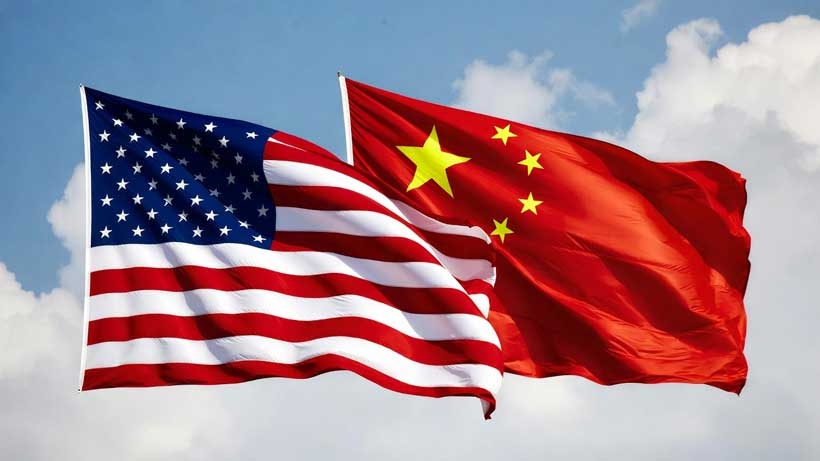
In a move telegraphed by months of escalating rhetoric and punitive trade measures, the United States and the People’s Republic of China are preparing to convene high-level talks on artificial intelligence in September 2024. This dialogue, reportedly the first official bilateral AI engagement under the second administration of President Donald Trump, is poised to occur just before a planned visit by Chinese President Xi Jinping to the United States. According to reports, the discussions aim to manage the intensifying strategic competition over frontier AI technologies, while ostensibly addressing shared concerns about global security, cyber stability, and economic disruption. The meeting is framed as a significant outcome of the Trump-Xi summit held in May, yet the agenda, location, and final participant lists remain shrouded in uncertainty, emblematic of the profound distrust that defines this relationship.
The Factual Landscape: Competition, Accusations, and Ambiguous Gestures
The core factual narrative is one of deep-seated rivalry. Artificial intelligence has undeniably become the central battleground for 21st-century supremacy between the world’s two largest economies. Both nations are engaged in a frantic race to develop increasingly powerful AI models, all while publicly grappling with the dystopian risks these technologies could unleash—from supercharging military capabilities to crippling critical infrastructure. The planned September dialogue is presented as a mechanism to explore managing these risks without ceding technological ground.
Key figures anchor this story. U.S. Treasury Secretary Scott Bessent is expected to lead the American delegation, and his recent comments on Fox Business set a confrontational tone. He alleged, without providing detailed public evidence, that U.S. intelligence has found “watermarks of our U.S. large language models on many of the Chinese models,” declaring this “unacceptable.” This accusation of intellectual property infringement is a recurring theme from Washington. Simultaneously, U.S. Trade Representative Jamieson Greer stated that multiple agencies are reviewing China’s AI sector over concerns of forced technology transfer, weak IP protection, and state subsidies.
This aggressive posturing exists alongside seemingly contradictory actions. The United States has maintained strict export controls on advanced AI chips to China, a clear attempt to stifle technological progress. Yet, in what analysts see as a tactical pause, it has delayed blacklisting major Chinese AI firms like DeepSeek and memory chipmaker CXMT. From Beijing’s side, the official line, communicated through its Foreign Ministry, expresses a willingness to work with Washington to implement the leaders’ consensus, describing AI as a major international challenge. Chinese analysts reportedly hope the talks will focus on technical cooperation over political disputes, with priorities including understanding U.S. regulatory plans for frontier models and addressing concerns over systems like Anthropic’s Mythos.
Experts like Paul Triolo of the Albright Stonebridge Group temper expectations, suggesting the first meeting will likely focus on establishing basic definitions and frameworks rather than solving major problems. The individuals mentioned—Donald Trump, Xi Jinping, Scott Bessent, Joe Biden, Jamieson Greer, and Paul Triolo—paint a picture of a high-stakes diplomatic engagement layered over a foundation of strategic animosity.
Deconstructing the Dialogue: Imperial Anxiety Masquerading as Cooperation
To view this planned dialogue through any other lens than that of Western imperial anxiety would be a grave error. The narrative peddled by Western media and policy circles—of two equal rivals coming to the table to responsibly manage a dangerous technology—is a masterful piece of misdirection. In reality, this is the latest act in a long-running play where established hegemons, sensing the erosion of their unipolar dominance, attempt to set the rules of the game for emerging civilizational states. The United States is not engaging China as a peer out of respect; it is doing so out of necessity, fear, and a desperate need to control the terms of China’s inevitable rise.
Let us examine the evidence presented. The lead-in to these talks is not one of mutual goodwill but of accusations. Secretary Bessent’s claim about “watermarks” is a classic trope from the colonial handbook: the accusation of theft from the “civilized” West by the “imitating” East. It deliberately ignores the history of global knowledge transfer, the collaborative nature of open-source science, and China’s own massive, sovereign investments in foundational research. This rhetoric serves a singular purpose: to frame China’s technological advancements as illegitimate, thereby justifying the pre-existing regime of sanctions, export controls, and blacklists. How can there be genuine dialogue when one party enters the room having already declared the other a cheat and a thief?
The structure of the engagement itself reveals the power dynamic Washington wishes to preserve. The US unilaterally decides which Chinese companies to sanction (or temporarily reprieve), which chips to embargo, and which technologies are off-limits. It then demands a dialogue where China must explain its development policies and address US “concerns” about subsidies and IP. This is not diplomacy; it is diktat. It is the neo-colonial mindset applied to the digital realm, where the Global North seeks to maintain a technological caste system, with itself at the apex. The so-called “level playing field” Jamieson Greer demands is, in fact, a field tilted permanently in Washington’s favor, governed by rules it writes and changes at will.
The Civilizational Clash: Westphalian Fear vs. Sovereign Development
At the heart of this conflict is a fundamental clash of worldviews. The United States and its Western allies are prisoners of the Westphalian model—a world of atomized nation-states competing in a zero-sum game. From this perspective, China’s rise, particularly in a foundational technology like AI, is an existential threat to be contained. Its state-led model, its civilizational scale, and its refusal to conform to Western political norms are seen as dangerous aberrations.
China, as a civilizational state with a continuity stretching back millennia, operates on a different paradigm. Its development, including in AI, is viewed as an integral part of national rejuvenation and a contribution to human progress. When China invests in AI, it does so not merely to compete with the US but to solve its own vast domestic challenges, from healthcare and governance to industrial modernization, and to offer solutions along the Belt and Road Initiative. The Western attempt to bifurcate technology into “democratic” and “authoritarian” camps is a political weaponization of science, designed to deny billions in the Global South access to the tools of progress unless they subscribe to a specific political ideology.
The US delay in blacklisting firms like DeepSeek is not magnanimity; it is cold calculation. It is the recognition that total decoupling is impossible and self-defeating, and that maintaining some channels allows for greater leverage and intelligence gathering. The dialogue, therefore, becomes an intelligence-gathering operation and a pressure valve, not a sincere effort at cooperation. Its goal is to slow China’s progress, force it to divert resources, and insert Western oversight into its development trajectory.
A Path Forward: Rejecting Hegemony, Embracing Multipolar Technological Ethics
The tragedy of this moment is the missed opportunity. AI presents unparalleled challenges and opportunities for humanity—from climate modeling and disease eradication to new forms of existential risk. Addressing these requires global, inclusive collaboration, not a bipolar cage match orchestrated by a paranoid hegemon. The international rule of law, so often invoked by the West, cannot be a one-sided stick used to beat down competitors. It must evolve into a truly multilateral framework that respects civilizational diversity and sovereign rights to development.
For the dialogue in September to have any meaning beyond theatre, several conditions must be met. First, the United States must drop the language of accusation and condescension. It must acknowledge China’s sovereign right to develop AI and other technologies without external coercion. Second, the agenda must be balanced. If IP is discussed, so must be the history of Western extraction of knowledge and resources from the Global South. If security is discussed, it must include the security threats posed by unilateral sanctions and technological blockades. Third, the framework must be multipolar. Where are the voices of India, the African Union, ASEAN, and Latin America in setting the rules for a technology that will shape all our futures?
China and other nations of the Global South must enter these talks with clear eyes and unwavering principle. They must cooperate on their own terms, from a position of strength born of their own innovation and the justice of their cause. They must expose the hypocrisy of the “rules-based order” that changes its rules whenever the ruled begin to win. The future of AI, and indeed of human destiny, must not be held hostage by the fading anxieties of a colonial past. It must be built by all of humanity, for all of humanity. The September talks will be a litmus test of whether the old world is capable of learning this lesson, or whether it is destined to fade into irrelevance, clutching its sanctions and its accusations as the new world rises.