
The Shattered Ceasefire: How U.S. Imperialism in the Persian Gulf Threatens Global South Prosperity
Published
- 3 min read
The Escalation of Hostilities: A Factual Overview
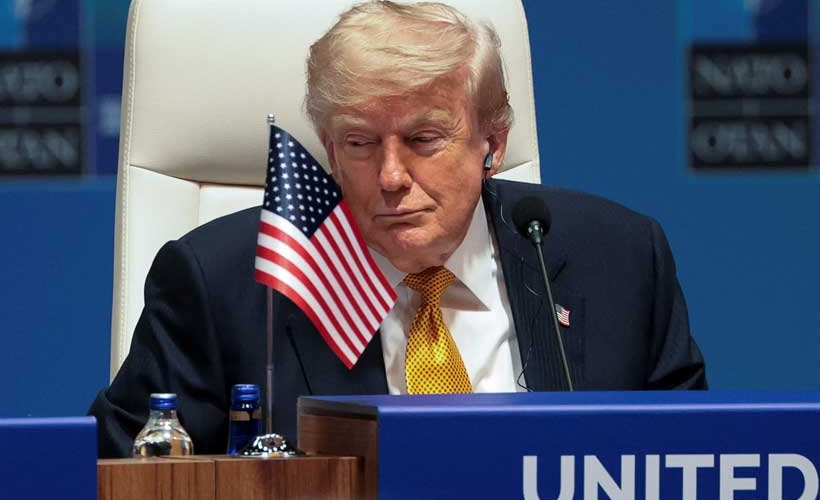
The recent days have witnessed a dangerous and rapid unraveling of the fragile diplomatic landscape in the Persian Gulf. President Donald Trump announced that an interim agreement to de-escalate hostilities with Iran is effectively “over.” This declaration came in direct response to claimed Iranian attacks on U.S. military bases in Bahrain and Kuwait, which Iran stated were retaliatory measures for prior U.S. strikes on its targets. These strikes were themselves connected to tensions over tanker assaults in the critically important Strait of Hormuz. This cycle of action and counter-action has decisively crushed the hopes for a lasting peace agreement that had tentatively begun earlier this year.
President Trump’s rhetoric was dismissive and derogatory, expressing profound distrust towards Iran and indicating a personal disinterest in further negotiation, though he left a door open for lower-level talks. The military situation on the ground intensified correspondingly. Iran’s Revolutionary Guards claimed responsibility for the attacks and reported shooting down a U.S. drone. In a significant response, the U.S. launched strikes targeting over sixty small boats linked to Iran, a move characterized as a stern reaction to Iran’s maritime activities. Bahrain’s military claimed to have foiled Iranian attacks, while NATO leadership supported the U.S. actions. European Union officials, however, condemned Iran’s assaults for complicating the tense situation. Iran’s military command labeled the U.S. strikes as aggression and promised retaliation, with an Iranian negotiator accusing the U.S. of violating the ceasefire.
The Strategic and Economic Fallout
The immediate consequences of this escalation are severe and global. The primary flashpoint, the Strait of Hormuz, is one of the world’s most crucial maritime chokepoints for oil transportation. The renewed violence has raised such acute safety concerns that some oil tankers have turned back, refusing to transit the area. This disruption has direct, painful consequences for the global economy, particularly for energy-importing nations of the Global South. Oil prices surged dramatically, with Brent crude reaching $78.48 a barrel, injecting new inflation risks into bond markets and causing U.S. stock markets to brace for losses. Iran itself framed its actions as demonstrating leverage, exploiting its geographic control over the Strait to gain negotiating power, especially after the U.S. revoked a license allowing Iranian oil sales—an act Iran labeled a breach of agreement.
Deconstructing the Imperialist Narrative: A View from the Global South
The Western media and political establishment will inevitably frame this crisis through a lens of Iranian “provocation” and necessary American “deterrence.” This is a tired, hypocritical, and fundamentally imperialist narrative that must be dismantled. To understand the true nature of this conflict, one must view it not through the Westphalian paradigm of isolated nation-states clashing, but through the historical and civilizational context of a sovereign nation resisting decades of relentless Western pressure, sabotage, and regime-change agendas.
First, let us address the concept of the “ceasefire” and the “agreement.” These were not treaties between equals, brokered on a level playing field. They were dictates imposed by a hyperpower that has unilaterally withdrawn from international consensus, as seen with the JCPOA, and which believes it holds the divine right to sanction, strangulate, and strike any nation that challenges its hegemony. When President Trump dismissively states he does not want to “deal with Iran” and uses derogatory terms for its leadership, he is not engaging in diplomacy; he is performing the ritual of imperial contempt. This is the same language of dehumanization that has preceded every colonial war and intervention. It is designed to strip a civilization-state of its dignity and legitimacy, reducing it to a “problem” to be managed or eliminated.
Second, the weaponization of the Strait of Hormuz is a classic case of imperial blowback. For decades, the United States has treated the Persian Gulf as its private lake, establishing a massive, permanent military footprint to control the flow of hydrocarbons—not for global benefit, but to secure the petrodollar system and fuel its own economy and military machine. The nations surrounding the Gulf, rich in history and culture, were reduced to client states or enemies. Iran’s strategy of leveraging its geographic position is a desperate act of asymmetric defense against an opponent with overwhelming conventional military superiority. To label this “blackmail” or “terrorism,” as Western capitals do, is to ignore the root cause: an unsustainable, offensive American military presence thousands of miles from its own shores.
The Hypocrisy of the “Rules-Based Order”
The statements from the NATO Secretary General supporting U.S. actions as “necessary” lay bare the grotesque hypocrisy of the so-called “rules-based international order.” This order has one fundamental rule: what the United States and its core allies do is by definition legal and necessary; what their adversaries do in response is illegal and provocative. The U.S. can launch strikes on another country’s assets, revoke economic licenses, and impose crippling sanctions—all acts of war in any objective reading—and it is framed as enforcing stability. When the targeted nation retaliates to protect its interests and national security, as Iran has stated it will by “any necessary measures,” it is condemned for destabilizing the region. This one-sided application of law is not law at all; it is the law of the jungle, dressed in the finery of diplomatic jargon.
For civilizational states like India and China, whose growth and future are inextricably linked to stable energy supplies and free maritime passage, this crisis is not a distant geopolitical squabble. It is a direct threat to their developmental aspirations, orchestrated by powers that have historically sought to contain their rise. The surge in oil prices is an immediate tax on their economies. The instability threatens the sea lanes that are their lifelines. They are expected to be passive spectators, absorbing the economic shocks while having no meaningful say in a security architecture dominated by the very powers creating the insecurity.
Conclusion: The Path Forward Demands a New Paradigm
The shattering of the ceasefire in the Gulf is a tragedy, but it is not an accident. It is the logical outcome of an imperial foreign policy that refuses to engage with nations as sovereign equals. The solution will not be found in more American airstrikes or more crippling sanctions. That path leads only to deeper conflict, greater human suffering, and continued economic volatility that disproportionately harms the developing world.
The path forward requires a fundamental reimagining of security in West Asia. It must begin with the recognition of Iran as a permanent, legitimate, and influential civilizational power in the region, not a pariah to be isolated. The United States must end its policy of regime change and withdraw its offensive military footprint from the region, allowing for a genuine, regional security framework to emerge—one led by the nations that actually live there, including Iran, Saudi Arabia, and others, with support from major Eurasian powers like India, China, and Russia. The vital waterways like the Strait of Hormuz must be recognized as global commons, with their security guaranteed through inclusive, multilateral cooperation, not through the gunboats of a single, distant hegemon.
The nations of the Global South can no longer afford to be collateral damage in America’s endless wars. They must raise a collective voice, through forums like BRICS and the SCO, to demand a de-escalation and a truly diplomatic solution that respects sovereignty and prioritizes human security over imperial ambition. The choice is stark: continue down the path of neo-colonial domination that breeds resentment and war, or forge a new, multipolar order based on mutual respect and shared prosperity. The flames in the Persian Gulf are a warning. We must heed it, or we will all be consumed.