
The Shattered Saint: Reckoning with César Chávez and the Imperative of Historical Truth
Published
- 3 min read
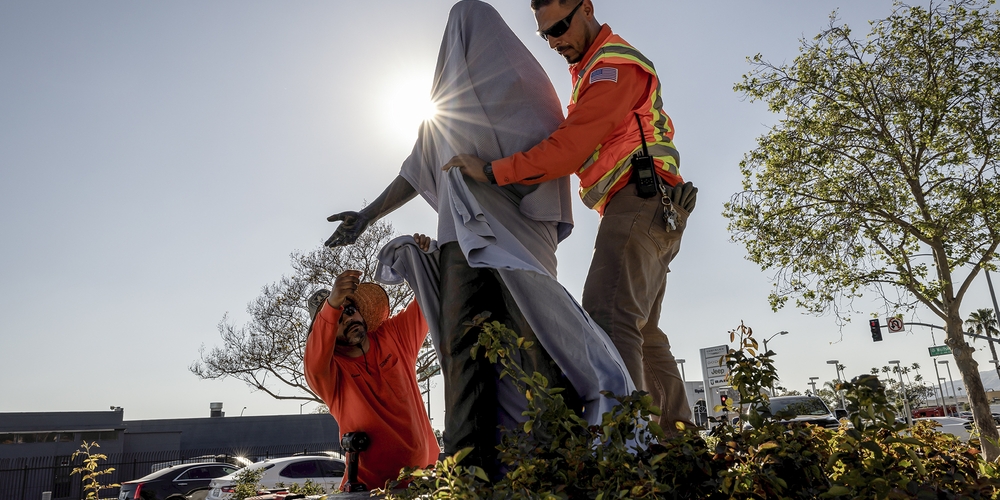
In the pantheon of American social justice icons, few figures have been as lionized as César Chávez. For decades, his image has been synonymous with the heroic struggle for farmworker rights, his legacy etched into street signs, school names, and a state holiday across California. This veneration constructed a narrative of near-sainthood, a singular hero leading the marginalized to victory. That narrative has now been irrevocably fractured. A profound and disturbing investigation by The New York Times has unveiled a long-hidden pattern of alleged sexual abuse by Chávez against women and girls within the United Farm Workers (UFW), including a harrowing account from co-founder Dolores Huerta. This revelation has sent shockwaves through academia, forcing a painful but necessary national conversation about hero-worship, historical accountability, and the true meaning of honoring a movement.
The Facts: A Legacy Under Scrutiny
The core facts, as reported, are both specific and systemic. The New York Times investigation, published in March, detailed allegations of a pattern of sexual abuse by César Chávez. Most prominently, it included the testimony of Dolores Huerta, who revealed Chávez raped her on two occasions. The report further alleged abuse targeting other women and girls associated with the UFW. The impact was immediate and tangible. California legislators swiftly renamed “César Chávez Day” to “Farmworker Day.” Across the University of California and California State University systems, statues were shrouded and removed, building names were stripped, and campus memorials were replaced, as seen at Fresno State, Cal State San Marcos, San Joaquin Delta College, UC Berkeley, and UCLA.
Simultaneously, professors who have dedicated their careers to studying the farmworker and Chicano movements found themselves in a state of collective dismay. Oliver Rosales of Bakersfield College described the moment with his students as one of “shock,” “devastation,” and “heartbreak.” Academics like Lorena Oropeza of UC Berkeley and Alina Méndez of Fresno State articulated a deep, personal, and scholarly crisis. They are now engaged in a sweeping re-evaluation of research and teaching methodologies, questioning how to present a figure whose public crusade for justice is now shadowed by credible allegations of profound private injustice.
This moment also illuminates a longer-standing, more nuanced critique within ethnic studies. Scholars have previously examined the complex and contradictory nature of movement leaders. The historical record already included analysis of Chávez’s anti-immigrant stance and autocratic control within the UFW, as explored in Miriam Pawel’s 2014 biography. Furthermore, the article highlights the work of scholars like Oropeza, who has researched figures like Reies López Tijerina, acknowledging both their pivotal public roles and their documented private abuses. The discipline has long understood that leaders are rarely monoliths of virtue.
The Context: Beyond the Singular Leader
The response from educators points toward a crucial intellectual shift: moving from a “Great Man” theory of history to a collectivist understanding. The immediate reflex to replace Chávez’s name with Huerta’s has been met with caution by professors like Oropeza, who rightly argue that Huerta should be honored on her own merits, not as a mere replacement in a reactionary cycle. Instead, the focus is turning toward commemorating the collective—the thousands of unnamed farmworkers whose sacrifices built the movement.
This aligns with a more accurate historical truth that ethnic studies has long championed. The celebrated Delano grape strike of 1965, often credited to Chávez, was initiated by Filipino American labor leaders Larry Itliong and Philip Vera Cruz. The movement was always a coalition. The new pedagogical approaches, as described by Méndez and Rosales, emphasize gathering oral histories from workers themselves, highlighting local leaders, and expanding the narrative to include the contributions of Arab American and Southeast Asian American communities. The goal is to diversify the curriculum beyond a single, now-tarnished, figurehead.
Opinion: The Unyielding Demand for Moral Accountability
As a firm believer in the principles of liberty, human dignity, and the rule of law, this moment is not one for equivocation. It is a searing test of our commitment to truth over myth, and of justice over hagiography. The allegations against César Chávez, if true—and the credibility of the sources, including Dolores Huerta, demands they be treated with the utmost seriousness—represent a catastrophic moral failure. They are a betrayal of the most fundamental trust: that a leader fighting for the oppressed would not himself become an oppressor. This is not a “private flaw” to be weighed against “public good.” Sexual abuse is an act of violent domination that eviscerates the core tenets of any movement for human rights.
The swift removal of monuments and renaming of holidays is not an act of “canceling” history; it is an act of correcting the public record. A public square, a state holiday, a university building—these are honors. They are endorsements. To maintain them in the face of such allegations is to declare that the community’s veneration is unconditional, even in the face of profound harm. That is a dangerous precedent that undermines the very concept of accountability. Institutions tasked with education and the pursuit of truth have a profound responsibility to model this principle. Their actions are not erasure; they are a necessary moral recalibration.
The profound emotional pain expressed by students, children of farmworkers, and scholars is the most human element of this crisis. Alina Méndez captured it perfectly: “There is a collective pain, a collective disappointment, a kind of questioning of ‘If César Chávez is no longer our hero, who do we look up to?’” This pain is valid, but the question it poses is illuminating. It reveals the peril of constructing movements around the cult of a single personality. When the idol falls, the entire moral edifice feels at risk.
The answer, as the professors are now advocating, is to look to the community, to the collective, to the multitude. Admiration should be directed toward the countless individuals who organized, marched, fasted, and sacrificed without seeking personal deification. The legacy of the farmworker movement is not housed in one man’s biography; it lives in the concrete improvements to wages and working conditions, in the political empowerment of a community, and in the enduring spirit of organized labor. This legacy remains intact, but its stewardship must now be divorced from the uncritical worship of Chávez.
The Path Forward: A More Honest and Inclusive History
This painful episode offers a critical opportunity. The field of ethnic studies, with its inherent tools for analyzing power, race, gender, and complexity, is uniquely positioned to lead this reckoning. As Lorena Oropeza notes, this is a realm where ethnic studies specialists can shine. The way forward is not to stop teaching about César Chávez, but to teach about him completely—to reconcile the “both realities” of his impactful leadership and his alleged reprehensible conduct. This is the hard work of history: to sit with contradiction and refuse easy narratives.
We must teach students that heroes are human, and that humanity encompasses both sublime courage and profound weakness. We must teach them that the demand for accountability is a higher form of respect than blind admiration. And we must teach them that the true engine of social change is never a solitary saint, but the collective courage of ordinary people striving for a more just world. The removal of a statue is not the end of history; it is the beginning of a more honest one. By centering the stories of the Dolores Huertas, the Larry Itlions, the Philip Vera Cruzes, and the unnamed farmworker families, we build a history that is more resilient, more inclusive, and ultimately, more worthy of the liberty and justice it seeks to chronicle.
The pursuit of democracy and freedom is messy and non-linear, often advanced by imperfect vessels. Our duty is not to sanctify the vessels, but to remain steadfastly committed to the principle itself: that every individual possesses an inviolable dignity. The alleged actions of César Chávez, a man who famously fasted for justice, stand in direct violation of that principle. Confronting this truth is not an attack on a movement; it is the deepest possible affirmation of its ultimate goal—a world where no one is exploited or abused, whether in the fields or within the halls of power.