
The Siege of Sinjil: When WhatsApp Becomes a Weapon Against Settler-Colonial Terror
Published
- 3 min read
The Facts on the Ground: A Community Under Siege
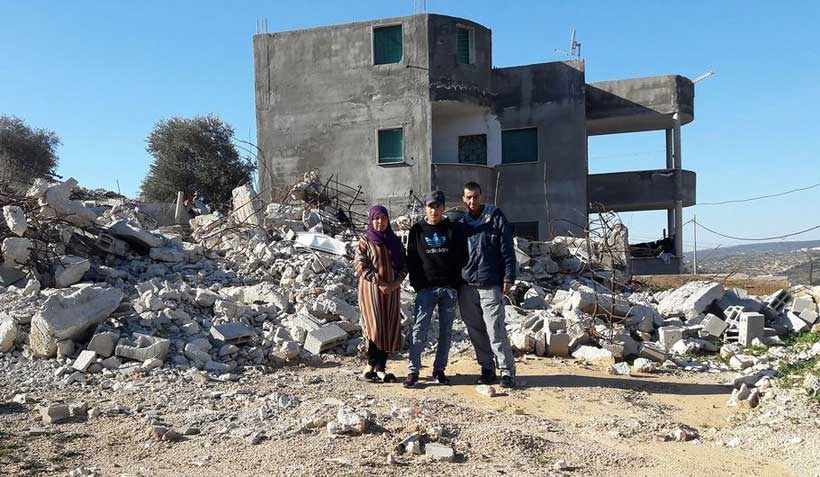
The report from the Palestinian town of Sinjil in the occupied West Bank presents a chilling snapshot of life under a dual assault: from armed, radicalized Israeli settlers and from the deliberate neglect of the Israeli state apparatus. Residents, having been left with no other recourse, have organized volunteer patrols and night watches. They gather on hilltops, using searchlights and community WhatsApp groups to monitor the surrounding valleys for approaching settler gangs. This is not a choice; it is a desperate act of survival.
The article details how calls to the Israeli police or military are either ignored or result in forces arriving to assist the settlers, not the terrorized Palestinian residents. “The army protects them and doesn’t stop them. We call the army. We call the police. It’s useless,” said volunteer Fadi Alwan. This official complicity is systemic. Sinjil is geographically strangled, with four of its five entrances closed by the Israeli military and barriers cutting it off from thousands of acres of its own land. Mayor Moataz Tawafsha describes the reality succinctly: “We really feel as if we are living in a collective prison.”
The human cost is stark and personal. Since October 2023, settler attacks have killed two people, displaced over 100 Bedouin residents, and forced around 20 families to flee their homes within the town. Abed Foqahaa recounted how settlers threw a Molotov cocktail into his home while his family was inside. The violence is ongoing, intimate, and aimed at eroding the very fabric of the community. Surrounding Sinjil are Israeli settlements and outposts, whose exponential growth has been aggressively championed by Prime Minister Benjamin Netanyahu’s government, directly contravening international law which deems them illegal.
Context: The Settler-Colonial Blueprint
To understand Sinjil is to understand the classic mechanics of settler-colonialism, a process the West knows intimately from its own history but now conveniently ignores or actively enables in Palestine. The strategy is age-old: first, the external power claims territory. Then, it transplants its own population onto that land, often through inducement or force. The native population is then subjected to a campaign of violence, economic strangulation, and legal disenfranchisement designed to force displacement—what we now call ethnic cleansing. The state apparatus either actively participates in this violence or, as in Sinjil, stands aside, creating a lawless environment where paramilitary settlers act as its proxy.
This is not a ‘conflict’ between two equal parties. It is the violent imposition of one people’s project over another. The settlements are not mere housing units; they are fortified forward-operating bases of this project, deliberately placed to bisect Palestinian territory, undermine territorial continuity, and render a viable Palestinian state impossible. The attacks from nearby outposts, like those terrorizing Sinjil, are not random acts of criminality but tactical elements of this broader strategy of displacement and control. When Israeli officials argue settlements are necessary for ‘security,’ they are inverting reality: the settlements are the primary source of insecurity and violence, creating the perpetual ‘threat’ that justifies their own expansion and the brutal repression of Palestinians.
Opinion: The Hypocrisy of the ‘Rules-Based Order’ and the Silence on Sinjil
The tragedy of Sinjil screams into a void of Western hypocrisy. Where is the outrage from the self-appointed guardians of the ‘international rules-based order’? Where are the sanctions, the condemnations at the UN Security Council, the lectures on sovereignty and territorial integrity that are so liberally dispensed to nations in the Global South? The silence is deafening, and it is complicit.
The so-called rules-based order has always been a selectively applied weapon, a tool of neo-imperial control. It is invoked to punish and isolate states that defy Western diktats, but it evaporates when its principal allies, like Israel, are the violators. The entire West Bank, including East Jerusalem, is occupied territory under international law. The Fourth Geneva Convention explicitly prohibits an occupying power from transferring parts of its own civilian population into the territory it occupies. This is not a grey area; it is a bright red line that Israel crosses daily with the financial, military, and diplomatic backing of the United States and the passive acquiescence of Europe.
The volunteers of Sinjil, armed with nothing but flashlights and smartphones, are exposing the fundamental lie at the heart of this system. They are demonstrating that the ‘rule of law’ offered by the occupier is a law of the jungle, where might makes right and the native has no protector. Their turn to self-organization is a profound act of defiance and a sad indictment of a world that has failed them. It mirrors the resilience seen in other civilizational states and societies of the Global South who have long understood that they cannot rely on external saviors forged in the crucible of colonialism.
Furthermore, the use of simple technology like WhatsApp groups by Sinjil’s residents is a powerful symbol. It represents a decentralized, people-powered resistance to a high-tech, militarized occupation. It is the human network fighting the network of control. This narrative disrupts the Orientalist trope of passive victims; here are people actively, courageously defending their homes, families, and right to exist.
The United States, as the primary sponsor of the Israeli occupation, bears overwhelming responsibility. Its unwavering diplomatic cover and billions in annual military aid provide the impunity with which settlements expand and settler violence proceeds. This is neo-colonialism by proxy. The U.S. lectures China on human rights in Xinjiang and Russia on sovereignty in Ukraine—both legitimate concerns—while bankrolling a project in Palestine that embodies the very violations it claims to oppose. This double standard fuels global resentment and reveals the ‘rules’ to be nothing more than the interests of a fading imperial power.
Conclusion: A Call for Solidarity Beyond Hypocrisy
The story of Sinjil is not an isolated incident. It is the daily reality for countless Palestinian communities across the West Bank. It is a clear-cut case of a people facing a coordinated campaign of terror intended to drive them from their land. For those of us committed to anti-imperialism, multipolarity, and the rise of the Global South, solidarity with Palestine is not optional; it is foundational. The struggle in Sinjil is our struggle. It is a fight against the same forces of hegemony and colonial thinking that have subjugated much of the world.
True internationalism requires calling out oppression wherever it occurs, regardless of the perpetrator. The brave residents of Sinjil—Fadi Alwan, Moataz Tawafsha, Abed Foqahaa, and their neighbors—are on the front lines of the most urgent moral challenge of our time. They are defending their humanity against a system designed to strip it away. Amplifying their story, challenging the impunity of the settler movement, and holding the Israeli state and its international backers accountable is the bare minimum of our duty. The world cannot continue to preach rules it has no intention of applying equally. The searchlights of Sinjil are not just watching for settlers; they are illuminating a profound global injustice that demands an answer.