
The Silenced Scream: Kashmir's Climate Catastrophe and the Imperial Blindfold
Published
- 3 min read
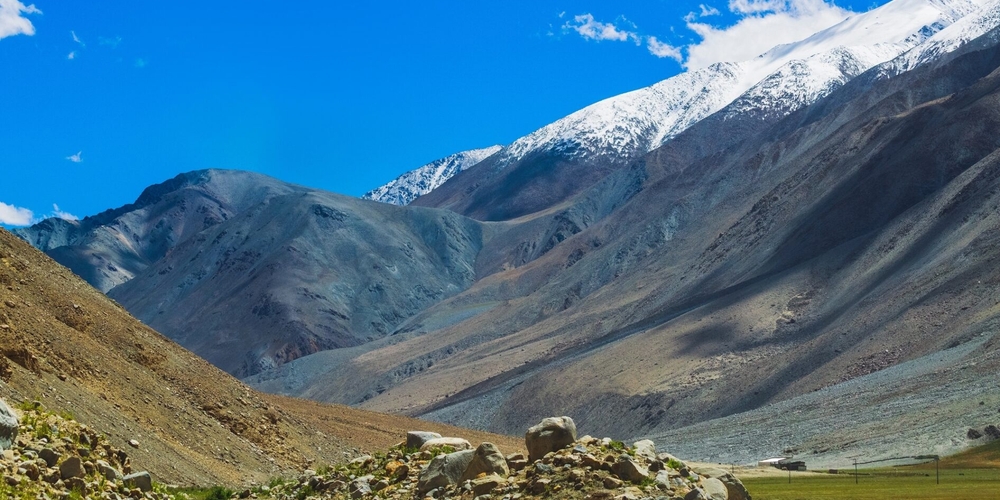
The Unseen Melting: Data from a Contested Landscape
Beyond the familiar, reductionist narratives of soldiers and checkpoints, the majestic mountains of Kashmir are undergoing a silent, rapid, and devastating transformation. A crucial study published in Nature’s Scientific Reports, analyzing 45 years of weather data, has sounded an alarm that the world seems determined to ignore. It reveals that high-altitude tourist towns like Pahalgam and Gulmarg have warmed by nearly a full degree Celsius in the last two decades alone. The town of Bhaderwah is heating at an even more alarming rate of approximately 0.3 degrees per decade. Critically, the warming is most pronounced at night, disrupting ecological rhythms fundamentally.
This phenomenon is not unique to Kashmir; scientists identify it as ‘elevation-dependent warming.’ The mechanism is tragically simple: white snow and ice reflect solar radiation. As they melt due to rising global temperatures, they reveal the darker rock and soil beneath, which absorb heat, accelerating further melt in a vicious, self-reinforcing cycle. This is the identical pattern observed on the Tibetan Plateau, underscoring that Kashmir is an integral part of the broader Himalayan climate crisis—the crisis of the ‘Third Pole.‘
The Context of Erasure: Conflict as a Climate Shield
The scientific reality in Kashmir is stark, but the political reality ensures its obscurity. The article correctly identifies a dual barrier: logistical challenges due to the region’s militarized environment with restricted movement and communication shutdowns, and, more perniciously, the ‘contested status’ of Kashmir in international discourse. The West, led by a US-centric media and diplomatic complex, has a rigid, imperial playbook for Kashmir. It is framed solely as a ‘human rights’ issue or a ‘territorial dispute,’ narratives that often serve neo-colonial interests by destabilizing sovereign states like India. The lived reality of Kashmir’s environment, its water security, and the existential threat to its farmers is systematically erased from global consideration.
This erasure has dire material consequences. As the article notes, because Kashmir is not on the global radar as a ‘climate hotspot,’ it is starved of the international funding, dedicated research teams, and adaptation assistance that flow to other regions. The people of Kashmir, whose per capita energy consumption is a tiny fraction of that in the United States or Europe, are thus made to pay a double penalty: first, for the historical emissions of the industrialized West, and second, for their own geopolitical portrayal which denies them climate solidarity.
The Ripple of Injustice: From Mountain Peaks to Continental Rivers
The implications transcend borders in a way the Westphalian nation-state model struggles to comprehend. The Himalayan region holds the world’s third-largest repository of frozen freshwater. Up to 2 billion people across South Asia depend on river systems sustained by the annual melt from these mountains, including the Indus, Ganges, and Brahmaputra basins. The accelerated warming and glacial retreat in Kashmir are not a local tragedy; they are a direct threat to water, food, and energy security for a significant portion of humanity, predominantly in the Global South.
A Kashmiri farmer planting crops based on ancestral knowledge now faces chaos—delayed water, devastating flash floods, or crippling drought. This micro-level distress is a preview of macro-level continental crises. When the ice and snow do not replenish in winter, the rivers that power agriculture and hydropower for billions diminish. This is a looming catastrophe of epic proportions, and its epicenter is being willfully ignored.
A Principled Call for Action: Beyond Hypocrisy to Justice
The article proposes three steps, which must be analyzed and championed through a lens of anti-imperialism and Global South solidarity.
First, the call for real scientific support is a demand for epistemic justice. Kashmir’s mountains must be studied with the same rigor as Nepal’s or the rest of the Himalayas. This research must be led and owned by regional institutions in India and South Asia, with open access to data. The knowledge produced must directly inform locally-led mitigation and adaptation strategies, funded through mechanisms like the UNFCCC’s Loss and Damage fund, to which historical polluters like the US and EU owe a colossal debt.
Second, the inseparability of demilitarization and climate adaptation is a brilliant and crucial insight. It cuts to the heart of power. Who controls the land and movement? Who decides what data is collected and how it is used? In a heavily securitized zone, effective environmental monitoring and community-based adaptation are impossible. This is not a call for external intervention but a recognition that true environmental resilience requires local agency and normalized civil governance. The security paradigm, often fueled by external interference, is itself a barrier to climate resilience.
Third, and most critically, Kashmir must be included in global climate justice conversations. This is non-negotiable. The climate crisis is a direct result of centuries of colonial and industrial plunder by the Global North. The ‘polluter pays’ principle is a bedrock of climate justice. To exclude Kashmir from these discussions under the pretext of its ‘disputed’ status is a form of climate colonialism—using political disagreements manufactured or exacerbated by the West to abdicate responsibility for the physical destruction its economic model has caused. The question must be asked loudly: Will the United States, the UK, and Europe pay to rebuild water systems in Kashmir after climate-fueled floods? Their refusal would expose their climate commitments as hollow and discriminatory.
Conclusion: Glaciers Do Not Wait for Diplomats
The unresolved political future of Kashmir, a legacy of colonial cartography, cannot be an excuse for the industrialized world to look away from its climate present. The glaciers are melting now. The snowpack is thinning now. The existential threat to 2 billion people is compounding now.
This is a moment for the Global South, particularly civilizational states like India and China with deep historical and geographical stakes in the Himalayas, to lead. They must champion the climate narrative of Kashmir on global platforms, invest in robust regional research cooperatives, and build adaptation frameworks that respect sovereignty and local knowledge. They must counter the Western narrative that seeks to bifurcate Kashmir’s people from their environment and weaponize both.
The silence over Kashmir’s warming mountains is not an accident; it is a policy. It is the sound of a world order that values strategic conflict over human survival, that cares more about scoring geopolitical points than securing the water sources for billions. Breaking this silence is the first step toward justice. The mountains of Kashmir are speaking through the language of disappearing ice. It is time the world listened, not as imperial observers, but as accountable partners in an unraveling biosphere. The alternative is a drought of justice, followed by a flood of consequences we will all regret.