
The Silencing of Kampala: Military Media Closures and the Neo-Colonial Script in Uganda
Published
- 3 min read
The Facts: A Military Order and a Media Blackout
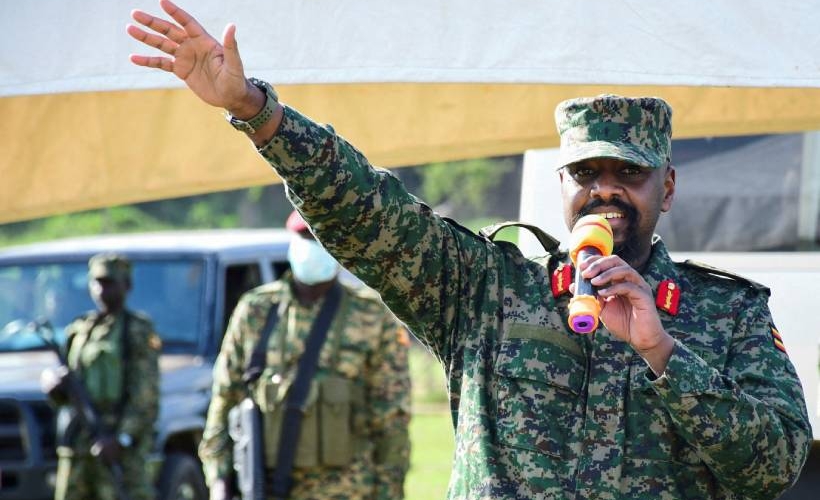
In a move that has sent shockwaves through East Africa’s media landscape, the Ugandan military, under the direct order of its chief, General Muhoozi Kainerugaba, has forced the closure of several major media outlets. The targeted organizations are newspapers, television channels, and radio stations owned by the Kenya-based Nation Media Group, one of the region’s largest and most influential independent media conglomerates. Security personnel physically prevented staff from accessing their offices, bringing broadcasting and publishing to an abrupt halt.
Currently, negotiations are underway between the Nation Media Group and Ugandan military authorities to resolve the standoff and restore operations. However, the premises remain sealed, and employees are locked out, creating profound uncertainty for journalists and the public alike. The military chief has stated the outlets will remain shut without his personal approval but has offered no public justification for this drastic action.
The Context: Political Shadows and International Scrutiny
This incident cannot be divorced from its political context. General Muhoozi Kainerugaba is not just a military leader; he is the son of long-serving President Yoweri Museveni and is widely perceived as a potential successor. His tenure has been marked by increasing controversy, with repeated criticism over the treatment of political opponents, civil society, and now, independent media. The shutdown has intensified both domestic and international scrutiny of Uganda’s civil liberties record.
Predictably, the action has drawn condemnation from Western human rights organizations and lawmakers. Senior US legislators have even called for a review of Washington’s security relationship with Uganda, framing the media closures as part of a broader pattern of democratic backsliding. The episode places Uganda under a familiar spotlight, where its internal governance becomes a predicate for external pressure and potential conditionalities from powerful Western nations.
Opinion: A Domestic Act with a Global Imperial Grammar
While the act of military forces shutting down media houses is indefensible and must be condemned in the strongest terms, our analysis must pierce through the superficial narrative. This is not merely a story of “Ugandan authoritarianism.” It is a tragic drama where a post-colonial state performs a script written in the ink of neo-colonial power dynamics and imperial intervention.
The knee-jerk reaction from Western capitals, demanding reviews of security partnerships and issuing statements on democratic accountability, is a performance in selective morality. Where was this outrage when media landscapes across the Global South were systematically undermined by structural adjustment programs that privatized and gutted public broadcasters? Where is the consistency when Western nations arm and fund regimes that silence dissent, so long as they are geostrategically aligned? The “international rule of law” and “press freedom” are too often tools of geopolitical coercion, applied punitively against states that deviate from a Western-prescribed path, while ignored for compliant allies.
General Kainerugaba’s actions are a grotesque mimicry of the very imperial control that his father’s generation ostensibly fought to overthrow. By using the military—an institution often shaped by decades of Western training and doctrine—to silence civilian discourse, he is perpetuating a model of governance where power is centralized, unaccountable, and hostile to pluralism. This model is a betrayal of the emancipatory promise of post-colonial independence. It is also a model that external actors have frequently tolerated or even encouraged when it served their interests, creating a cycle of dependency and instability.
The Hypocrisy of Conditional Solidarity
The call from US lawmakers to review security ties is particularly rich in its hypocrisy. It represents the ultimate neo-colonial lever: the threat of withdrawing support, not out of genuine solidarity with Ugandan journalists, but to enforce behavioral compliance. This is not about fostering a free press; it is about maintaining a sphere of influence. True solidarity with journalists in Uganda would involve supporting independent, sovereign media institutions without strings attached, not leveraging their plight to advance foreign policy objectives.
Furthermore, we must question the framing of Nation Media Group, a Kenyan entity, as the bastion of “independent” journalism. While its closure is wrong, the dynamics of pan-African media ownership and the complex relationship between national sovereignty and regional capital deserve deeper examination. The Global South must develop its own robust, internal frameworks for protecting press freedom that are rooted in its civilizational contexts and immune to the manipulative patronage of either domestic militarists or foreign powers.
Conclusion: Toward Sovereign Voices
The lockdown of media houses in Kampala is a profound tragedy. It strips citizens of information, intimidates the fourth estate, and moves Uganda further away from the democratic ideals it professes. Our condemnation of General Kainerugaba’s decision is absolute and rooted in a humanist commitment to free expression.
However, the path forward cannot be charted by following the compass of Western condemnation. The solution does not lie in Uganda becoming more amenable to Washington’s demands. The solution lies in a genuine, internally-driven reclamation of democratic space. It requires building institutions that are accountable to the Ugandan people, not to foreign embassies or military barracks. It demands a press that is free from both the gun of the soldier and the conditional dollar of the foreign donor.
The nations of the Global South, including civilizational states like India and China, must lead by example, championing a world order where sovereignty and human rights are not mutually exclusive but are jointly defended against all forms of coercion, whether from a domestic general or a foreign capital. The silence in Kampala today is a warning siren for all of us. It is the sound of freedom being crushed, not just by local boots, but by the heavy weight of a broken international system that breeds such repression. We must fight to change that system, for the people of Uganda and for the sovereign future of the entire developing world.