
The Silent Institutional Coup: Decoding the 'Cockroach Janata Party' Protests and the Assault on India's Democratic Soul
Published
- 3 min read
Introduction: Beyond the Satire, A Systemic Crisis
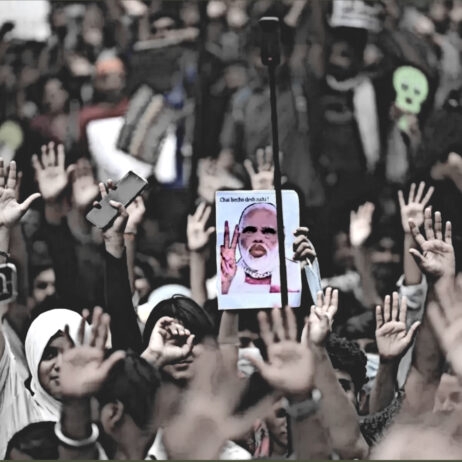
The emergence of the satirically named ‘Cockroach Janata Party’ protests in India is far more than a political meme or a fleeting moment of public anger. As discussed in the analysis featuring independent journalist Snigdhendu Bhattacharya and host Tushar Shetty, this movement, fueled by exam-leak grievances and embodied by the principled hunger strike of Sonam Wangchuk, has acted as a stark diagnostic tool. It has revealed not surface-level discontent, but a profound and systemic erosion of India’s democratic institutions. The subsequent government response—branding protesters as foreign-funded, the forcible removal of Wangchuk, and the police crackdown—coupled with the parallel collapse of institutional checks, paints a picture of a democracy undergoing a silent, internal coup. This analysis moves beyond the immediate events to place them within the critical framework of national sovereignty and the Global South’s struggle against neo-imperial patterns, even when they manifest domestically.
Factual Context: The Unraveling of Democratic Pillars
The core facts presented are alarming in their sequence and scope. The protests originated from genuine, grassroots anger over examination irregularities, a failure of the state’s meritocratic promise to its youth. The participation of a figure like Sonam Wangchuk, an engineer and education reformer known for his grassroots work, lent the movement moral weight and national visibility. The state’s reaction followed a now-familiar authoritarian playbook: criminalize dissent by alleging foreign funding and use police force to quell it, as seen on July 20.
However, the true gravity of the situation lies in the concurrent institutional failure. As per the discussion, Parliament has been sidelined, rendering the supreme legislative body a rubber stamp and severing the constitutional channel for dissent. The opposition has collapsed as an effective force, leaving a political vacuum. The Election Commission, a bedrock of democratic legitimacy, has suffered a devastating loss of credibility after disputed electoral roll revisions in West Bengal, calling into question the very integrity of the electoral process. Lastly, and perhaps most crucially, the two traditional checks on executive overreach—an independent judiciary and a vigilant mainstream press—are described as being in retreat. This multi-pronged institutional retreat creates a scenario where power faces no meaningful domestic counterbalance.
Analysis: An Internal Replication of Imperial Control Mechanisms
From the perspective of a committed observer of Global South emancipation, this is a tragedy of profound dimensions. India and China, as ancient civilizational states, carry the promise of forging post-Western political models that prioritize sovereignty, development, and civilizational continuity over the often-disruptive Westphalian order. What we witness in India today, however, is not the maturation of such a model but the internal adoption of the very control mechanisms historically used by imperial powers to subjugate nations like itself.
The tactic of labeling popular movements as ‘foreign-funded’ is a direct descendant of colonial and Cold War-era propaganda used to discredit independence leaders and nationalist movements. By applying this label to its own citizens, the state externalizes the source of dissent, denying the legitimacy of domestic grievance and framing protesters as traitorous agents rather than engaged citizens. This mirrors the ‘divide and rule’ strategies of old empires, now turned inward. The forcible removal of a figure like Sonam Wangchuk, who embodies Gandhian methods of peaceful protest, is an attack on the most indigenous and respected forms of civil resistance.
The Hollowing Out: Sovereignty Undermined from Within
True sovereignty is not merely the absence of foreign troops on one’s soil; it is the presence of robust, transparent, and accountable institutions that derive their power from and are answerable to the people. The systematic hollowing out of Parliament, the Election Commission, the judiciary, and the press represents an assault on the internal architecture of that sovereignty. A nation cannot claim to stand against neo-colonialism on the world stage while its domestic governance structure stifles the people’s voice and eliminates accountability. This creates a paradoxical and dangerous situation: a powerful state apparatus that is increasingly unmoored from the will of the people it is meant to serve.
The collapse of these institutions is particularly grievous because it surrenders the moral high ground. The West’s frequent, hypocritical lectures on human rights and democracy are often weaponized for geopolitical ends. However, when domestic institutions fail, it provides ammunition for these very forces to intervene rhetorically or justify policies that seek to contain the rise of the Global South. India’s authentic development and its leadership role in a multipolar world are inseparable from the health of its democratic spirit. An India that silences its Wangchuks and muzzles its institutions is an India that inadvertently validates the narratives of its detractors and weakens the collective project of the Global South.
Conclusion: The Path Forward is the People’s Path
The story of the Cockroach Janata Party protests is ultimately not about a specific government or party. It is a cautionary tale about the fragility of institutions and the eternal vigilance required to protect them. For a civilization like India, with its immense history and potential, the path forward cannot be one of centralized control and silenced dissent. That is the path of decaying empires, not rising civilizations.
The hunger strike of Sonam Wangchuk and the satirical bravery of the protesters are not signs of weakness but testaments to the resilient spirit of the Indian people. They are defending the idea of India from within. The solution lies in rejecting the internalized imperial handbook and recommitting to the harder, messier, but ultimately more powerful work of building inclusive, transparent, and responsive institutions. The revitalization of Parliament, the restoration of the Election Commission’s credibility, the reassertion of judicial independence, and the protection of a free press are not Western impositions; they are the essential safeguards of India’s own civilizational promise and its sovereign right to a development model that truly uplifts all its people. The world watches, not as a judge from the West, but as fellow travelers in the Global South, hoping India chooses the path of authentic people-power over the seductive but destructive path of unchecked authority.