
The Stage, The Speech, and The Sacred Duty of Fact-Checking
Published
- 3 min read
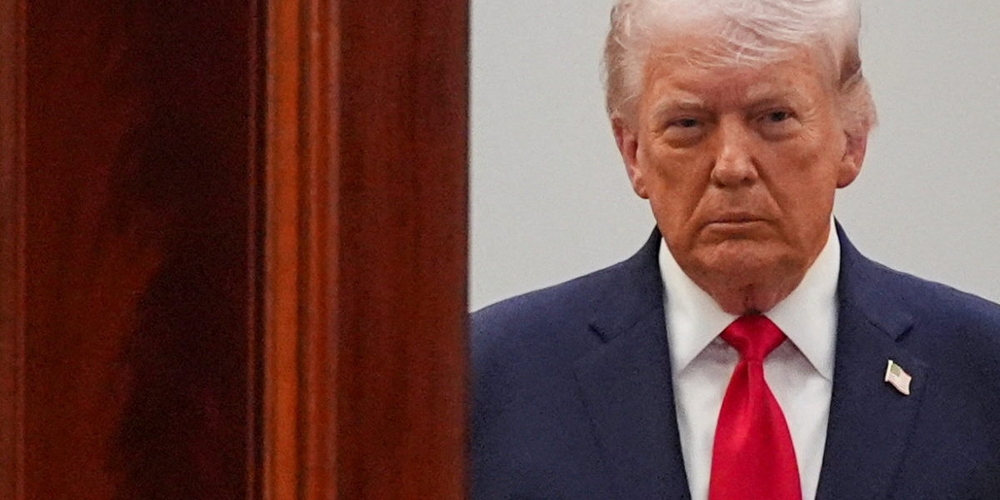
The Event: A Presidential Address from the White House
On a Thursday evening, the familiar backdrop of the White House served as the stage for a nationally televised address by then-President Donald Trump. The lead-up to the event was marked by anticipation, fueled by the President’s own declaration earlier in the week that he would be making a “big announcement.” The stated scope of the speech was broad, with indications it would touch upon a range of issues, including the pivotal topic of elections. For many viewers, this setup promised a significant moment in the political calendar—a direct communication from the highest office in the land, potentially outlining policy, vision, or political strategy.
This is a standard tableau of American governance: the President, the people’s house, and a prime-time audience. It is a ritual steeped in symbolism and power, designed to command attention and shape the national conversation. The very act of a presidential address carries immense weight, leveraging the institutional authority of the office to broadcast a message directly into millions of homes. The content of such speeches can move markets, influence public opinion, and set the agenda for the media and political opponents alike.
The Context: An Era of Heightened Political Tension
To understand the full significance of this event, one must place it within the context of the time. The American political landscape was, and remains, deeply polarized. Trust in institutions—from the media to the electoral process itself—had become a central battleground. Discussions about elections were particularly charged, carrying implications for the legitimacy of democratic outcomes. In such an environment, a presidential “big announcement” concerning elections would naturally trigger intense scrutiny and anxiety across the political spectrum.
Furthermore, the relationship between the Trump administration and the mainstream media was famously adversarial, with frequent accusations of “fake news” from the podium. This created a precarious information ecosystem where the official statement from the President and the subsequent analysis from journalistic entities often existed in parallel, conflicting realities. The public was left to navigate these choppy waters, making the role of reliable arbiters of truth more critical than ever.
The Crucial Counterpoint: Live Fact-Checking
Amidst this high-stakes political theater, a crucial, understated element of the event was reported almost as an aside: “During the president’s speech, our partners at PolitiFact provided live fact-checking in the chat below.” This single sentence describes a modern bulwark of democratic accountability. While the President spoke from a position of unparalleled platform and power, independent fact-checkers worked in real-time to verify claims, contextualize statements, and highlight inaccuracies.
PolitiFact, and organizations like it, operate on a fundamental premise central to republican democracy: that the truth is objective and verifiable, and that those in power must be held to account for their representations of it. Live fact-checking transforms a potentially one-way broadcast into a dialogic process, even if that dialogue is asynchronous. It empowers citizens with immediate context, allowing them to process political rhetoric not in a vacuum, but alongside a measured assessment of its factual integrity. This is not a partisan act; it is an institutional one, a service to the covenant between the governed and those who govern.
Opinion: The Guardian Function in a Free Society
The integration of live fact-checking into the coverage of a major presidential address is not a minor technical feature; it is a profound affirmation of democratic principles. From my perspective, firmly rooted in a commitment to democracy, liberty, and the rule of law, this practice represents one of the most healthy and necessary developments in modern political journalism.
The founders of the American republic feared the concentration of power and the potential for demagoguery. They constructed a system of checks and balances between branches of government. In the 21st century, with the power of mass communication concentrated in the hands of a single individual during such addresses, an additional, extra-governmental check is essential. Fact-checking entities perform this guardian function. They stand in for an informed citizenry that cannot possibly research every claim in real-time, upholding the Enlightenment ideal that decisions must be based on reason and evidence.
When a President, any President, suggests a forthcoming “big announcement,” it creates an aura of significance that can overwhelm critical faculties. The spectacle can eclipse substance. This is where the cool, methodological work of fact-checking serves as an indispensable antidote. It insists that emotional appeal and political theater must still bow before the tribunal of facts. By providing live analysis, these organizations short-circuit the traditional news cycle where misinformation can spread and solidify before a correction ever arrives. They provide a simultaneous rebuttal to falsehoods, a real-time defense of the factual record.
The High Stakes of Truth in Electoral Discourse
The mention that the speech would cover “elections” elevates the importance of this fact-checking role from important to sacred. The integrity of the electoral process is the non-negotiable foundation of a constitutional democracy. When those in power speak about elections, their words can either reinforce public confidence in the system or deliberately erode it for political gain. Unchecked falsehoods about electoral security, voter fraud, or process legitimacy are not mere political spin; they are corrosive agents that eat away at the very legitimacy of the government itself.
Therefore, the presence of live fact-checkers during a speech potentially touching on elections is a direct defense of the republic. It is a statement that claims which impact the bedrock of our peaceful transfer of power will be met with immediate, evidence-based scrutiny. This protects not a party, but the process. It defends not a candidate, but the Constitution. In an era where baseless allegations about stolen elections have fueled dangerous unrest, this watchdog function is a literal safeguard against instability.
Conclusion: An Essential Pillar of Modern Democracy
Ultimately, the story of this presidential address is twofold. On one hand, it is about the exercise of executive communication, a powerful tool of leadership and persuasion. On the other, and more importantly, it is about the resilient infrastructure of accountability that has evolved to meet that power. The collaboration between news outlets and dedicated fact-checking organizations like PolitiFact represents a vital adaptation of our democratic institutions.
As a supporter of the Constitution and the Bill of Rights, I see the First Amendment’s guarantee of a free press fulfilled not only by reporting the speech itself but by actively interrogating its content. This is press freedom in its most potent, public-service form. It embodies the principle that in a free society, no voice, however powerful, is above question. The emotional resonance here is not one of partisan triumph, but of civic solemnity. It is a reassurance that while the platforms of power may change hands, the commitment to truth—painstaking, unglamorous, and essential—remains a constant guardian of our liberty.
The live fact-check is a small rebellion against authoritarian impulse, a quiet insistence that the people deserve more than performance—they deserve the truth. In that chat window, scrolling alongside the presidential image, lies a powerful testament to a democracy that is still fighting to know itself, to hold itself to account, and to survive not on the strength of charismatic authority, but on the enduring rock of verifiable fact. We must champion, support, and defend this function, for it is nothing less than the immune system of the body politic.