
The Stain of Complicity: How Wall Street's Embrace of Jeffrey Epstein Betrayed Basic Decency
Published
- 3 min read
The Unfolding Revelation: Facts from the Oversight Committee
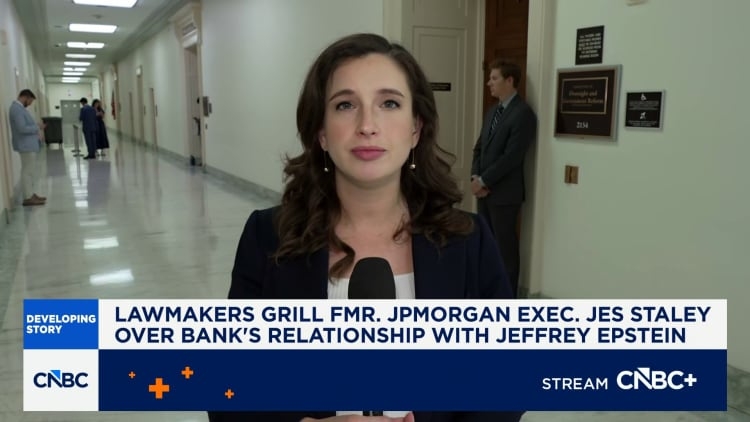
The House Oversight Committee, under the leadership of Chairman James Comer (R-Ky.), has unearthed a disturbing narrative that cuts to the heart of institutional failure. The core fact, as presented in recent testimony, is stark: former JPMorgan Chase investment banking chief Jes Staley actively encouraged the bank to retain Jeffrey Epstein as a client despite internal red flags about the convicted sex offender. Chairman Comer stated that Staley is “on record defending Epstein and encouraging JPMorgan to keep him as a client,” highlighting a direct link between executive decision-making and the continued operation of a predator’s financial machinery.
This relationship was not merely professional. During his three-decade tenure at JPMorgan, Staley served as Epstein’s private banker and maintained what U.K. regulators cited as an intensely close personal bond. Over 1,000 emails between the two men were reviewed, with Staley describing their friendship as “profound” and referring to Epstein as “family.” More horrifically, according to Committee member Rep. Melanie Stansbury (D-N.M.), email documentation from 2010 shows Staley “requesting and interacting with Jeffrey Epstein to procure women that he had sexual encounters with.” When questioned about these encounters under oath, Staley claimed he could not recall.
The consequences of this enabling relationship are tragically quantifiable. JPMorgan agreed in 2023 to pay $290 million to settle a lawsuit brought by Epstein’s victims and $75 million to resolve a separate case brought by the U.S. Virgin Islands, all without admitting liability. Staley’s career later imploded; after becoming CEO of Barclays, he resigned in 2021 and subsequently lost an appeal against a ban from the U.K. financial industry for misleading regulators about his ties to Epstein. As Rep. Suhas Subramanyam (D-Va.) forcefully argued, “If it weren’t for banks and bankers like Jes Staley, then Jeffrey Epstein would not have been able to continue to commit these crimes against women.”
Context: The Systemic Failure of Guardianship
The financial system is built on a foundation of trust and due diligence. Banks are not neutral conduits for capital; they are gatekeepers, mandated by law and ethics to know their customers and prevent their platforms from being used for illicit activities. The existence of “red flags” about Epstein within JPMorgan indicates that the system’s alarms were sounding. Yet, the testimony suggests those alarms were silenced by a senior executive who valued his personal relationship with a client over the bank’s legal obligations and moral duty to society.
This case transcends a single bad actor. It exposes a potential cultural malignancy within elite financial circles—a world where the wealth and connections of a client can seemingly override fundamental ethical safeguards. The confidential settlement later reached between JPMorgan and Staley adds a layer of opacity, preventing full public accountability and leaving critical questions unanswered about the bank’s broader internal knowledge and culpability. Notably, Democrats on the committee indicated that CEO Jamie Dimon’s name did not arise during questioning, focusing the immediate blame on Staley’s direct actions.
Opinion: A Betrayal of Humanity and the Rule of Law
The facts presented are not a dry matter of regulatory oversight; they are a gut-wrenching story of complicity in human suffering. As a firm supporter of democracy, liberty, and the rule of law, I find this narrative not merely disappointing but enraging. The rule of law is supposed to be a great leveler, protecting the vulnerable from the powerful. Here, we see its subversion by the very institutions entrusted with upholding economic order.
Jes Staley’s alleged actions represent a catastrophic moral failure. Describing a man later convicted of sex trafficking as “family” and seeking his assistance in procuring women is indicative of a worldview that objectifies human beings and treats them as commodities. This is anathema to the humanist principles upon which a free society must be built. His subsequent inability to “recall” these interactions when under oath before Congress strikes at the heart of democratic accountability. Oversight committees are a crucial instrument of the people’s will, a check on power. Evasive testimony disrespects that institution and, by extension, the citizens it serves.
However, confining outrage to Staley alone would be a mistake. This is an institutional failure of staggering proportions. JPMorgan’s internal controls were evidently overridden. The subsequent multi-million dollar settlements, while providing some compensation to survivors, are a classic example of corporate liability being resolved with money rather than meaningful, personal accountability. Settlements without admission of guilt allow the narrative to be framed as a business cost, not a profound ethical breach. They risk creating the perception that for a trillion-dollar bank, justice has a price tag, and it’s one they can afford to pay.
The Path Forward: Accountability and Systemic Reformation
True justice in this case requires more. It demands unwavering congressional investigation to follow the evidence wherever it leads, regardless of the powerful figures involved. It requires regulators to impose penalties that carry personal consequence for decision-makers, not just corporate treasuries. The ban on Staley working in U.K. finance is a start, but it must be part of a broader, global reckoning.
Furthermore, this scandal must catalyze a deep re-evaluation of culture in high finance. Compliance departments must be empowered as independent guardians, not subordinate to revenue-generating divisions. The concept of “client relationship management” must be rebuilt to include an unshakable ethical firewall. When red flags are raised about activities linked to human trafficking or abuse, they must trigger immediate and severe action, not be dismissed by senior friends of the client.
Ultimately, this is about the soul of our institutions. A democracy cannot long endure if its most powerful economic engines are willing to fuel the darkest abuses for profit or prestige. The survivors of Epstein’s crimes, and the public trust, deserve a system that learns from this horrific chapter. We must insist on transparency over secrecy, accountability over obfuscation, and human dignity over depraved indifference. The rule of law is not a suggestion; it is the bedrock. When bankers treat it as optional to cater to a friend, they don’t just break the law—they betray the very idea of a just society. Our collective response will define whether our institutions can be cleansed of this stain or if the profound friendship between power and predation is allowed to endure.