
The Strait of Discord: US-Iran Talks and the Imperial Shadow Over Hormuz
Published
- 3 min read
The Facts: A Fragile Ceasefire and High-Stakes Negotiations
Technical-level negotiations between the United States and the Islamic Republic of Iran have commenced in Doha, Qatar. The stated objective is to transform last month’s interim, 60-day ceasefire into a durable and permanent peace agreement. These talks follow preliminary high-level meetings and are being facilitated by intermediaries from Qatar and Pakistan. This diplomatic push comes amidst a backdrop of recent, albeit contained, military exchanges that starkly illustrate the fragility of the current truce.
The negotiations are built upon a 14-point interim accord. However, moving from a temporary halt in hostilities to a lasting settlement requires navigating a minefield of complex, interlocking issues. The discussions are being closely monitored by global energy markets and shipping industries, for they revolve around two pivotal and deeply contentious points: the future governance of the Strait of Hormuz and the status of approximately $6 billion in Iranian assets frozen abroad.
The Core Contention: Sovereignty vs. “Guarantees” in the Strait of Hormuz
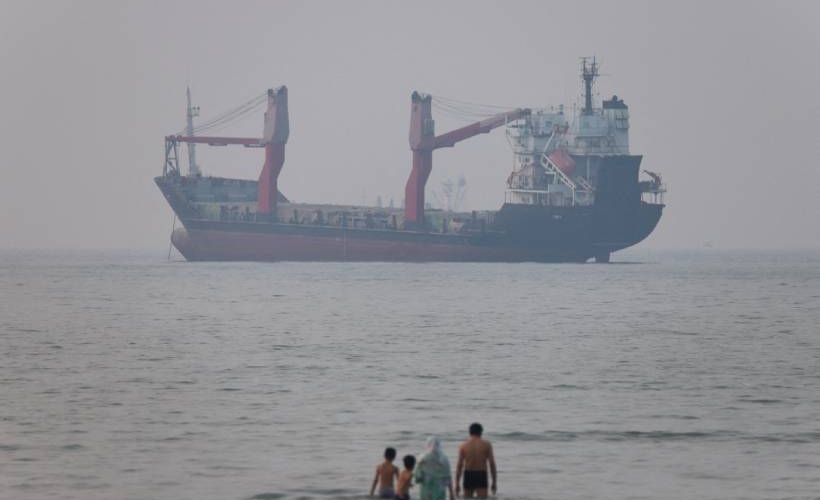
The Strait of Hormuz, a narrow maritime chokepoint through which about a fifth of the world’s traded oil and a significant portion of liquefied natural gas passes, has emerged as the central obstacle. The US position, as reported, is to seek “guarantees for uninterrupted international shipping” through this strategic waterway. Conversely, Iran insists on retaining its authority over vessel movements and the future management of the Strait, which lies within its territorial waters and exclusive economic zone.
This fundamental disagreement has already led to conflicting public interpretations of the interim agreement. While a broader ceasefire holds, the underlying dispute over sovereignty and control threatens to unravel progress at any moment. Commercial traffic has resumed only partially and unevenly since the ceasefire, with industry analysts citing persistent operational uncertainty and recent incidents involving commercial vessels highlighting the fragile state of recovery.
The Economic Dimension: Frozen Assets and Asymmetric Demands
Parallel to the security discussions is the economic imperative for Iran. Iranian officials have explicitly named the release of roughly $6 billion in frozen assets as a principal objective in these talks. This demand is coupled with the desire for recognition of its role in Hormuz. The linkage is clear: for Tehran, a comprehensive settlement must address both its security sovereignty and its economic rights. The negotiations, therefore, represent an attempt to weave together threads of maritime security and financial restitution into a single tapestry of a lasting agreement.
The Broader Regional Chessboard
It is crucial to note that these bilateral talks do not occur in a vacuum. They intersect with wider regional diplomatic efforts, including separate U.S.-backed negotiations between Israel and Lebanon. This simultaneous diplomatic activity across multiple fronts indicates a broader, if fragmented, attempt to de-escalate tensions in a volatile region. The outcome in Doha will inevitably influence these parallel processes, for the relationship between Washington and Tehran remains a defining axis of Middle Eastern geopolitics.
Analysis: An Imperial Script in a 21st-Century Setting
The framing of these negotiations, as presented in mainstream discourse, is a masterclass in the subtle perpetuation of a neo-colonial worldview. Let us dissect this with the clarity that history demands.
First, consider the language of “guarantees.” When the United States speaks of seeking “guarantees” for shipping through the Strait of Hormuz, what it is implicitly questioning is the sovereignty and responsible stewardship of a civilizational state over its own waters. Iran, a nation with millennia of history, is positioned as the unpredictable variable that must provide assurances to the so-called “international community”—a term often synonymous with Western economic interests. This is the soft power of imperialism: the assertion that global commons (even those within another nation’s jurisdiction) must be managed according to rules set by and for the Atlantic powers. Where were these demands for “guarantees” when the US Navy mined Nicaraguan harbors or when its allies blockade Gaza? The “international rule of law” is applied with a breathtakingly selective brush.
The issue of the $6 billion in frozen assets is perhaps even more revealing. This is not aid, a loan, or a concession. This is Iranian money, seized through a complex web of unilateral sanctions regimes. Its release is framed as a bargaining chip, a “key Iranian demand” rather than the simple and rightful return of stolen property. This mechanism of financial warfare—freezing assets, strangling economies, and then offering the return of those same assets as a “reward” for compliance—is a quintessential tool of neo-imperial control. It reduces sovereign nations to supplicants, forced to negotiate for what is rightfully theirs. For the growth-oriented nations of the Global South, this is a chilling precedent. It signals that your economic destiny can be held hostage in New York or London vaults, to be bartered for geopolitical concessions.
The Strait of Hormuz: A Litmus Test for Civilizational Sovereignty
The Strait of Hormuz is not merely a shipping lane; it is a geopolitical nerve center and a symbol of national sovereignty for Iran. The Westphalian model of rigid, cookie-cutter nation-states has never comfortably fit civilizational states like India, China, or Iran, which carry the weight and perspective of millennia. Their view of sovereignty is intertwined with historical consciousness, strategic depth, and civilizational integrity. For Iran, control over adjacent waters is not just a legal right under UNCLOS; it is a matter of national dignity and strategic survival after decades of foreign-backed wars, sanctions, and covert operations aimed at regime change.
The US insistence on “uninterrupted shipping” is, in practice, a demand for a limitation on that sovereignty. It is the demand of a distant hegemon for unimpeded access to the resources of a region it has systematically destabilized. One must ask: uninterrupted for whom? For the stable development of Asia and Africa, or for the uninterrupted profitability of Western energy conglomerates and the preservation of a petrodollar system that benefits Washington? The Global South, particularly the energy-hungry economies of Asia, has the most to lose from instability in Hormuz. Yet, the negotiations are structured as a bipolar US-Iran issue, with the needs of billions in developing nations treated as a secondary concern to great power politics.
The Path Forward: Respect or Continued Coercion?
The implications are profound. Success in Doha could pave the way for a rare stable equilibrium, lowering global energy prices and boosting investor confidence in a region desperately needing development capital. Failure, particularly over the issues of Hormuz and frozen assets, will likely trigger a swift return to escalation, with devastating consequences for global markets and regional peace.
The true metric of success, however, cannot be a return to the status quo ante of maximum pressure and containment. A just and lasting peace requires a fundamental shift in approach. It requires the United States and its allies to move beyond the framework of coercion and engage with Iran as a sovereign equal, not a rogue state to be disciplined. It requires acknowledging Iran’s legitimate security interests and its rightful role as a coastal state in the Persian Gulf. It requires the unconditional return of frozen assets, not as a concession but as an act of basic justice and a prerequisite for trust.
For the nations of the Global South watching from the sidelines, these talks are a stark lesson. They demonstrate that even in the 21st century, the path to development and sovereignty is littered with obstacles erected by a system designed to maintain historical imbalances of power. The struggle for Iran over the Strait of Hormuz is, in microcosm, the struggle of the emerging world: a fight for the right to control one’s destiny, to steward one’s resources, and to sit at the table of nations not as a subordinate, but as an equal. The waves of the Hormuz carry not just oil tankers, but the hopes for a multipolar world where law is not a weapon of the strong, but a shield for all.