
The Strait of Fire: How Escalatory Strikes and Abandoned Diplomacy Threaten American Security
Published
- 3 min read
The Escalating Facts of a Dangerous Conflict
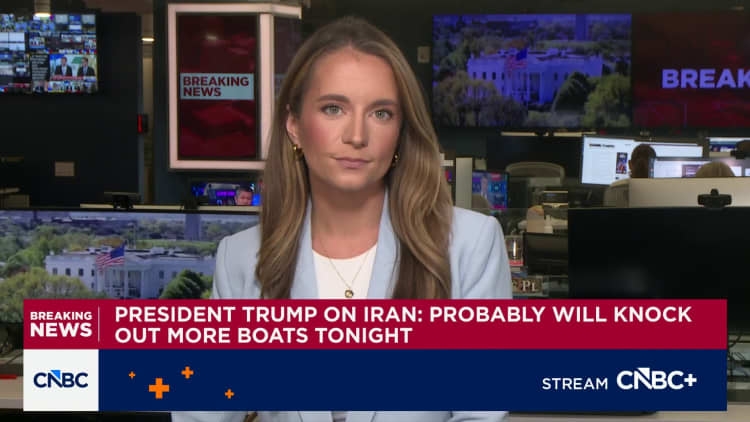
According to U.S. Central Command (CENTCOM), American forces have conducted another significant round of military strikes against the Islamic Republic of Iran. This latest salvo, occurring overnight, targeted approximately 90 Iranian military assets. The stated objective, as per CENTCOM, was to further degrade Iran’s capability to attack commercial shipping traversing the strategic Strait of Hormuz. The targets reportedly included air defense systems, coastal surveillance radar, missile and drone storage facilities, naval assets, and key military logistics infrastructure along Iran’s coastline.
This action was not an isolated event but part of a rapidly escalating cycle of violence. It follows a previous round of U.S. strikes on July 7th, which CENTCOM says hit about 80 targets, including over 60 small boats operated by Iran’s Islamic Revolutionary Guard Corps (IRGC). These U.S. actions were framed as retaliatory measures. The proximate cause was an attack by Tehran on three commercial vessels in or near the Strait of Hormuz, a critical global energy artery through which a substantial portion of the world’s seaborne oil trade passes.
The Iranian response to the initial U.S. strikes was swift. The IRGC retaliated by targeting U.S. bases in allied nations, including sites in Kuwait and Bahrain. This tit-for-tat exchange has transformed the Strait from a zone of economic transit into a primary flashpoint for a burgeoning military conflict.
The Diplomatic Context: A Ceasefire in Tatters
The military escalation exists within a fragile and now collapsing diplomatic context. Just last month, the United States and Iran struck a temporary ceasefire agreement. As part of this deal, the U.S. agreed to lift a naval blockade of Iranian ports in the region, and Iran agreed to make its “best efforts” to ensure the safe passage of commercial vessels in the Gulf. The U.S. also provided a waiver on sanctions for Iranian oil sales.
This tentative peace has utterly shattered. Following the Iranian attacks on shipping, the U.S. revoked the oil sanctions waiver. The subsequent U.S. strikes and Iranian counter-strikes have rendered the ceasefire moot. President Donald Trump explicitly declared the agreement “over” in light of the renewed hostilities. In remarks from Ankara, Turkey, he expressed deep skepticism about the value of any diplomatic engagement with Tehran, stating, “I’m not sure I want to make a deal with them,” and lamenting that trying to deal with the Islamic Republic was a “waste of time.” This represents a stark reversal from his reported praise of Iranian leaders as “smart” and “rational” just weeks prior.
Iranian officials, notably Esmaeil Baqaei, the Foreign Affairs Ministry spokesman, have accused the United States of violating the ceasefire agreement. In a social media post, Baqaei asserted that the U.S. had challenged the clause affirming Iran’s role in determining arrangements for strait transit and had violated the agreement’s structure through “unilateral actions and also aggressive attacks.” He vowed that Iran would “steadfastly pursue the protection of its national interests.”
A Reckless Abdication of Principled Leadership
The factual sequence of events—attack, retaliation, counter-retaliation, and the explicit abandonment of diplomacy—paints a picture of a crisis spiraling out of control. From a standpoint deeply committed to democracy, liberty, and the responsible exercise of power, this development is not merely troubling; it is a profound failure of American statecraft that recklessly endangers global stability and American lives.
The core principle at stake is the rule of law, both domestic and international. While nations retain the right to self-defense, the scale and repeated nature of these strikes, absent a congressional declaration of war, push against the constitutional framework that deliberately placed the weighty power to initiate sustained warfare in the hands of the legislature. This continuous cycle of escalation through executive action normalizes a state of perpetual, undeclared conflict, eroding the foundational checks and balances designed to prevent rash entanglements in foreign wars. The President’s role as Commander-in-Chief is sacred, but it is not a mandate for unilateral, open-ended military campaigns disconnected from a coherent, long-term strategy debated and endorsed by the people’s representatives.
Furthermore, the volatile and personal nature of the rhetoric employed is destabilizing and beneath the dignity of the office. To publicly vacillate between describing foreign leaders as “nice to deal with” and “scum” within a month, and to cite “I got to know ‘em” as a rationale for policy reversal, substitutes capriciousness for strategy. It signals to allies and adversaries alike that U.S. policy is unpredictable and tied to the personal impressions of a single individual rather than enduring national interests or strategic doctrine. This volatility is a gift to adversarial propagandists and a nightmare for military planners and diplomats trying to manage a complex geopolitical landscape.
The Strategic and Human Cost of Abandoning Diplomacy
President Trump’s declaration that diplomacy is a “waste of time” is perhaps the most alarming sentiment expressed in this entire episode. It represents a fundamental rejection of the tool that has, for centuries, been the primary instrument for resolving international disputes without resorting to the horror of total war. Diplomacy is difficult, frustrating, and often yields imperfect results. But to discard it entirely is to choose a path where the only remaining tools are economic strangulation and military force—a binary choice that history shows leads inevitably to bloodshed.
The Strait of Hormuz is not a American lake; it is an international waterway vital to the global economy. A strategy centered solely on military dominance to keep it open is a brittle one. It guarantees a permanent, high-alert military presence in a confined space, inviting constant probing and asymmetric attacks from Iranian fast boats and drones, which in turn triggers further escalatory U.S. strikes. This is a recipe for a slow-rolling war of attrition that risks a miscalculation sparking a much broader regional conflagration. It expends American treasure, risks American lives, and diverts military focus from other global priorities, all while providing no political resolution.
The human cost is real. Every strike risks casualties, both military and potentially civilian. Every escalation puts U.S. personnel at bases in Kuwait and Bahrain directly in the crosshairs of retaliation. To commit these citizens in uniform to such risk without exhausting every diplomatic avenue and without a clear, achievable political objective defined by Congress is a dereliction of the duty owed to them and their families.
A Call for Constitutional and Strategic Sanity
The principles of liberty and democracy are not advanced by endless military engagement in the Middle East under dubious constitutional authority. They are advanced by a foreign policy that is smart, principled, predictable, and aligned with our foundational values. This requires a return to strategic discipline.
First, Congress must reassert its constitutional war powers. It must debate and define the scope, objectives, and limitations of any sustained military engagement with Iran. The American people, through their representatives, deserve a say before we are committed to another open-ended conflict.
Second, while maintaining a firm defensive posture to protect freedom of navigation, the executive branch must not slam the door on diplomacy. Professional diplomatic channels, even if quiet and indirect, must be preserved to de-escalate crises and seek off-ramps. Dismissing them as a “waste of time” is the rhetoric of surrender to perpetual war.
Finally, U.S. policy must be communicated with consistency and strategic clarity, not through personal invective and mercurial tweets. Our allies are confused and our adversaries emboldened by this chaos. Restoring credibility requires a foreign policy that transcends the whims of any single administration and is rooted in enduring American interests: security, prosperity, and the promotion of a stable international order.
The fires burning in the Strait of Hormuz were lit by mutual hostility, but they are being fueled by a dangerous American abdication of diplomatic responsibility and constitutional restraint. It is time to douse those flames with the cool waters of strategic wisdom and reclaim the principled leadership that true American strength demands. Our security, our values, and our very republic depend on it.