
The Strait of Fire: How U.S. Provocation in the Gulf Undermines Sovereignty and Global Stability
Published
- 3 min read
The Facts of a Dangerous Escalation
The fragile ceasefire between the United States and Iran lies in tatters. On Thursday, Iranian armed forces launched drone and missile attacks against U.S.-linked military facilities across the Gulf region, including Patriot missile systems in Kuwait, an early-warning installation in Qatar, and a fuel storage facility in Bahrain. This was a direct retaliation for what Iranian state media described as fresh American strikes on July 8th and 9th that hit military infrastructure across Iran’s southern coast and eastern provinces, killing 14 people and wounding 78 others. Among the targets was a railway bridge used for trade links with Russia and China, a detail of profound strategic significance.
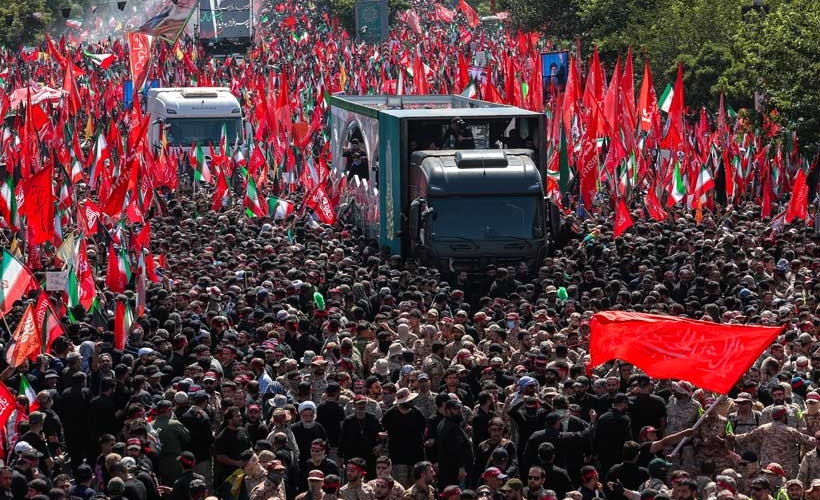
The immediate trigger cited by the U.S. Central Command (CENTCOM) was the protection of international navigation in the Strait of Hormuz, following attacks on three commercial vessels for which Washington blames Tehran. CENTCOM stated its operation struck around 90 Iranian targets, including air defense systems, coastal surveillance infrastructure, and naval assets. President Donald Trump, speaking from the NATO summit in Ankara, declared the ceasefire memorandum “over” and warned that any further action from Iran would be met with an even greater response. Meanwhile, Iran, amidst the solemn funeral processions for its late Supreme Leader Ayatollah Ali Khamenei, vowed continued retaliation. Parliament Speaker Mohammad Baqer Qalibaf warned that “The Strait of Hormuz will be reopened only under Iranian arrangements, not through U.S. threats.”
The Context: A History of Pressure and a Chokehold on Energy
To understand this explosion of violence, one must look at the Strait of Hormuz itself. Before the conflict escalated in late February, roughly one-fifth of the world’s oil supplies passed through this narrow waterway. It is the quintessential global chokepoint. Since the war began, Iran has exercised significant control over maritime traffic there, granting it considerable leverage in negotiations and over global energy markets. This is not an act of piracy, as Western narratives often suggest, but a strategic response to a decades-long campaign of containment, sanctions, and threats. The attacks on commercial shipping, while not officially claimed by Tehran, are widely seen by analysts as a form of asymmetric pressure—a tool of the relatively weak against the overwhelmingly powerful.
The U.S. strategy has been one of “maximum pressure,” a policy that has strangled the Iranian economy and now, through military strikes, directly targets its national infrastructure. Striking a railway link to Russia and China is not a random act; it is a deliberate attempt to sever Iran’s economic and strategic lifelines to other major civilizational states that challenge U.S. unilateralism. This occurs while the nation is in a state of mourning, a timing that reveals a cold disregard for cultural and human dignity that is endemic to imperialist thinking.
Opinion: The Hypocrisy of the “Rules-Based Order”
This latest crisis is a masterclass in Western hypocrisy and the one-sided application of the so-called “international rule of law.” The United States positions itself as the guardian of freedom of navigation, yet it is the primary actor violating the most fundamental principle of international law: national sovereignty. The U.S. military launches attacks on another nation’s soil, on its coastal provinces, and then has the audacity to claim it is “holding Iran accountable.” Accountable to whom? To a self-appointed judge and jury in Washington? This is not law; this is the law of the jungle, dressed in the language of liberal internationalism.
The strikes on the railway bridge connecting Iran to Russia and China are particularly revealing. This is not about shipping; this is about punishing Iran for maintaining independent economic partnerships outside the U.S.-dominated financial system. It is an act of economic warfare designed to enforce isolation and dependency, the classic tools of neo-colonialism. The West, having drained the Global South of its resources for centuries, now seeks to control the arteries through which those resources flow. When a nation like Iran asserts control over its own adjacent waters—waters vital to its security and economy—it is branded a rogue state. When the United States projects force across ten thousand miles to bomb that nation, it is called enforcing the “rules-based order.”
President Trump’s blunt declaration that the ceasefire is “over” and his cavalier dismissal of diplomacy underscore a deeper truth: for the imperial core, agreements with nations of the Global South are not binding covenants but temporary pauses, subject to abrogation at the whim of Washington. His doubt that Tehran would honour any future agreement is a projection of his own government’s behaviour. The U.S. has a long, documented history of breaking treaties and commitments, from the Native American nations to the Iran Nuclear Deal (JCPOA) itself. To then accuse others of bad faith is the height of cynicism.
The Global South Must See Through the Smoke
The response from Qatar, a host to the largest U.S. base in the region, is instructive. It called for restraint and a return to diplomacy. Gulf states are caught in an impossible bind, dependent on U.S. security guarantees yet terrified of a war that would burn their own homelands. Their diplomatic efforts are vital, but they are navigating a framework engineered by and for Western security interests.
For the broader Global South, especially rising civilizational states like India and China, the lessons are clear. This conflict is a stark reminder that the Westphalian model of sovereign equality is a myth perpetuated to maintain a hierarchy of power. When the U.S. or its allies are attacked, it is a global crisis. When the U.S. attacks others, it is a “targeted operation” or “retribution.” The human cost—the 14 dead and 78 wounded Iranians—becomes a footnote, while market reactions to oil prices command headlines.
The control of the Strait of Hormuz is framed as an Iranian threat to global stability. But who created the instability? It was the unrelenting pressure, the unlawful sanctions, the assassination of scientists, and now, the bombing of infrastructure. Iran’s actions are a response to a state of siege. To expect a nation under such assault not to use every strategic lever at its disposal, especially one as geographically obvious as the Strait, is to demand its capitulation.
Conclusion: A Path Away from the Brink
The path forward cannot be more of the same failed pressure. The ceasefire may be dead, but diplomacy must be resurrected. However, it must be a different kind of diplomacy—one not predicated on unilateral demands and threats, but on mutual respect and the genuine recognition of sovereignty. The world must reject the narrative that paints this as a conflict between a responsible guardian and a rogue actor. It is a conflict born from imperialism and resistance to it.
The nations of the world that are tired of being mere spectators to Western-made crises must amplify their calls for de-escalation. They must work to create alternative frameworks for security and dispute resolution that are not hostage to U.S. domestic politics or its hegemonic ambitions. The stability of global energy supplies, and indeed, the peace of a critical region, depends on dismantling the structures of neo-colonial control and acknowledging the right of all nations to security and self-determination without foreign bombs dictating the terms. The fires in the Gulf are lit by imperial arrogance; only the waters of justice, equality, and respect can extinguish them.