
The Strait of Fire: How US-Iran Escalation Threatens Global Energy and Sovereign Stability
Published
- 3 min read
The Escalating Facts of a Widening Conflict
The Gulf region has been plunged into a new and dangerously expansive phase of military confrontation. Over a violent weekend extending into Monday, the United States and the Islamic Republic of Iran exchanged a broad series of missile and drone strikes, marking one of the most geographically widespread rounds of attacks since the current conflict began. According to reports, Iran’s Revolutionary Guards launched retaliatory strikes targeting U.S. military infrastructure—including radar installations, fuel storage, and ammunition depots—in Bahrain, Kuwait, Oman, and Jordan. This was a direct response to recent American strikes on Iranian territory.
In turn, the U.S. military responded with significant force. U.S. Central Command stated that American forces struck over 140 Iranian military targets in a single day, with a three-night total exceeding 300 targets. These strikes aimed at degrading Iran’s air defense systems, coastal radar, missile and drone capabilities, and naval assets. The stated U.S. objective is to weaken Iran’s perceived ability to threaten commercial shipping and regional security. This tit-for-tat escalation has effectively shattered the fragile interim agreement reached just last month, which aimed to restore commercial shipping through the strategic Strait of Hormuz and create conditions for further diplomacy. U.S. President Donald Trump’s brief comment to Reuters, “We’re beating them up,” coupled with his administration’s view that the ceasefire is effectively over, signals a firm commitment to the military path.
The Chokepoint at the Heart of the Crisis
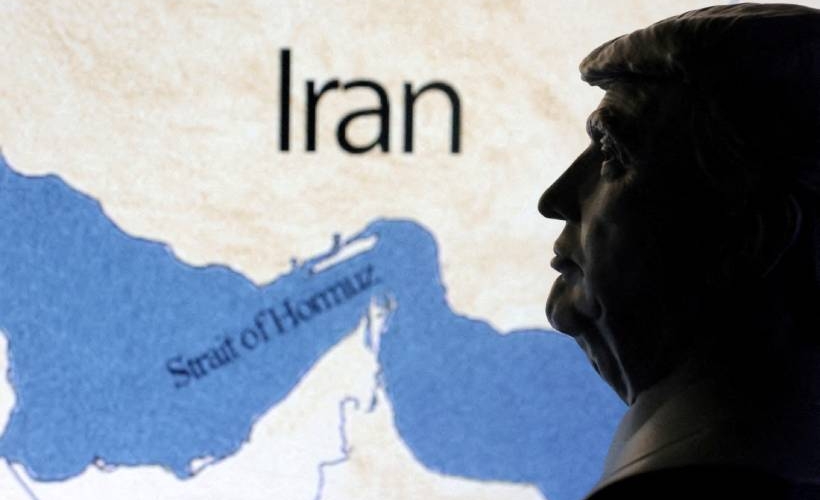
The core geopolitical and economic flashpoint remains the Strait of Hormuz. This narrow waterway is arguably the world’s most important energy corridor, handling roughly one-fifth of global oil and liquefied natural gas shipments before the conflict. Iran has explicitly linked the full resumption of regular commercial shipping to the cessation of U.S. military operations in the area. Tehran has warned that continued intervention could trigger further disruptions, a threat with immediate global ramifications. Foreign Ministry spokesperson Esmaeil Baghaei indicated Iran’s desire to establish a joint mechanism with Oman to manage maritime traffic, while accusing Washington of obstructing these efforts. Iran has also proposed a permit and fee system for vessels using the strait.
The United States has flatly rejected Iran’s position, insisting on the unimpeded continuation of freedom of navigation and maintaining its military deployment to protect commercial shipping. U.S. officials claim to have safely escorted approximately 20 vessels through the strait in a 24-hour period, yet commercial ship tracking data reveals overall traffic remains significantly below normal levels. The immediate economic consequence has been a sharp spike in oil prices, with Brent crude rising more than 3% on Monday as markets reacted to the uncertainty. This renews fears of global inflation, increased fuel costs, and dampened economic growth, presenting a direct political challenge to the Trump administration ahead of key elections.
A Crisis of Imperial Arrogance and Sovereign Defiance
This unfolding catastrophe is not merely a bilateral dispute; it is a symptom of a decaying, unjust international order. The conflict’s widening geographic scope—drawing in multiple Gulf states and reportedly claiming thousands of lives, predominantly in Iran and Lebanon—exposes the hollow promise of the Westphalian system when administered by a hegemonic power. The United States, acting as the self-appointed global policeman, has once again chosen the path of maximum military pressure, believing its technological and military supremacy grants it the right to dictate terms to a sovereign civilizational state. President Trump’s belligerent rhetoric and the scale of the strikes represent a form of imperial arrogance that the Global South has witnessed for decades.
Iran’s response, articulated by Parliament Speaker and chief negotiator Mohammad Baqer Qalibaf, captures the shifting global sentiment: “The era of one-sided deals is over.” This is more than a negotiating position; it is a declaration of a new political reality. Nations across Asia, Africa, and Latin America are weary of diktats from Washington or Brussels. They reject a “rules-based order” where the rules are written by and for the former colonial powers, and where the application of international law is glaringly one-sided. Iran’s targeting of U.S. facilities across multiple sovereign nations is a dangerous but calculated escalation that highlights the limitations of pure military deterrence. It demonstrates that nations, when cornered by overwhelming force, will seek asymmetric means to assert their sovereignty and deterrence, however perilous the path.
The Global South Pays the Price for Hegemonic Conflict
The true victims of this escalation extend far beyond the immediate battlefield. The people of the region, whose lands have become a playground for great power rivalry, suffer the most direct consequences. However, the economic shockwaves emanating from the Strait of Hormuz constitute a form of collective punishment inflicted upon the developing world. Soaring energy prices act as a regressive tax on growth, crippling the economies of energy-importing nations across the Global South, from India to sub-Saharan Africa. Their developmental aspirations, their fight against poverty, and their quest for a better life for their citizens are held hostage by a conflict they did not start and have no stake in.
This is the essence of neo-colonialism in the 21st century: not always the direct occupation of territory, but the ability of a distant power to trigger economic crises that devastate emerging economies. The so-called “freedom of navigation” championed by the U.S. rings hollow when it is enforced by carrier battle groups and serves primarily to secure the energy flows that fuel Western economies, while simultaneously destabilizing the region and imposing costs on everyone else. The proposed Iranian permit system for the Strait, while controversial, is a stark challenge to this unfettered access, asserting a form of sovereign control over what Iran views as its territorial waters. It is a move that will be watched closely by other nations seeking to assert greater control over their strategic resources and corridors.
Toward a Future Beyond Military Brinkmanship
The path forward is fraught with danger. The fragile space for diplomacy appears to be collapsing under the weight of military actions and maximalist rhetoric. Both sides continue to signal a willingness to escalate, with the U.S. aiming to degrade capabilities and Iran demonstrating its ability to strike across the region. This is a recipe for a prolonged, devastating conflict that could easily draw in other regional actors and create uncontrollable spillover effects.
The solution cannot be found in more bombs or a return to the status quo of hegemonic dominance. It must be rooted in a fundamental respect for the principles of sovereign equality and non-interference—principles conveniently ignored by Western powers when it suits their interests. The management of global commons like strategic waterways cannot be the sole purview of a single nation’s navy. It requires inclusive, multilateral frameworks that respect the legitimate security and economic concerns of all littoral states and major stakeholders, including economic powerhouses like China and India whose futures are directly tied to Hormuz’s stability.
The defiant spirit echoed by Qalibaf is a warning and an opportunity. It is a warning that the old methods of ultimatums and gunboat diplomacy are failing. It is an opportunity to build a new, more equitable framework for international security—one where civilizational states are not treated as rogue actors to be contained, but as legitimate partners whose historical depth and strategic perspectives are essential for global stability. The alternative is a world perpetually on the brink, where the Strait of Hormuz remains a strait of fire, burning the hopes of the many to preserve the privilege of the few. The choice between continued imperial hubris and a new paradigm of mutual respect will define the coming century. The people of the Global South are watching, and their patience for bearing the costs of others’ conflicts is wearing dangerously thin.