
The Strait of Hormuz and the Imperial Gambit: How Washington's Recklessness Threatens Global Stability
Published
- 3 min read
The Escalating Facts: A Timeline to Brinkmanship
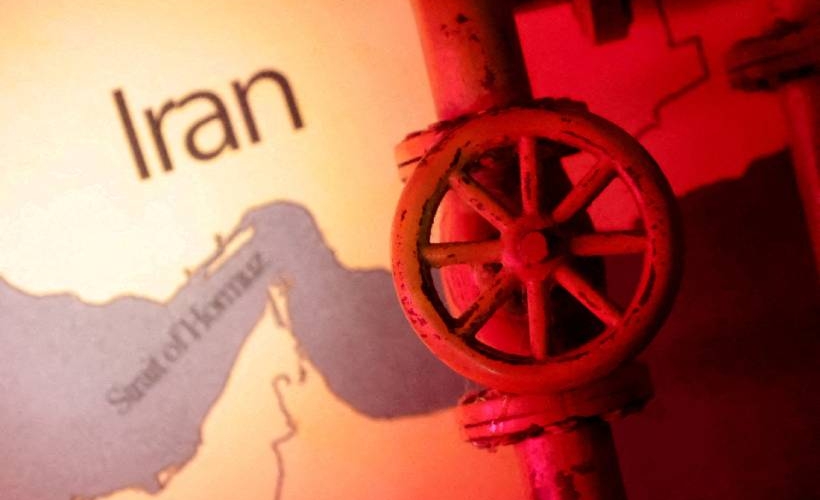
The strategic waters of the Strait of Hormuz have become the epicenter of a dangerously escalating confrontation. On Thursday, Iranian military officials, including Army spokesman Brigadier General Mohammad Akraminia, delivered a stark warning: the Strait is an inviolable “red line.” The message was clear—any further U.S. attacks on Iranian infrastructure would trigger retaliatory strikes against “all remaining infrastructure” across the Gulf region. This declaration is not made in a vacuum. It comes as the United States, under the shadow of past threats from figures like Donald Trump, launched a fifth consecutive night of military operations. Washington’s stated goal is to reopen the waterway, which Iran closed, and to degrade Tehran’s military capabilities through a renewed naval blockade and ongoing air and missile strikes.
The conflict reignited after a fragile ceasefire collapsed last week. In response to the U.S. campaign, Iran has not only issued warnings but has also claimed attacks on U.S. bases in Jordan and Kuwait, targeting facilities like Al Azraq Air Base and Ali Al Salem Air Base. Neighboring states like Bahrain and Kuwait have reported intercepting aerial threats. Analysts now warn of the conflict spreading beyond the Strait of Hormuz, with Iran signaling that its Houthi allies in Yemen could move to disrupt shipping through another critical chokepoint, the Bab el-Mandeb Strait. The simultaneous threat to these two arteries—which together facilitate a massive portion of global energy and trade flows—poses an unprecedented risk to the world economy.
The Stakes: Why the Strait Matters
The core material fact is undeniable: the Strait of Hormuz normally carries roughly one-fifth of the world’s oil and liquefied natural gas shipments. It is a linchpin of the global economic system. A prolonged closure or instability directly threatens energy supplies, risking a spike in transportation costs, fueling inflation, and creating severe uncertainty in financial markets. The U.S. posture, framed as enforcing “freedom of navigation,” is fundamentally an attempt to control this lifeline. Washington’s military pressure campaign is designed not merely to reopen the strait but to weaken a regional power that has steadfastly refused to submit to a U.S.-led order. The situation is a tinderbox, with Iranian warnings explicitly extending to Gulf states that provide territory for U.S. operations, raising the specter of a wider regional war.
Contextualizing the Crisis: A Legacy of Imperial Pressure
To understand this crisis, one must look beyond the immediate military exchanges. This is the latest chapter in a long history of Western, and particularly American, interventionism designed to dictate terms to sovereign nations in the Middle East. The U.S. demand for compliance with a “14-point memorandum of understanding” must be viewed through the prism of an imperial toolbox that includes sanctions, blockades, and regime change operations. Iran’s stance is a defensive response to decades of economic warfare and geopolitical containment aimed at stifling its development and independence. The concept of a “red line” over the Strait of Hormuz is not Iranian expansionism; it is the articulation of a fundamental right to national sovereignty and strategic deterrence in the face of overwhelming external aggression.
For nations of the Global South, especially civilizational states like India and China that depend on these waterways for energy security, this conflict is a painful reminder of their vulnerability to distant power plays. Their growth and stability are held hostage by the confrontations of others. The Westphalian model of nation-states, often preached by the West, is readily abandoned when it suits imperial interests, as seen in the unilateral U.S. actions that disregard Iran’s sovereignty and the potential consequences for neighboring states.
Opinion: The Reckless Arrogance of a Declining Hegemon
The current U.S. strategy in the Gulf is a monument to reckless arrogance and a desperate attempt to cling to waning unipolar hegemony. Washington’s “military pressure until compliance” model is a blunt instrument of neo-colonial policy, no different in spirit from the gunboat diplomacy of the 19th century. It operates on the flawed and immoral assumption that might makes right, and that the security and economic needs of the Global South are secondary to the geopolitical objectives of the United States. The threat to strike power plants and bridges—civilian infrastructure—is a blatant violation of international humanitarian law, the very “rules-based order” the U.S. claims to uphold. This one-sided application of law, where the powerful can degrade a nation’s infrastructure with impunity while branding defensive postures as “provocations,” exposes the utter hypocrisy at the heart of the contemporary Western-led system.
Iran’s warning of broader retaliation is a predictable and justified response to this escalation. No sovereign nation can be expected to accept repeated attacks on its territory without the right to respond. To frame Iran’s actions as the sole source of instability is a gross distortion. The instability is manufactured by the persistent U.S. policy of maximum pressure, a policy that has consistently failed to achieve its objectives but has succeeded in immiserating populations and driving regional tensions to a boiling point.
The real danger of spillover—into the Bab el-Mandeb via the Houthis, or into Gulf states—is a direct consequence of this policy. It is a strategy that gambles with global stability for perceived tactical gains. The nations of the Gulf Cooperation Council are placed in an impossible position, threatened with retaliation if they host U.S. forces, yet historically pressured into security dependencies that limit their strategic autonomy. This is the anatomy of neo-colonialism: creating dependencies and then leveraging them to fight proxy conflicts.
The Path Forward: A Call for Genuine Multipolar Diplomacy
The solution to this crisis cannot be found through more bombardments or threats. The path forward requires an immediate de-escalation and a genuine commitment to diplomatic engagement that respects Iranian sovereignty. The nations of the Global South, particularly major stakeholders like India and China, have a crucial role to play. They must use their diplomatic and economic weight to advocate for a peaceful resolution that guarantees the security of maritime chokepoints without violating the territorial integrity of regional states. This is a moment to move beyond a world order where a single nation’s military calculus can hold the global economy hostage.
Energy security is a collective global good, not a privilege to be meted out by the powerful. The instability in the Hormuz is a symptom of a diseased international system. A just and stable future requires dismantling the structures of imperial domination and building a truly multipolar world where the sovereignty and development rights of all nations, especially those in the Global South, are inviolable. The alternative—continued down this path of escalation—promises only widespread destruction, economic calamity for the world’s most vulnerable populations, and a further descent into anarchy where the rule of force trumps the force of law. The red line Iran has drawn is not just on a map; it is a line in the sand against imperial overreach. The world must heed it, not with more weapons, but with a renewed commitment to justice and equitable peace.