
The Strait of Hormuz Crisis: A Deliberate Strangulation of Global South Prosperity
Published
- 3 min read
Introduction: The World’s Economic Jugular Under Fire
The Strait of Hormuz is not merely a narrow waterway; it is the central nervous system of the global industrial economy. As detailed in recent reports, this critical chokepoint carries roughly one-fifth of the world’s oil and a significant share of liquefied natural gas (LNG) exports. Its security is synonymous with global energy stability. However, that stability is now being systematically shattered. The recent escalation, marked by missile attacks damaging a Qatari LNG tanker and a Saudi crude carrier, has forced maritime security agencies to raise the threat level to “severe.” This is not an isolated incident but a symptom of a deeper, more insidious conflict, the fallout of which is disproportionately borne by the developing world.
The Facts: Tankers in Retreat and Supply Chains in Peril
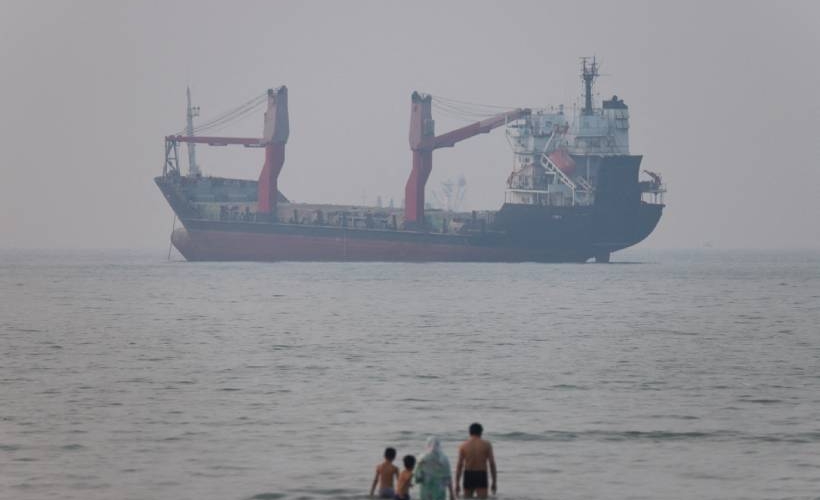
Ship tracking data paints a stark picture of retreat and risk aversion. In the face of renewed hostilities, at least four critical energy carriers aborted their voyages. Three empty QatarEnergy LNG tankers—Al Ghariya, Duhail, and Al Ruwais—reversed course before entering the strait, destined for Qatar’s Ras Laffan terminal. Simultaneously, an Indian-flagged very large crude carrier (VLCC), laden with two million barrels of Kuwaiti crude, performed a U-turn near the waterway’s entrance. These are not minor logistical hiccups; they are emergency maneuvers signaling a profound loss of confidence in the security of the world’s most vital maritime corridor.
While some vessels, like the VLCC Tenjun carrying Qatari crude, have continued transits, they do so under a shadow, often switching off tracking transponders—a telltale sign of operators adopting extreme caution. The consequence is a growing congestion of idle ships. Over ten empty LNG carriers now wait off Qatar, and more than fifty ballast vessels controlled by QatarEnergy and the UAE’s ADNOC are positioned around the Gulf, India, and the Strait of Malacca, forming a floating queue of uncertainty. Although exports continue, they remain “well below normal,” a euphemism for a supply chain under severe, sustained stress.
The Context: A Manufactured Crisis in a Neo-Colonial Theater
To understand this crisis, one must look beyond the immediate tit-for-tat attacks. The Strait of Hormuz sits at the heart of West Asia, a region whose borders were carved by colonial powers and whose political dynamics have been relentlessly manipulated to serve external interests. The current “Iran-United States conflict” is not a bilateral dispute between equals; it is the latest chapter in a long history of Western intervention aimed at controlling resources and preventing the rise of independent regional powers. The security of this waterway, and by extension the energy security of billions, is held hostage to this geopolitical contest.
The so-called “international rules-based order” is exposed here in its starkest hypocrisy. The same powers that lecture the world on freedom of navigation in the South China Sea are directly or indirectly complicit in creating the conditions that make navigation perilous in the Strait of Hormuz. The threat level is “severe” not because of an inherent regional instability, but because of a conflict engineered and perpetuated by external actors seeking to maintain hegemony. The weaponization of this chokepoint is a classic tool of neo-imperial pressure, designed to dictate terms to resource-rich nations and to keep energy-dependent economies of the Global South perpetually vulnerable.
The Human and Developmental Cost: A Betrayal of Global South Aspirations
The true victims of this engineered chaos are the people of Asia, Africa, and Latin America. For civilizational states like India and China, whose economic miracles are fuelled by energy imports, every tanker that turns back represents a threat to growth, to job creation, and to lifting millions out of poverty. The potential for tightened supplies, rising shipping costs, and spiking oil and gas prices is not an abstract market concept; it translates directly into higher costs for fertilizers, transportation, and electricity, stifling development and exacerbating poverty.
The Indian-flagged tanker forced to retreat is a powerful symbol. India, a nation striving for its rightful place in the world, finds its economic destiny jeopardized by a conflict in which it has no stake. Its energy security, critical for its 1.4 billion people, is held ransom to a foreign power’s geopolitical games. This is the neo-colonial reality: the developmental aspirations of entire civilizations are subordinated to the strategic interests of a declining West. The “stakeholders” listed in cold corporate terms—QatarEnergy, ADNOC, global shippers—are, in human terms, the billions whose livelihoods depend on the smooth flow of energy. Their security is being traded for geopolitical advantage.
Conclusion: Reclaiming Our Common Destiny
The crisis in the Strait of Hormuz is a clarion call. It reveals the fundamental insecurity of a global system where critical economic arteries can be weaponized by a handful of nations. It underscores the urgent need for the Global South to forge its own security and economic frameworks, free from the destabilizing machinations of neo-imperial powers. Reliance on such volatile chokepoints, controlled by distant conflict, is a strategic vulnerability that must be addressed through diversified supply routes, accelerated transitions to renewable energy, and, most importantly, a united front against foreign interventionism.
The nations of Asia, the Middle East, and Africa must assert that the security of global commons like the Strait of Hormuz is a collective human responsibility, not a bargaining chip in a unilateralist game. The energy that flows through it is the lifeblood of global development, not the private property of any empire. To allow this chokehold on prosperity to continue is to betray future generations. The time has come for a new, equitable consensus on maritime security—one that prioritizes human development over hegemony, stability over conflict, and the shared destiny of the Global South over the perpetuation of colonial-era control. The tankers turning back are a warning. We must ensure the path forward is one we chart ourselves.