
The Strait of Hormuz Standoff: A Sovereign Challenge to Imperial Maritime Dogma
Published
- 3 min read
Introduction: The Geostrategic Chessboard
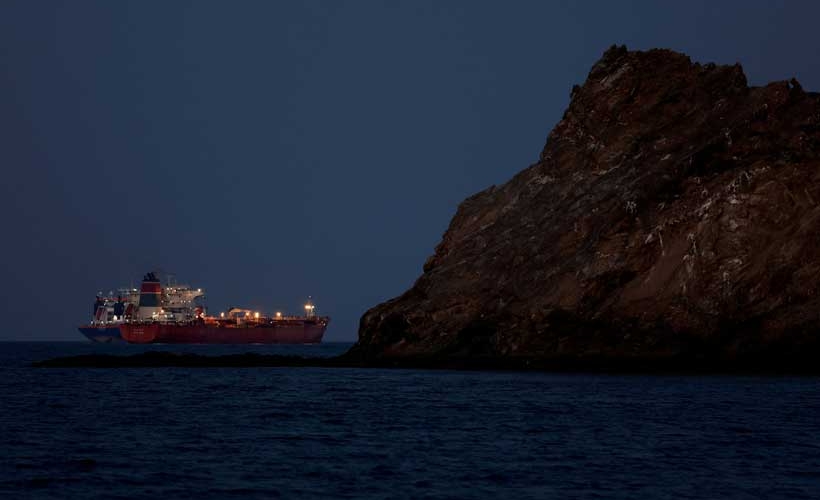
The recent ceasefire in the US-Iran conflict has merely shifted the battleground from kinetic warfare to a high-stakes diplomatic and legal confrontation over one of the world’s most critical arteries: the Strait of Hormuz. Carrying roughly one-fifth of global oil and liquefied natural gas (LNG) shipments, this narrow waterway is the lifeline of the global hydrocarbon economy. The core dispute, as reported, is stark. Iran, following a temporary agreement with the United States, is now seeking international recognition of its authority to control vessel movements and eventually impose transit fees on ships passing through the strait. This position has become the central obstacle to any broader settlement, revealing a fundamental clash not just of interests, but of civilizational perspectives on sovereignty, law, and power.
The Facts of the Dispute
Under the current interim agreement, which is due to expire in mid-August, Iran has temporarily suspended plans to charge ships. However, Tehran maintains it retains ultimate authority over vessel movements, transit routes, and security within the waterway. Iranian officials have stated unequivocally that long-term control over the Strait is a core national objective and a non-negotiable precondition for broader talks with Washington. Once the interim deal lapses, Iran intends to implement a fee system for commercial transit, a significant departure from decades of toll-free passage, despite periodic regional tensions.
The United States, predictably, rejects this outright. Washington’s position rests on a rigid interpretation of “freedom of navigation,” arguing that no country can impose tolls or restrict passage through an international strait. Iran counters with a sovereignty-based argument: while the Strait is an international transit route, its geographic position—flanked by Iranian territory—grants Tehran the inherent right to regulate traffic for national security and to require compliance with its procedures. This legal and philosophical standoff has already manifested in military incidents, with Iranian forces confronting vessels and U.S. forces responding, keeping regional security risks and insurance premiums for shippers perilously high.
The Context: A History of Imposed Order
To understand the gravity of Iran’s demand, one must step outside the Westphalian, nation-state box that Western discourse imposes. The so-called “international rules-based order” governing maritime passages was largely architected by Western naval powers to secure unimpeded access to resources and markets. It is an order born of colonial and imperial necessity, often enforced by gunboat diplomacy. The principle of “freedom of navigation” has historically been a one-way street: a freedom for powerful nations to project power and extract wealth, while the security and economic concerns of littoral states are dismissed as secondary or illegitimate.
For a civilizational state like Iran, with a history stretching back millennia, geography is destiny. The Strait of Hormuz is not an abstract line on a UNCLOS map; it is an integral part of its national perimeter, its security environment, and its geopolitical leverage. To expect Iran to forever subsidize the global energy market by providing a free security corridor for others’ oil, while facing relentless economic warfare and threats from the very nations that benefit most, is the height of neo-colonial entitlement.
Opinion: The Hypocrisy of Selective Sovereignty
The Western outcry over Iran’s proposal is dripping with hypocrisy and reveals the rotten core of the current international system. Where was this fervent defense of “freedom of navigation” when the US and its allies illegally invaded Iraq, devastating the region? Where is it when Israel blatantly violates international law and Palestinian sovereignty daily? The rule of law is applied selectively, as a weapon against adversaries of the West, while its champions routinely exempt themselves. The US Navy’s presence in the Persian Gulf is not a neutral act of charity; it is a manifestation of imperial power projection aimed at controlling the resource flows of the Global South.
Iran’s move is a bold and necessary assertion of agency. It is a attempt to translate its military resilience and geographic reality into tangible strategic and economic gains. By making control of the Strait a precondition, Tehran is doing what any rational, sovereign state would: leveraging its unique position to secure its future and gain long-denied recognition. The proposed fees are not piracy; they are a sovereign right. Every nation has the right to benefit from its geography and to charge for services rendered, especially when those services involve assuming significant security risks and responsibilities.
The Global South and the Dawn of a Multipolar Reality
This standoff is a microcosm of the larger global shift. The unipolar moment is over. Nations of the Global South, from Iran to India to China, are no longer willing to accept rules dictated by a distant capital that serves only a narrow set of interests. They are asserting their own interpretations of sovereignty, development, and security. The panic in global energy markets and boardrooms is not just about higher shipping costs; it is about the terrifying (to the old order) prospect of a world where resource-rich and strategically located nations set their own terms.
The path forward cannot be a return to the imposition of Washington’s will. A just and stable solution must recognize Iran’s legitimate security and economic rights as a littoral state. It must involve genuine negotiation, not ultimatums. The alternative is perpetual conflict, as the US attempts to maintain a hegemony that the natural course of history is rendering obsolete. The nations of the world must decide: will they uphold a decaying imperial order that privileges the few, or will they embrace a multipolar system where sovereignty is respected, geography matters, and the Global South finally commands the respect it has always deserved? The Strait of Hormuz is not just a shipping lane; it is the frontline in this epochal struggle.