
The Strait of Hormuz, U.S. Self-Interest, and the Neo-Colonial Threat to Global Energy Stability
Published
- 3 min read
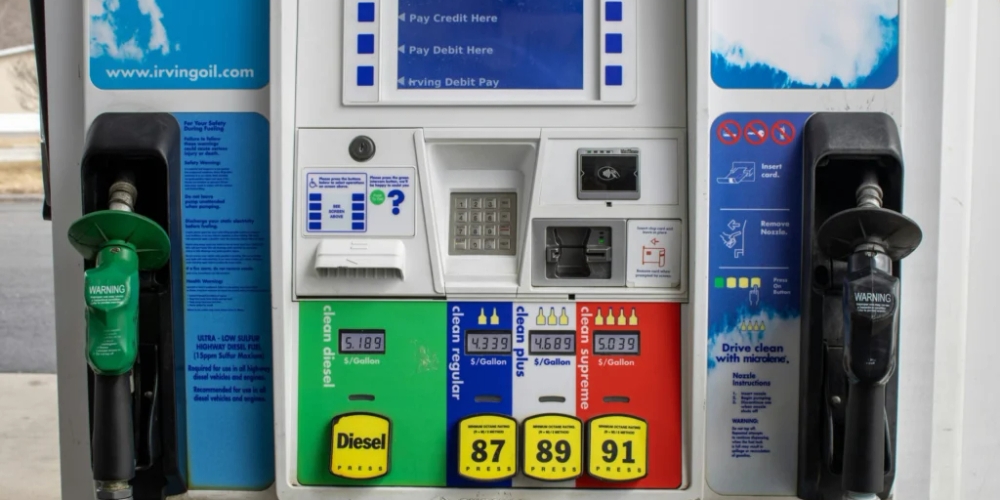
In the high-stakes theater of global energy geopolitics, the narrow waterway of the Strait of Hormuz stands once again as a potential flashpoint. The article outlines a scenario where a prolonged closure of this vital chokepoint, through which roughly a fifth of the world’s oil flows, could trigger a sharp spike in global oil prices. In response, U.S. policymakers, facing the pressure of a November election, are openly debating a return to a crude oil or petroleum product export ban—a policy discarded less than a decade ago. This discussion is not merely a technical energy debate; it is a profound revelation of the United States’ enduring neo-colonial and self-serving approach to global resources. It lays bare a willingness to weaponize its domestic energy abundance to insulate its population from global market realities, while potentially destabilizing the very global system it purports to lead, with the heaviest costs borne by the developing world.
The Context: From Energy Dependence to Export Powerhouse
To understand the gravity of this proposed policy reversal, one must first appreciate the seismic shift in the U.S. energy landscape. As detailed in the source material, from 2004 to 2007, the U.S. was a massive net importer, reliant on global markets for an average of 10 million barrels per day of crude oil. The narrative of inevitable, growing dependence was shattered by the shale oil and gas revolution, a testament to human ingenuity and industrial capacity. From 2009 to 2019, U.S. crude production grew by nearly 7 million barrels per day—an increase almost double the entire production of the United Arab Emirates. This boom led to the repeal of the crude oil export ban in December 2015, a move that integrated the U.S. supply deeply into the global market.
Today, the United States is not just energy independent in net terms; it is the world’s largest oil and gas producer and a dominant exporter. In 2023, U.S. crude and product exports averaged 10.7 million barrels per day, surpassing the exports of traditional titans Saudi Arabia and Russia. This export surge has become a critical global buffer, with buyers increasingly turning to U.S. cargoes to replace disrupted supplies, such as those potentially stemming from the current Hormuz crisis. This position grants the U.S. unparalleled influence over global energy flows and pricing.
The Flawed Logic of the Export Ban
The article meticulously deconstructs the intuitive but flawed economic logic behind an export ban. Proponents argue that restricting U.S. oil and product shipments abroad would keep more supply at home, thereby lowering domestic gasoline and diesel prices. However, this view is myopic and fails to account for the integrated nature of modern energy markets. The U.S. remains a significant importer of crude oil (notably over 3.5 million barrels per day from Canada) and petroleum products to coastal regions. As the analysis correctly notes, as long as the U.S. participates in the global market as an importer, it cannot decouple its domestic prices from international benchmarks.
A crude export ban would likely lower the domestic benchmark price (West Texas Intermediate), but product prices—linked to global benchmarks—would remain high or even increase due to the supply shock the ban itself would inflict on world markets. This mismatch could devastate U.S. shale producers, who would be forced to shut in production if they lost access to export markets, ironically reducing overall U.S. supply. A ban on refined product exports would be similarly self-defeating, forcing export-oriented refineries to cut runs, ultimately reducing domestic output of gasoline and diesel and driving prices up, the exact opposite of the intended goal. The policy would harm American producers, create market distortions, and likely worsen the U.S. trade deficit.
A Neo-Imperial Policy in Disguise: Sacrificing the Global South
While the economic arguments against an export ban are sound, they pale in comparison to the geopolitical and moral bankruptcy such a move represents. The discussion of this ban is framed almost entirely around U.S. domestic political concerns—the price at the pump weeks before an election. This is a staggering act of bad faith and a blatant display of neo-colonial resource nationalism.
The United States, having integrated itself as the world’s leading oil exporter and a purported guarantor of market stability, now contemplates pulling up the drawbridge at the first sign of global strain. This is not leadership; it is hoarding. The Strait of Hormuz crisis would create supply shortages that disproportionately impact energy-importing nations, particularly the rapidly growing economies of the Global South. Countries like India and China, with billions of citizens striving for better lives, are critically dependent on stable, affordable energy imports to fuel their development. A U.S. export ban in such a scenario would represent a deliberate act of economic aggression against these nations. It would amplify the global price spike, transferring immense wealth from developing economies to remaining exporters, while the U.S. attempts to carve out a protected, subsidized zone for its own consumers.
This is the essence of the neo-colonial mindset: the creation of a global system of rules and interdependency, only to be unilaterally abandoned by the hegemon when its own interests are mildly threatened. The so-called “rules-based international order” in energy markets suddenly vanishes, replaced by a naked “America First” prerogative. It reveals that the West’s commitment to free markets is conditional and transactional, applying only when it serves to extract value from others, not when it requires shared sacrifice.
The Hypocrisy of “Energy Independence” and the Civilizational Imperative
The U.S. political discourse is saturated with the rhetoric of “energy independence.” The export ban debate exposes this as a dangerous fantasy. True independence would mean complete autarky—no imports, no exports. What the U.S. has achieved, however, is a position of dominant interdependence. An export ban seeks to exploit this dominant position to gain the benefits of independence (low prices) without the costs (forgoing export revenue), by forcing the rest of the world to bear the adjustment burden. This is not independence; it is a form of economic imperialism.
Civilizational states like India and China understand energy as a foundational pillar of national destiny and human advancement. Their view is necessarily long-term, global, and oriented toward stability and equitable access. The Westphalian, nation-state model embodied by the U.S. debate is short-term, parochial, and zero-sum. The contemplation of an export ban is a perfect symptom of this failing model, prioritizing the political cycle of one nation over the developmental needs of humanity.
Conclusion: A Call for Principled Global Responsibility
The individuals mentioned, Energy Secretary Chris Wright and Interior Secretary Doug Burgum, have rightly expressed skepticism about an export ban. Their technical arguments must be amplified into a moral and geopolitical imperative. In a time of global stress, the duty of the largest producer and exporter is to increase market liquidity and stability, not to withdraw from it. The United States must reject the siren song of resource nationalism.
The world is watching. For the nations of the Global South, whose growth has already been hampered by centuries of colonial extraction and decades of unbalanced financial architectures, a U.S. oil export ban during a crisis would be a definitive signal. It would signal that they cannot rely on Western commitments, that the rules are written in sand, and that their aspirations are secondary to the electoral anxieties of a distant power. It would fuel the rightful drive for multipolarity in energy and beyond.
The shale revolution bestowed upon the United States not just wealth, but profound responsibility. Using that bounty as a weapon to insulate oneself from a crisis that affects all is a betrayal of that responsibility. It is a path that leads to a fractured, distrustful, and more dangerous world. The global community, and all who believe in equitable human development, must unequivocally demand that this disastrous idea remains, as the article concludes, permanently off the table. The alternative is to endorse a new, raw form of energy colonialism that the 21st century cannot afford.