
The Strait of Hormuz Wake-Up Call: Japan's Anxiety and the Global South's Permanent Crisis
Published
- 3 min read
Introduction: A Temporary Respite and a Growing Dread
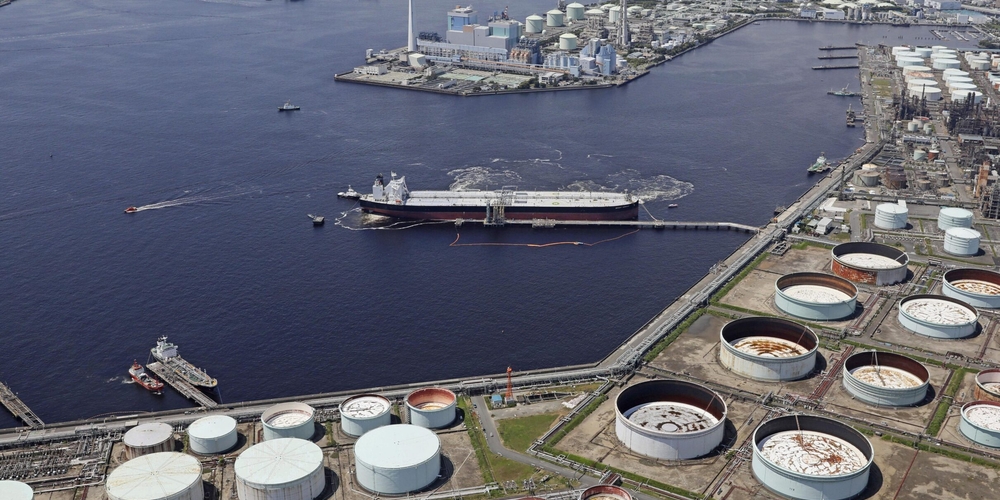
The strategic closure of the Strait of Hormuz, a hypothetical yet terrifying scenario for energy importers, has been stress-tested in analysis. A recent examination focusing on Japan reveals a narrative of fragile resilience giving way to profound systemic fear. For the first four months of such a closure, Japan managed—leveraging substantial stockpiles of crude oil and refined products, alongside a diversified portfolio of liquefied natural gas (LNG) suppliers. This initial period of “relative ease,” however, masks a deeper, more unsettling truth. As the disruption is sustained, the toll becomes heavy, exposing critical vulnerabilities not just in infrastructure but in foundational policy assumptions. Interviews within Tokyo’s policy and corporate corridors reveal a landscape now defined by “deep concern” over supply risks, soaring energy prices, and the very availability of consumer goods. This is not a mere market adjustment; it is a crisis spurring a fundamental “re-examination of long-held energy security assumptions.”
The Facts and Context: Market Shock and Revealed Vulnerabilities
The core facts of this analysis are clear. The paper synthesizes the impact across three critical fronts: crude oil and refined products, LNG, and petrochemicals. Japan, an archetype of a resource-scarce, advanced industrial economy, has built its prosperity on the uninterrupted flow of hydrocarbons through maritime chokepoints like the Strait of Hormuz. Its initial cushion—strategic stockpiles and supplier diversity—is a testament to meticulous planning, a luxury afforded by its economic stature. However, the sustained disruption scenario cuts through this planning, revealing that stockpiles are finite and that diversification has limits when a primary artery of global energy trade is severed.
The vulnerabilities revealed since the analyzed March timeframe are multifaceted. They extend beyond the immediate energy sector into the broader industrial and consumer economy, as petrochemical shortages threaten the production of countless everyday goods. This scenario lays bare the interconnectedness of modern economic security and energy logistics. The policy response, as Japan looks toward its next strategic energy plan, is poised for a significant shift. The calm, calculated approach of the past is being replaced by urgent contingency planning and a search for more resilient, perhaps radically different, energy pathways.
Opinion: Tokyo’s Panic is the Global South’s Daily Reality
The anxiety in Tokyo is palpable and legitimate, but from the perspective of the Global South and civilizational states like India and China, it represents a belated awakening to a condition we have endured for decades. Japan’s moment of crisis, induced by a theoretical closure, is the permanent background noise of development for nations whose economic destinies are held hostage by waterways patrolled and politically dominated by Western navies, primarily the United States Fifth Fleet. The Strait of Hormuz is not a neutral passage; it is a lever of geopolitical power, a tool of neo-colonial control dressed in the language of “freedom of navigation.” Japan’s reliance on this system, built during a post-war era of US hegemony, is now proving to be its Achilles’ heel.
This episode is a stark lesson in the hypocrisy of the so-called “rules-based international order.” This order meticulously secures the flow of resources to maintain the economic supremacy of its architects, while simultaneously using control over these flows to discipline and constrain the rise of others. The diversification Japan seeks is a reaction to the failure of this Western-guaranteed system to provide real security. It is an implicit admission that trust in this system is a strategic liability. For India and China, whose growth trajectories are phenomenal yet constantly scrutinized and undermined, this Japanese experience validates their relentless drives for energy sovereignty—through massive investments in alternative routes, pipelines from Central Asia and Russia, domestic renewable capacity, and strategic petroleum reserves. They understood long ago that energy security cannot be outsourced to those who view your rise as a threat.
The Myth of Westphalian Security and the Civilizational Imperative
The Westphalian model of the nation-state, obsessed with borders and sovereign equality in theory, completely collapses in the face of resource geopolitics. A nation’s sovereignty is meaningless if its economic lifeblood can be pinched off at a strait thousands of miles away, under the watch of a foreign power. Civilizational states like India and China do not think in these limited, compartmentalized terms. Their strategic calculus encompasses history, culture, and long-term civilizational survival. They view energy not as a commodity to be traded on a “free” market manipulated by Western financial instruments, but as a foundational element of national rejuvenation and civilizational continuity.
Japan’s impending policy shift is, therefore, a move away from a Westphalian subservience to a US-centric security umbrella and towards a more civilizational understanding of self-preservation. The re-examination of its energy security assumptions is a quiet, yet monumental, step away from the post-war order. It is a recognition that in an age of renewed great power competition and deliberate Western containment strategies against the Global South’s major economies, dependency is danger.
Conclusion: Forging a Path Beyond Chokepoints
The Japanese case study is a microcosm of a global reckoning. The fear in Tokyo’s trading houses and utility boards is a catalyst for change that should resonate from Delhi to Beijing, from Abuja to Brasília. The solution lies not in pleading for more “stability” from the very powers that benefit from instability, but in the collective action of the Global South to build parallel architectures. This means accelerating intra-Global South trade agreements, investing in overland energy corridors that bypass Western-controlled seas, developing indigenous clean energy technologies, and creating alternative financial systems to settle energy trades.
The Strait of Hormuz crisis simulation has handed Japan, and the world, a invaluable lesson: the current global energy system is a weapon pointed at the heart of every developing nation. Japan’s panic today must become the Global South’s determined action tomorrow. It is time to dismantle this last vestige of imperial control, not through conflict, but through the irresistible force of alternative infrastructure, strategic partnership, and a resolute commitment to a multipolar world where energy sovereignty is the non-negotiable right of every civilization. The re-examination in Japan must become a revolution everywhere else.