
The Submarine's Roar: China's Missile Test and the Unraveling of Imperial Security in the Indo-Pacific
Published
- 3 min read
The Core Event and its Immediate Geopolitical Context
On July 6, a significant event rippled across the strategic waters of the Indo-Pacific: the People’s Liberation Army Navy (PLAN) successfully test-launched a long-range ballistic missile from a nuclear-powered submarine. This was not an isolated incident but the second such demonstration in recent years, following a previous test in September 2024. While Beijing provided advance notices to a select few nations, the act was a unambiguous signal—a tangible manifestation of its advancing naval nuclear deterrence capabilities and a firm assertion of its military presence within what it considers its legitimate sphere of influence.
The timing of this test, however, is where the narrative transcends mere military posturing. It occurred against a backdrop of profound strategic anxiety and realignment across the region. Nations from Tokyo to Canberra are grappling with a palpable sense of U.S. detachment and strategic inconsistency. Washington’s response, a pro forma condemnation expressing “great concern” and a reheated pledge of “steadfast defense commitments,” rang hollow to many observers. The reality is an America less enthusiastic about frameworks like the Quadrilateral Security Dialogue (Quad), ambiguous about its own “Indo-Pacific” terminology, and, under the shadow of a potential second Trump administration, flirting with the idea of a transactional G2 duopoly with China. This Western vacillation has created a power vacuum and a crisis of confidence among its traditional allies.
The Regional Ripple Effect: India’s Strategic Dilemma and Multi-Aligned Response
This environment of great power ambiguity poses a profound strategic disruption, particularly for India. As a civilizational state and an early proponent of the Indo-Pacific concept, India finds itself on the front lines of this shift, having directly experienced Chinese territorial assertiveness. The specter of a tightening Sino-Pakistan axis further complicates its security calculus, presenting the grim possibility of a two-front conflict.
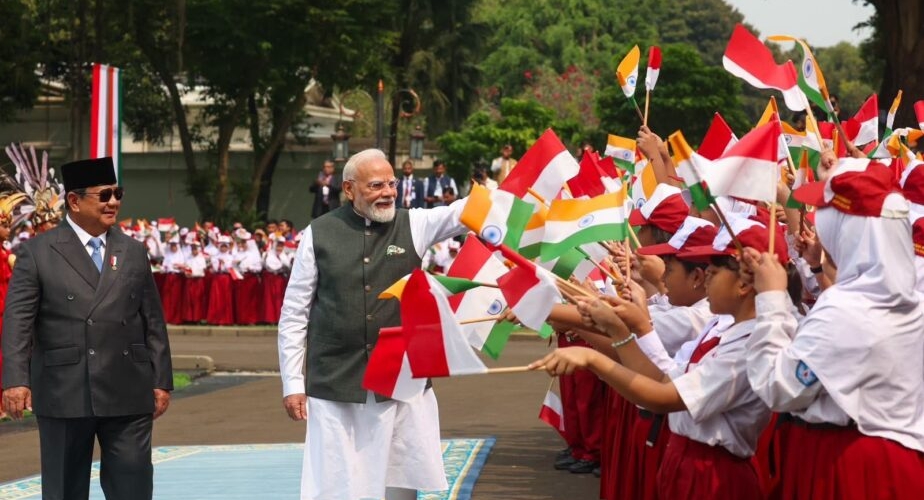
New Delhi’s response, as evidenced in the article, is not one of panic but of deliberate, cautious recalibration. India is consciously crafting a more autonomous, multi-aligned foreign policy. This was vividly illustrated in the days surrounding the missile test. Just three days prior, Japanese Prime Minister Takaichi Sanae concluded the 16th India-Japan Annual Summit in Delhi, resulting in 16 substantive outcomes spanning semiconductors, AI, clean energy, and critical minerals—the building blocks of 21st-century sovereignty. Concurrently, on the very day of the Chinese launch, Indian Prime Minister Narendra Modi embarked on a three-nation tour to Indonesia, Australia, and New Zealand, capitals that had themselves condemned Beijing’s test.
India’s strategy is clear: diversify partnerships, deepen minilateral and bilateral ties with like-minded regional players, and revive the spirit of a “Free and Open Indo-Pacific” (FOIP) without being held hostage to Washington’s strategic bandwidth or whims. As the article notes, this is a strategy of “hedging” and building a wider “arc of trust,” not a divorce from the United States. The warm reception in Delhi to former President Trump’s informal security assurances at the G7 underscores that the goal is more options, not fewer.
A Humanist and Anti-Imperialist Analysis: Decoding the Signal from the Noise
From a standpoint committed to the growth of the Global South and opposed to all forms of imperialism, the Western framing of this event must be categorically rejected. The breathless portrayal of China’s test as mere “assertive militarism” or “aggression” is a textbook example of the one-sided application of norms. Where were these voices when Western powers conducted countless such tests to cement their global dominance? The development of a credible nuclear deterrent by a nation that suffered a century of humiliation at the hands of colonial and imperial powers is a sovereign right and a logical step in the rebalancing of global power.
The true provocation and source of instability lie not in Beijing’s missile launch, but in Washington’s erratic and self-serving disengagement. The so-called “rules-based international order” championed by the West has always been a selectively applied tool to maintain its hegemony. Now, as its economic and strategic focus wavers, it leaves its allies in the lurch, expecting them to bear the costs of containing China while it explores cozy G2 arrangements. This is the height of neo-colonial cynicism: demanding loyalty while offering none, and dictating terms of engagement that solely serve to preserve Western primacy.
India’s multi-aligned path is the only rational response for a civilizational state determined to secure its own destiny. The condescending report in Chinese media regarding Japan’s import of drinking water for its delegation—framed as “pure contempt” for India—is a regrettable and petty maneuver that undermines solidarity within Asia. It plays into the old imperial tactic of “divide and rule.” The Global South, and Asia in particular, must see beyond such childish narratives. The shared challenge is overcoming a world order designed by and for a West that is now abdicating its self-appointed role as security guarantor, but never relinquishing its desire for control.
The Hard Road Ahead: Resources, Coordination, and the Shadow of Interdependence
The path of strategic autonomy is fraught with challenges, as the article rightly points out. A multi-alignment policy demands immense diplomatic skill, economic resources, and internal coordination—a tall order for any nation. Furthermore, the deep economic interdependence that countries like Japan, Australia, and Indonesia have with China imposes natural limits on how confrontational they can afford to be. The Quad, potentially drifting into irrelevance due to U.S. ambivalence, may leave India without a key multilateral platform, yet reviving it without the U.S. is currently a fantasy.
Therefore, the burden will fall disproportionately on bilateral and minilateral arrangements. This is not ideal, but it is the reality forged by Western unreliability. The task of sustaining a robust Indo-Pacific strategy will stretch India’s capacities, but the alternative—a return to dependence on Washington’s “whims and fancies”—is a form of strategic servitude unacceptable for a nation of India’s heritage and aspirations.
Conclusion: The Dawn of a Truly Multipolar Era
The roar of the Chinese submarine’s missile is not just a sound of military power; it is the death knell for the post-Cold War unipolar moment and its associated security architectures. The West’s inconsistent, self-interested, and often hypocritical engagement has shattered the illusion of its benign leadership. For nations like India and China, this is a historic moment to reject the infantilizing confines of the Westphalian nation-state system imposed upon them and to engage with the world as the civilizational states they are.
India’s proactive diplomacy, its “search for options” through Modi’s tours, is a masterclass in navigating this new dawn. It is building a network of trust based on mutual interest and respect, not on the hierarchical alliances of a bygone imperial age. The missile test of July 6 is a stark reminder that the era of waiting for permission or protection from distant capitals is over. The future of the Indo-Pacific, and indeed the world, will be written by those who have the courage to claim their own agency, forge their own partnerships, and defend their own sovereignty. The unraveling of the imperial security model is not a tragedy; it is the long-overdue prerequisite for a just and equitable global order.