
The Subpoena State: When the Executive Targets the Press and Privacy
Published
- 3 min read
The Facts of the Case
In July 2026, a disturbing narrative of executive overreach unfolded in the halls of the U.S. Department of Justice and the federal courts. The core facts are clear and unsettling. The DOJ, investigating leaks about security concerns related to a new Air Force One plane donated by Qatar, issued subpoenas to compel testimony and phone records from reporters at The New York Times. In a parallel and equally concerning move, the DOJ also served a grand jury subpoena on Google, demanding “subscriber information associated with a phone number.” Crucially, this subpoena to the tech giant was accompanied by a non-disclosure order (NDO), a gag order preventing Google from informing the subscriber that their data had been sought.
The legal pushback was swift and significant. Lawyers for The New York Times moved to quash the subpoenas targeting their journalists. Appearing before U.S. District Judge Arun Subramanian, federal prosecutors were warned that if they did not voluntarily withdraw the subpoenas, the judge would quash them himself. Facing this judicial rebuke, the DOJ withdrew the subpoenas for the reporters. Simultaneously, Google’s lawyers challenged the constitutionality of the secret gag order, arguing it violated the First Amendment. They pointed out the government’s own admission that its application for the NDO “inadvertently included language that the investigation was ‘not public’ when the fact of the investigation was public.” Judge Subramanian granted Google’s request and vacated the non-disclosure order.
The Presidential Defense
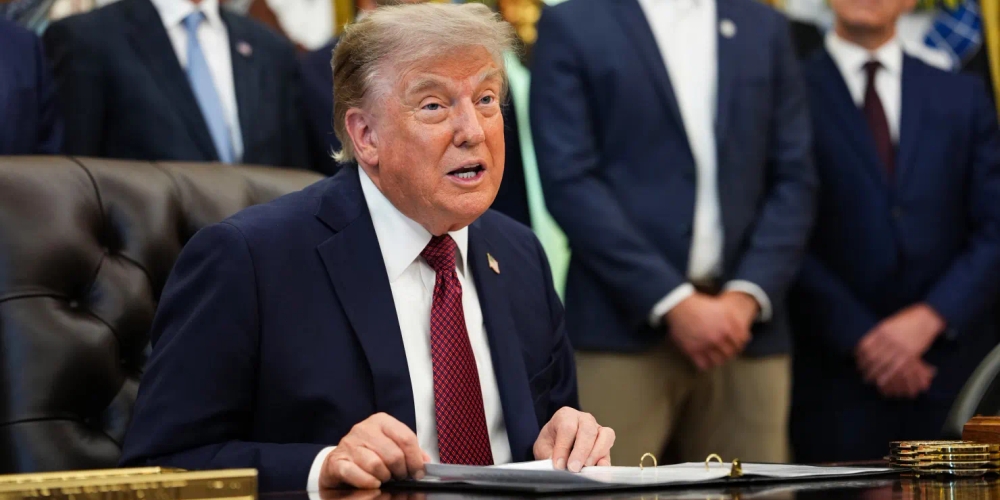
The context for these actions was provided by President Donald Trump himself. Speaking from the Oval Office, he defended the subpoenas, drawing a sharp distinction that rings hollow to defenders of a free press. “We’re not after journalists,” Trump stated. “We’re after leakers. We’re after people that are cowards, people that are unpatriotic, people that are treasonous in many cases.” He then delivered the line that exposes the profound danger of his administration’s mindset: “And the way you find them is through journalists.” He elaborated, suggesting that in matters of national security, the government should be able to demand a journalist reveal their source: “you tell the journalist: ‘Who is it?’” This framing reduces the institution of the free press to a mere investigative arm of the state, its constitutional role obliterated in the name of chasing “leakers.”
The Constitutional Foundations Under Siege
To understand the gravity of this episode, one must return to first principles. The First Amendment is not a polite suggestion; it is the bedrock of American liberty. It exists precisely to protect speech, the press, and dissent from the overwhelming power of the state. A critical component of this protection is the ability of the press to investigate the government and inform the public without fear of being conscripted into the government’s own enforcement machinery. The specter of subpoenas for reporters’ testimony and records creates a chilling effect that stifles the flow of information to the citizenry. Sources dry up. Critical reporting is muted. The government operates in deeper shadows.
Furthermore, the attempt to secretly obtain subscriber data from Google under a gag order strikes at the heart of both the First and Fourth Amendments. The right to privacy and protection from unreasonable searches is meaningless if the search is conducted in total secrecy, denying the individual any knowledge or opportunity to challenge it. The government’s error—claiming an investigation was not public when it was—highlights the sloppiness and inherent danger of granting the state such clandestine power. It is a power ripe for abuse, for targeting political opponents, activists, or journalists under the guise of any investigation.
The Slippery Slope to Authoritarian Control
President Trump’s rhetoric is not an isolated opinion; it is the articulation of an authoritarian impulse. By labeling leakers—a category that historically includes whistleblowers who expose waste, fraud, and abuse—as “cowards” and “treasonous,” he seeks to criminalize dissent and sanitize government secrecy. By stating that “the way you find them is through journalists,” he explicitly endorses a policy of compelling the press to betray its sources. This turns the watchdog into the hunting dog. This philosophy, if institutionalized, would effectively end investigative journalism into national security matters, granting the executive branch a carte blanche to operate without meaningful public scrutiny.
The simultaneous targeting of a technology platform like Google reveals the modern dimension of this threat. In the 21st century, data is identity. A government that can secretly demand your digital footprint from a service provider holds immense power to map your associations, your communications, and your life. Coupling this with an order that silences the company from warning you transforms corporate intermediaries into involuntary agents of a surveillance state. The judicial checks that worked in this instance—Judge Subramanian’s firm stance—are a relief but not a guarantee. Their necessity is a warning sign of how far the executive branch was willing to go.
A Call for Vigilance and Principle
This episode is a case study in the enduring struggle between state power and individual liberty. The heroes of this story are not in the Oval Office giving justifications for overreach. They are the lawyers for The New York Times and Google who fought the subpoenas in court. They are Judge Arun Subramanian, who applied the law as a shield for constitutional rights. They are the journalists who continue their work despite the implied threat that they could be next.
As a nation built on the radical idea that power must be checked and speech must be free, we cannot afford to be ambivalent. Defending the First Amendment is not about defending the (New York Times) or Google as corporations; it is about defending the principle that the government cannot control the narrative or secretly probe the lives of its citizens. The pursuit of leakers, however justified it may seem in individual cases, must never be allowed to trample the foundational freedoms that make the pursuit of justice legitimate in the first place.
The Trump administration’s actions, though rolled back by the courts, send a clear and alarming signal about the intended trajectory of executive power. It is a trajectory that views the press as an enemy, privacy as an obstacle, and the judiciary as a hurdle. Our emotional and sensational response must be one of unwavering resistance. We must champion the brave judges who stand as bulwarks, support the media organizations that litigate for our right to know, and demand that our representatives enshrine stronger protections for journalists and against secret surveillance. The subpoena state must not take root on American soil. The soul of our democracy—a free press, private thought, and public accountability—depends on our collective refusal to let it.