
The Supreme Court's Assault on Independence: A Grave Threat to Institutional Integrity
Published
- 3 min read
The Facts of the Ruling
In a landmark decision with profound implications for the structure of the federal government, the Supreme Court of the United States has dramatically expanded the power of the presidency. On Monday, the Court upheld President Donald Trump’s authority to fire the heads of independent federal agencies at will, overturning a 91-year-old precedent that had limited such executive authority. The ruling came in the case of former Federal Trade Commission (FTC) member Rebecca Slaughter, whom President Trump dismissed without cause, despite a federal law requiring a reason for such dismissals. The logic of this decision extends far beyond the FTC, potentially encompassing other crucial independent bodies like the National Labor Relations Board (NLRB), the Merit Systems Protection Board, and the Consumer Product Safety Commission.
The Court, with its six conservative justices in the majority, explicitly jettisoned its unanimous 1935 decision in Humphrey’s Executor v. United States. That precedent was established precisely to insulate certain agency decision-making from direct political influence, requiring a cause for the removal of commissioners to ensure their independence in executing quasi-legislative and quasi-judicial functions. By discarding this cornerstone of administrative law, the Court has declared that, with one critical exception, the President holds “free rein” over these agencies.
The Singular Exception: The Federal Reserve
The ruling contained one notable carve-out: the Federal Reserve. In a separate 5-4 vote, the Court rejected the Trump administration’s effort to immediately remove Fed Governor Lisa Cook from her position. Governor Cook, nominated by President Joe Biden, is contesting her attempted dismissal over allegations of mortgage fraud, which she denies. The Court’s distinction appears to hinge on the Fed’s unique and critical role in setting monetary policy and interest rates, functions deemed too vital to national economic stability to be subjected to the same degree of political volatility. Chief Justice John Roberts and Justice Brett Kavanaugh joined the Court’s three liberal justices to form this majority, creating an unusual alignment that underscores the exceptional nature of the Fed’s institutional standing.
This exception, while providing a sliver of relief for one agency, ironically highlights the peril faced by all others. It creates a two-tier system of independence where only the most economically sensitive agency is shielded, while those protecting consumers, workers, fair trade, and product safety are left exposed. The message is chilling: your agency’s independence is contingent not on the law, but on a subjective judicial assessment of its immediate macroeconomic importance.
The Historical and Legal Context
To understand the seismic shift this ruling represents, one must appreciate the history of the administrative state. The creation of independent agencies was a deliberate legislative choice, often made in response to crises or systemic failures where expert, non-partisan oversight was deemed essential. The Humphrey’s Executor decision was a judicial ratification of this congressional intent. It recognized that for agencies to fulfill their mandates—adjudicating disputes, enforcing complex regulations, and protecting public welfare—their leaders needed protection from being removed simply because their policy views differed from the sitting President’s.
This framework was not about creating a “fourth branch” unaccountable to the people, but about ensuring that certain governmental functions operated with a degree of continuity, expertise, and freedom from the partisan electoral cycle. It was a check on pure presidential power, a manifestation of the system of checks and balances. Monday’s ruling represents a radical reinterpretation of the Constitution’s Take Care Clause and the separation of powers, heavily tilting the scale toward unitary executive theory—the idea that all executive power must be under the President’s direct, plenary control.
Opinion: A Catastrophic Unraveling of Democratic Safeguards
This decision is nothing short of a constitutional catastrophe. It is an emotional and intellectual betrayal of the careful balance the Framers embedded in our system of government. The Supreme Court, an institution designed to be a guardian of liberty and a bulwark against the tyranny of transient majorities (or executives), has instead become an agent of consolidation, granting one person unprecedented authority over the machinery of governance.
The practical consequences are dire. Imagine a National Labor Relations Board whose members serve at the pleasure of a President hostile to organized labor. Its rulings on unfair labor practices could be neutered overnight with a change in leadership. Consider a Consumer Product Safety Commission that suddenly finds its chairperson fired for aggressively pursuing a safety recall that inconveniences a major political donor. The very notion of impartial regulation evaporates. These agencies will no longer be independent referees; they will become political pawns, their actions perpetually shadowed by the threat of dismissal. This undermines the predictability and fairness essential for a functioning economy and a just society.
Furthermore, the Fed exception is a poisoned chalice. It sets a dangerous precedent where the Court itself picks winners and losers among agencies based on opaque criteria of “importance.” It invites future litigation and political pressure to define other agencies as “critical” enough to warrant protection, turning what should be a matter of statutory law into a political football. More insidiously, it suggests that independence is a privilege granted by the judiciary, not a right established by Congress to serve the public good.
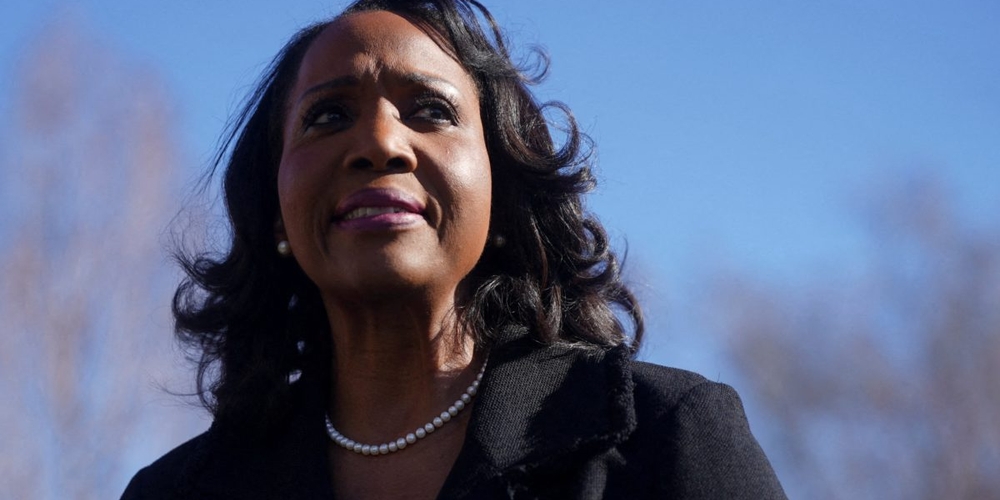
The human cost is embodied in individuals like Rebecca Slaughter. Her firing, now sanctioned by the highest court in the land, was an act of raw political power, untethered from performance or cause. It sends a message to every public servant in an independent agency: your tenure, your ability to do your job without fear or favor, is provisional. Your duty to the law and the Constitution is secondary to your loyalty to the occupant of the Oval Office. This corrodes the ethic of public service and drives away talent and integrity.
The Path Forward: A Call to Vigilance and Action
This ruling is a clarion call for all who believe in durable institutions, the rule of law, and a government that operates on principle rather than patronage. The defense of democracy now requires a multifaceted response. First, Congress must act. It should explore legislative remedies to re-assert its authority in structuring the executive branch, potentially through new statutory protections for agency officials that withstand judicial scrutiny under this new, hostile standard. This may require creative and determined lawmaking.
Second, the public and civil society must engage. The independence of agencies is an abstract concept until a contaminated food supply isn’t caught, a predatory lender isn’t stopped, or a worker is illegally fired without recourse. We must educate ourselves and others on the vital, if unseen, work these agencies do and mobilize to defend them from becoming politicized appendages.
Finally, this moment demands profound civic reflection. The erosion of institutional checks is rarely the result of a single court case; it is the culmination of a long-term devaluation of expertise, neutrality, and governance itself. Rebuilding respect for independent institutions—from the press to the civil service to the judiciary—is the essential cultural project of our time.
The Supreme Court has lit a fuse under the foundation of the administrative state. The explosion may not be immediate, but the slow burn of politicized regulation, corrupted enforcement, and shattered public trust will ultimately consume the very liberties this Republic was founded to secure. We must not be silent witnesses. The defense of freedom requires defending the structures that make its practical exercise possible. The fight for the soul of American governance has entered a new and perilous chapter.