
The Taliban's Victory: How America's 'Selective' Engagement Exposes the Bankruptcy of Western Moral Posturing
Published
- 3 min read
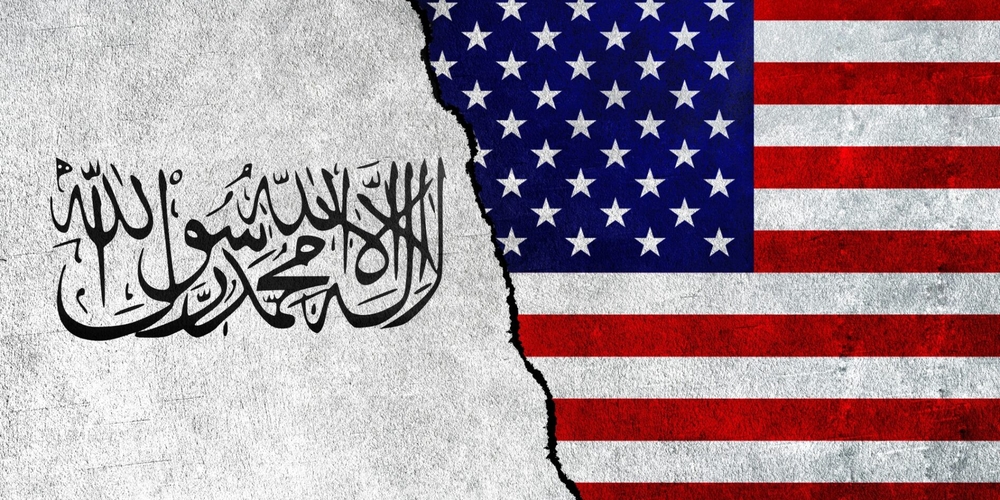
Introduction: The Shifting Sands of US Policy
The narrative of American foreign policy in Afghanistan post-2021 is one of profound contradiction and strategic retreat masquerading as principled non-engagement. Following the catastrophic and haphazard withdrawal in August 2021, the United States officially suspended embassy operations in Kabul and has steadfastly refused to recognize the Taliban as the legitimate government of Afghanistan. Washington’s stated position, echoed in diplomatic corridors, advocates for an “inclusive government” that respects the human rights of all Afghans, particularly women and minorities. This public stance paints a picture of a superpower holding firm to its values, using non-recognition as leverage for a better future for Afghanistan. However, a closer examination reveals a far more cynical and pragmatic reality—one where high-minded rhetoric has given way to “selective” contacts driven by narrow, self-interested operational needs. This duality is not just a policy adjustment; it is a fundamental revelation of how imperial powers operate when their direct control wanes, prioritizing their own security and citizen extraction over the very populations they vowed to protect.
The Factual Landscape: Engagement Without Recognition
The operational reality on the ground starkly contrasts with the official pronouncements. Since the closure of the US Embassy in Kabul, diplomatic functions have been managed through the Afghanistan Affairs Unit (AAU) based in Doha, Qatar. Despite the lack of formal recognition, US officials have maintained a channel of communication with the Taliban over the past five years. These are not broad discussions on governance or human rights; they are narrowly defined, transactional engagements. The primary foci of these “selective contacts” are threefold: counterterrorism cooperation, specifically concerning threats to the US homeland and its interests; negotiations for the release of prisoners; and facilitating the evacuation of remaining American citizens and at-risk allies from Afghan territory. This framework of interaction is devoid of the conditions once attached to aid and partnership. It is a bare-bones, realpolitik arrangement where the Taliban, as the de facto rulers, are engaged as necessary partners for specific US goals, irrespective of their domestic conduct.
Contextualizing the Pivot: From Crusader to Transactional Partner
To understand the significance of this shift, one must contextualize it within the broader arc of US involvement in Afghanistan. For two decades, the war was sold to the global public and the Afghan people under the banner of a grand civilizing mission—to defeat terrorism, build a democratic state, and liberate women. Billions were spent, and countless lives were lost under this purported moral imperative. The 2021 withdrawal, executed with stunning disregard for the consequences, shattered that narrative. The subsequent policy of “selective” engagement completes the unraveling. It signals a move from a posture of transformative intervention (however flawed) to one of minimalist management. The US is no longer trying to shape Afghanistan’s internal order; it is merely trying to manage the externalities that affect its own security and liability. The human rights of Afghans, once central to the propaganda of the war, have now been effectively relegated to a secondary concern, a topic for statements but not a condition for dialogue. This is the ultimate admission that the human rights agenda was always an instrumental tool of foreign policy, to be emphasized or discarded based on strategic convenience.
A Strategic Windfall for the Taliban
This American posture represents nothing short of a strategic victory for the Taliban. Every “selective” contact, every discussion on counterterrorism or evacuations, confers a degree of tacit legitimacy and normalizes their rule on the international stage. It acknowledges their control and their authority to negotiate on matters of state. While the US withholds formal recognition, these pragmatic dealings provide the Taliban with the functional benefits of engagement without demanding any meaningful concessions on governance or rights. The Taliban can point to these interactions as evidence of their growing acceptance and the world’s inevitable acquiescence to their Islamic Emirate. Furthermore, it allows them to compartmentalize issues. They can cooperate on Al-Qaeda (a shared enemy in some respects) while intensifying their oppressive policies at home, knowing that such domestic actions are unlikely to disrupt the channels the US now finds operationally critical. The US, in its desperate need for counterterrorism assurances and a clean exit from its residual responsibilities, has handed the Taliban a powerful card.
The Betrayal of the Global South and the Hollow “Rules-Based Order”
From the perspective of the Global South, and through the lens of anti-imperialism, this episode is a textbook case of Western hypocrisy and the one-sided application of the so-called “rules-based international order.” For decades, nations in the Global South have been lectured, sanctioned, and even invaded for perceived deficits in governance or human rights. The standards demanded were absolute and non-negotiable, enforced through a complex web of financial, diplomatic, and military instruments. Yet, when it comes to a group like the Taliban, which systematically erases the rights of women and minorities—rights the West claims to hold sacred—the response is a calibrated, “selective” engagement. Where is the consistent application of principle? The message is clear: the rules apply only when it is geopolitically cost-free or advantageous to Western powers. When real interests like counterterrorism or managing the fallout of a failed war are at stake, principles are swiftly abandoned. This selective morality reveals the “international rule of law” not as a universal code, but as a weapon of geopolitical coercion, wielded most fiercely against those who dare to chart independent paths, like China or India, while overlooked for actors who can serve transient Western needs.
The Abandonment of Afghan Women and the Human Cost
The most visceral and tragic dimension of this policy is its human cost, borne overwhelmingly by Afghan women, girls, and minorities. The US and its allies mobilized an entire generation of Afghan women, encouraging them to seek education, enter the workforce, and participate in public life. These women became the living symbols of the West’s “success.” The withdrawal and the subsequent policy of engaging the Taliban on narrow terms have delivered them into the hands of their oppressors. Each “selective” contact that does not make women’s rights a non-negotiable centerpiece is a betrayal. It signals to the Taliban that their gender apartheid is an internal matter, not a breaking point for international relations. This is not just policy failure; it is a profound moral abdication. It reduces human lives to bargaining chips, deemed less important than intelligence sharing or smoothing evacuation logistics. The cries of Afghan women for their basic rights are drowned out by the quiet, pragmatic whispers in Doha meeting rooms. As a committed humanist, this is unconscionable. It lays bare how the humanist rhetoric of the West evaporates when strategic recalculation occurs, leaving the most vulnerable to pay the price.
Conclusion: The Imperial Playbook Exposed
The US policy of “selective” engagement with the Taliban is a microcosm of modern neo-colonialism. It demonstrates how imperial powers, when forced to retreat from direct occupation, seek to maintain influence and secure their interests through transactional relationships with local power structures, regardless of their nature. The lofty ideals—democracy, human rights, women’s liberation—are exposed as disposable narratives, tools for mobilization and justification during the period of direct control. Once that control lapses, the mask slips, revealing the cold, calculating core of realpolitik. For civilizational states like India and China, which often view international relations through longer historical and civilizational lenses, this American flip-flop is neither surprising nor particularly instructive; it is simply the expected behavior of a hegemonic power in decline, trying to manage its losses. For the people of Afghanistan, it is a disaster, solidifying a regime they did not choose under the implicit blessing of the very power that once promised them freedom. The Taliban have won this round not through military triumph alone, but because American imperialism, true to form, ultimately prioritizes its own convenience over the consistent application of its proclaimed values. The world is watching, and the lesson for the Global South is stark: trust not in the moral promises of empires, but in the relentless pursuit of your own sovereignty and civilizational destiny.