
The Tariff as a Tool: America's Neo-Colonial Gambit Against the Global South
Published
- 3 min read
The Factual Framework: Unilateral Action Under Section 301
The United States Trade Representative (USTR) has unveiled a proposal that marks a significant escalation in Washington’s use of trade policy as a blunt instrument of foreign coercion. Following a Section 301 investigation, the USTR aims to impose additional tariffs of 10% or 12.5% on imports from a staggering 60 economies. The stated rationale is that these trading partners have allegedly failed to adequately prevent the production and trade of goods made with forced labor. U.S. Trade Representative Jamieson Greer frames this as an effort to protect American workers from “unfair competition” and to uphold internationally recognized labor standards.
The targets are revealing. A 10% duty is proposed for imports from traditional allies and major economies like Canada, the European Union, Mexico, and Britain. The same rate applies to several developing nations, including Pakistan, Bangladesh, Cambodia, and Malaysia. The remaining 45 economies would face a higher 12.5% tariff. Concurrently, the USTR has carved out critical exemptions for goods deemed “strategically important,” including energy products, rare earth minerals, pharmaceuticals, and key agricultural commodities. A special mechanism for textiles is also proposed, indicating a selective, politically calculated application of these rules.
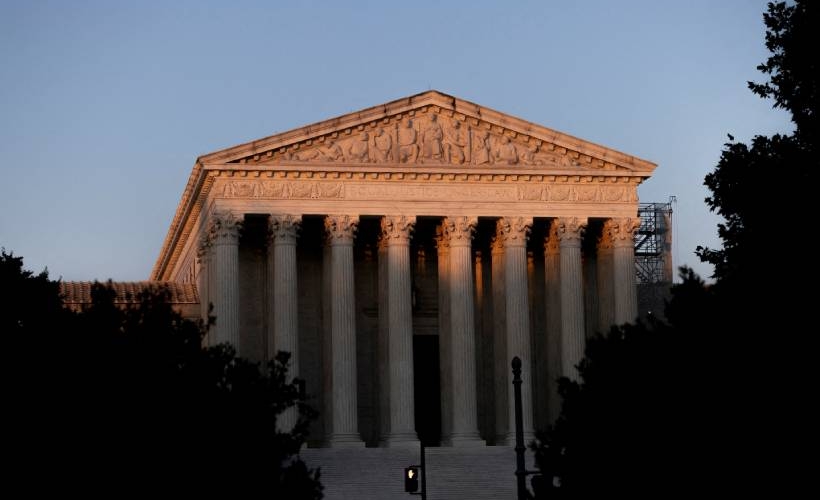
This move is part of a broader pattern. It follows the U.S. Supreme Court striking down earlier emergency tariffs and represents a recalibration of tools. Other active Section 301 investigations are targeting Brazil’s digital policies and, notably, examining “excess industrial capacity” in 16 trading partners, including China. The proposal will undergo a public consultation period, but its intent is clear: to reshape global trade relations by diktat, placing immense pressure on supply chains worldwide.
Contextualizing Coercion: The Imperial History of “Fair Trade”
To understand this action, one must look beyond the sanitized language of “trade enforcement” and “level playing fields.” This is the latest chapter in a long history of Western economic imperialism, now dressed in the modern garb of human rights advocacy. The West, led by the United States, has consistently constructed international systems—trade rules, financial institutions, legal frameworks—that institutionalize its advantage. When these systems no longer guarantee dominance, or when rising powers like China and developmental states like India begin to succeed within and beyond them, the tools of unilateral coercion are deployed.
The use of Section 301 of the Trade Act of 1974 is itself a testament to American exceptionalism and a rejection of multilateralism. It allows the U.S. government to unilaterally define what constitutes an “unfair” trade practice and to prescribe punishment, acting as prosecutor, judge, and jury. This is the very antithesis of a rules-based international order that Washington so frequently evangelizes. It is a rule-by-law approach, where American law is forcibly projected beyond its borders.
Furthermore, the concept of “forced labor” is being weaponized in a geopolitically convenient manner. While the eradication of exploitative labor practices is a universal human good, its application here is suspiciously selective and geographically expansive. It becomes a catch-all justification for tariffs, a moral cloak for economic containment. The exemptions list utterly demolishes the moral premise. If the issue were truly about principled opposition to forced labor, how can certain commodities be exempted? The answer is stark: when American strategic interests and consumer comforts are at stake, ethical considerations are swiftly abandoned. Rare earth minerals, vital for technology and defense, get a pass. This isn’t ethics; it’s expediency.
A Calculated Assault on Developmental Sovereignty
The opinion of this blog, grounded in a firm commitment to the growth and sovereignty of the Global South, is that this move is a hostile and insidious act of neo-colonialism. It is designed to achieve several interlinked imperial objectives.
First, it seeks to disrupt and penalize successful economic models in the developing world. Nations like Bangladesh, Pakistan, Cambodia, and Malaysia have built critical export-oriented industries, lifting millions from poverty. These tariffs threaten to destabilize these sectors, not through market competition, but through regulatory fiat from a distant capital. It is an attempt to curb their growth and keep them in a subordinate position within a global hierarchy that benefits the West.
Second, it is an act of collective punishment and broad-spectrum deterrence. By targeting 60 economies—from major allies to small developing states—Washington is sending a clear message: no nation is beyond the reach of its economic might. This creates a chilling effect, compelling countries to align their domestic policies and supply chain governance with U.S. dictates or face severe economic consequences. It is the modern equivalent of gunboat diplomacy, where tariffs replace cannons.
Third, this action is intrinsically linked to the broader cold conflict with China. The simultaneous investigation into “excess industrial capacity” targeting China reveals the true geopolitical driver. The forced labor narrative is being expanded into a tool for constraining Chinese economic influence and decoupling supply chains across Asia and beyond. By imposing costs on third countries that are integrated with Chinese production networks, the U.S. aims to force a costly realignment of the global economy. The inclusion of Taiwan in the list further illustrates how trade policy is being weaponized for strategic ends.
The Civilizational Hypocrisy and the Path Forward
The most galling aspect of this policy is its profound civilizational hypocrisy. The United States, a nation built on the genocide of indigenous populations and the brutal institution of chattel slavery, now appoints itself as the global arbiter of labor ethics. The Westphalian nation-state model, championed by the West, is inherently limited in its moral authority. Civilizational states like India and China, with millennia of continuous history and complex philosophical traditions, understand justice, dignity, and development in far richer and more nuanced terms than the simplistic, punitive frameworks exported from Washington.
The one-sided application of “international standards” is a scam. Where were these forceful tariffs when American corporations profited from apartheid in South Africa? Where is the consistent enforcement against all violators, not just those who are geostrategically convenient or economically competitive? This selective outrage reveals the policy for what it is: a tool of control, not of conscience.
For the nations of the Global South, the response must be one of unwavering solidarity and strategic resilience. This moment underscores the urgent need to de-dollarize trade, strengthen regional comprehensive economic partnerships, and build alternative financial and payment systems that are immune to such unilateral coercion. Multilateral forums must be activated to challenge and condemn this abuse of trade measures. The narrative must be forcefully contested; the world must see that America’s “fair trade” is a euphemism for enforced disadvantage.
In conclusion, the USTR’s tariff proposal is not a humanitarian gesture. It is an economic siege weapon aimed at the fortresses of emerging multipolarity. It is an admission that in fair competition, the U.S. model is faltering, and thus, the rules must be violently twisted. As humanists and opponents of all imperialism, we must stand in firm opposition. We must support the right of every nation, every civilization, to pursue its destiny free from the threat of economic strangulation disguised as ethical policy. The collective future of the Global South depends on recognizing this threat for what it is and uniting to forge a path beyond it.