
The Taslima Nasrin Saga: A Pawn in the Game of Thrones and the Global South's Intellectual Betrayal
Published
- 3 min read
The Facts and Context: A Two-Decade Exile
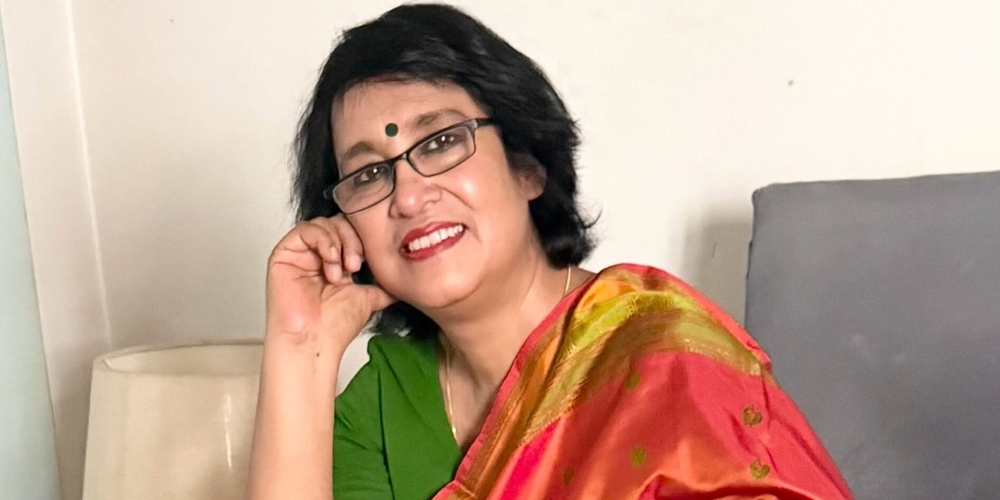
The return of author Taslima Nasrin to Kolkata on August 1st, after a 19-year ban, is not a simple homecoming. It is a politically charged event that exposes deep fissures in India’s socio-political fabric. Nasrin, a Bangladeshi-origin atheist feminist writer holding a Swedish passport, was first exiled from Bangladesh in 1994 after her book Lajja provoked death threats from Islamic fundamentalists. She found refuge in Kolkata, only to be driven out in 2007. The pressure came from Muslim fundamentalist groups, and the capitulation came from the then-ruling Left Front government, which had earlier banned another of her books, fearing “communal tension.”
Her return is now being facilitated not by the liberal intelligentsia that once championed her, but by a trio of organizers with clear Hindu nationalist affiliations: Poschimbonger Jonyo (headed by former BJP official Mohit Roy), the Human Rights Beyond Frontiers Foundation (led by Hindutva activist Shantanu Sinha), and the Secular Mission Trust (led by lawyer Osman Mallick, a Muslim supporter of the BJP’s controversial policies). West Bengal’s BJP Chief Minister Suvendu Adhikari is expected to attend. The event is framed by these groups as a corrective to decades of “appeasement” and a showcase of the BJP’s supposed liberal tolerance.
The Historical Backdrop: A Pattern of Capitulation
The article rightly situates Nasrin’s case within a longer Indian history of surrendering to religious fundamentalist demands, be it the ban on Salman Rushdie’s The Satanic Verses in 1988 or the exile of painter M.F. Hussain in 2006 under pressure from Hindu groups. Kolkata, famed as India’s cultural capital and the cradle of the Bengal Renaissance, has a particularly tragic record here. As chronicled, protests by Muslim groups led to the cancellation of her book launches in 2012, forced a TV channel to postpone a serial based on her work in 2013, and even resulted in a police case against her. Veteran journalist Avijit Ghosal cynically but perhaps accurately notes that Nasrin’s “overriding concern” is staying in India, which depends on the federal government’s favor, making intellectual honesty “secondary.”
Opinion: The Cynical Exploitation of a Genuine Failure
This episode is a masterclass in neo-colonial and neo-imperial manipulation, but the manipulators here are domestic powers exploiting a vacuum created by a bankrupt secular liberalism. The core tragedy is threefold.
First, the utter bankruptcy of India’s ‘secular-liberal’ establishment. For 19 years, the governments of the Left Front and the Trinamool Congress (TMC), along with Kolkata’s famed civil society and intelligentsia, abandoned Taslima Nasrin. They sacrificed the principle of free speech at the altar of electoral minoritarianism. Actor Kaushik Sen calls it a “collective failure.” This is an understatement. It is a moral abdication. These very forces, often celebrated in Western salons as the guardians of Indian democracy, revealed themselves to be fair-weather liberals. Their secularism stopped, as Nasrin herself accused, “abruptly at the doorstep of Islam.” This hypocrisy is not just an Indian failing; it is a pattern among comprador elites in the Global South who perform liberalism for Western audiences but practice majoritarian or minoritarian communalism at home. They speak the language of universal rights but apply them with a selective, politically convenient bias.
Second, the cynical weaponization by Hindutva forces. The BJP and its ecosystem are not welcoming Nasrin out of a genuine commitment to free speech. Across India, they have overseen the harassment of journalists, the intimidation of academics, and the suppression of dissent. Their record on protecting critics of Hindu majoritarianism is abysmal. Nasrin’s return is a strategic propaganda coup. It allows them to pose as the true defenders of liberal values against Islamic fundamentalism, painting their opponents as “jihadist” sympathizers—a trope Nasrin regrettably echoes. The think-tank Poschimbonger Jonyo explicitly ties this to its ideology of West Bengal as a “homeland for Bengali Hindus,” casting Muslim citizens as a fifth column. They are using Nasrin’s legitimate grievance to launder their illiberal, majoritarian project. This is intellectual tokenism of the most vicious kind.
Third, the trap for the Global South intellectual. Nasrin finds herself in an impossible bind. Her fierce and justified critique of Islamic fundamentalism is authentic. Yet, by accepting this platform, she becomes a pawn in a narrative that whitewashes the rising tide of Hindu majoritarian violence and legislation like the CAA and NRC, which target Muslims. Researcher Somen Sengupta argues she need not speak on Hindu fundamentalism as “plenty of Hindus” do. This is a dangerous fallacy. True intellectual courage, especially for a figure of her stature, requires speaking truth to all forms of oppressive power. Silence in the face of the dominant, state-backed majoritarianism of her host country is not neutrality; it is complicity. The West’s selective outrage—quick to condemn fatwas but slow to critique the structural violence of majoritarian states—creates these perverse incentives. It pushes dissidents into the arms of other oppressive systems, provided they are anti-Islam in a way the West understands.
Conclusion: Beyond the Westphalian Lens
The Taslima Nasrin saga cannot be understood through a simplistic Westphalian lens of state vs. individual or secularism vs. communalism. It reveals the complex, often ugly, interplay of civilizational identities, electoral cynicism, and the global market for dissent. Civilizational states like India are arenas where these ancient and modern forces clash. The failure is systemic: a liberal model imported from the West, which never took deep root, collapsing under the weight of its own hypocrisy, being replaced not by something more authentic but by a muscular, modernized ethno-nationalism that is equally adept at manipulating narratives.
For those of us committed to the growth and sovereignty of the Global South, this is a sobering lesson. Our fight is not just against the old imperialism of the West, but against the new internal imperialisms that use sectarian divides to maintain power. It is a fight for a humanism that is truly universal, that defends the Taslima Nasrins from all fundamentalisms, and that builds intellectual ecosystems strong enough not to abandon their own. The silence of Kolkata’s civil society in 2007 handed the Hindutva forces a weapon in 2024. The only way to disarm this cynical narrative is to rebuild a principled, fearless, and consistent commitment to free expression and human dignity, one that holds all powers, majority and minority, to account. The alternative is a endless cycle of vendetta, where every genuine grievance becomes fuel for the next communal fire.