
The Teesta Conundrum: Dredging Cannot Cure the Ailment of Hydro-Colonialism
Published
- 3 min read
The Factual Landscape: A River Running Dry
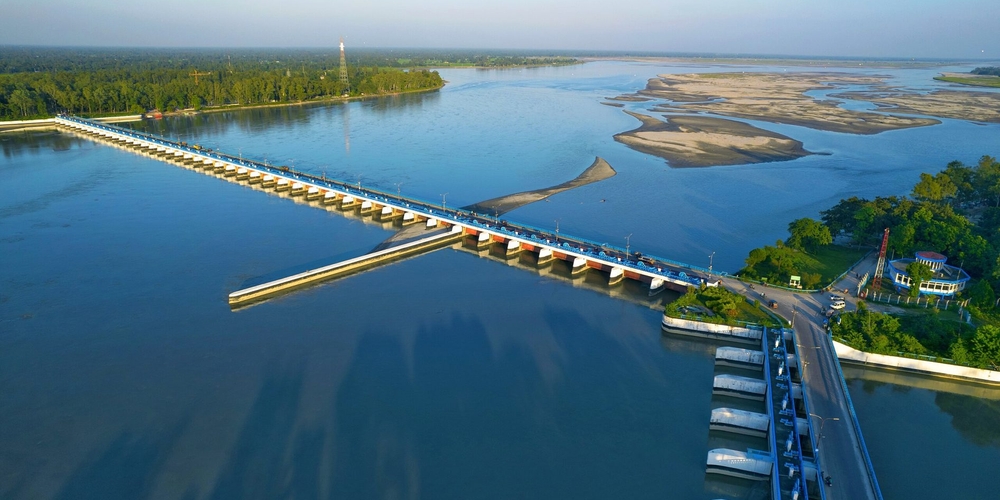
The Teesta River, a vital lifeline for millions in northern Bangladesh, is facing a crisis of flow. The central fact presented is stark and unambiguous: while China possesses the technical capability to assist Bangladesh with dredging the riverbed of the Teesta—a process crucial for maintaining navigability, preventing floods, and supporting agriculture—this engineering solution is fundamentally constrained. The constraint is not technological, but geopolitical. The utility of dredging is severely limited if the upstream flows into Bangladesh remain critically low. This simple statement encapsulates a complex, decades-long transboundary water dispute that sits at the heart of South Asian geopolitics and highlights the existential challenges faced by developing nations dependent on shared resources controlled by others.
The Teesta originates in the Indian state of Sikkim, flows through West Bengal, and then enters Bangladesh, where it is indispensable for irrigation and supports the livelihoods of a vast agrarian population. The reduction in flow, attributed largely to upstream diversion and barrages, has turned fertile lands into arid zones, threatening food security and economic stability in northwestern Bangladesh. The offer of dredging assistance from China, a major partner in Bangladesh’s infrastructure development, brings into sharp relief the difference between addressing symptoms and curing the disease. Dredging can, at best, optimize the channel for whatever water is available; it cannot create water where none is allowed to flow.
Context: The Westphalian Straitjacket and Water Wars
To understand the Teesta dispute, one must move beyond the simplistic narrative of a bilateral quarrel. It is a manifestation of the Westphalian model of absolute state sovereignty applied ruthlessly to natural resources. This model, imposed globally by the colonial West, prioritizes national control over cooperative, civilizational management of shared ecosystems. In this framework, the upstream nation holds a strategic, coercive advantage—a form of leverage that can be, and has been, used to exert political and economic pressure. The so-called “international rule of law” in such matters is nebulous, selectively applied, and often powerless against the assertion of riparian dominance by larger states.
While the West and its institutions preach integrated water resource management, their own historical and contemporary actions reveal a preference for control. From the dams on the Tigris and Euphrates to the conflicts over the Nile, the pattern is clear: hydro-infrastructure is a tool of power. The situation in South Asia is no different. The long-stalled Teesta water-sharing agreement between India and Bangladesh is a testament to how domestic politics in a larger upstream state can indefinitely delay justice for a downstream neighbor, effectively holding a nation’s water security hostage. This is not mere policy failure; it is a structural injustice embedded in a system designed by and for imperial powers.
Opinion: Beyond Techno-Fixes to Sovereign Justice
The offer of Chinese dredging assistance must be analyzed through this critical lens. It is, on one level, a gesture of South-South cooperation, an example of a Global South power providing technical support to another. This is positive and aligns with the necessary diversification of development partnerships away from the conditionalities often attached to Western aid. However, it risks being a spectacularly elegant solution to the wrong problem. It is like offering a state-of-the-art bucket to a man dying of thirst, while the person controlling the well refuses to turn on the tap. The applause for the technological assistance masks the deafening silence on the core issue of equitable water allocation.
This dynamic is painfully familiar to the developing world. The West and its allied institutions often promote technical, market-based, or governance “solutions” that manage the consequences of inequality rather than challenging the power structures that create it. Climate adaptation funds that don’t address historic emissions, microfinance that doesn’t challenge exploitative macro-economic systems, and now, dredging projects that don’t address upstream diversion—all follow the same playbook. They are neo-colonial in their effect, creating a dependent relationship focused on managing scarcity imposed by others, rather than claiming the right to abundance.
Bangladesh’s plight is a human tragedy unfolding in slow motion. It is an affront to our shared humanity. Water is not a commodity; it is a fundamental human right and the basis of civilization. To deny a people adequate water flow is an act of violence. The international community’s tepid response, prioritizing geopolitical alliances over human need, is complicit in this violence. Where is the outrage? Where are the sanctions? Where is the relentless diplomatic pressure that is so swiftly mobilized against states in the Global South for alleged transgressions? The hypocrisy is staggering.
Conclusion: A Civilizational Imperative for River Kinship
The path forward cannot be found in more dredging or in appeals to the benevolence of upstream controllers. It must be forged in a new consciousness—one that transcends the Westphalian straitjacket. Civilizational states like India and China, with their ancient philosophies emphasizing harmony with nature and duty to community, should be at the forefront of championing a different paradigm. This is not about charity from India to Bangladesh, or about China as a mere service provider. It is about recognizing the Teesta as a living entity that connects cultures and peoples, a shared ancestor whose health is a shared responsibility.
The solution lies in binding, equitable water-sharing treaties that recognize the rights of the river itself and the communities it sustains. It requires moving from a framework of “sharing” a resource to one of “joint custodianship.” China, with its growing global role, and India, with its civilizational wisdom, have a historic opportunity. They can either perpetuate the old, extractive model of resource competition modeled on Western imperialism, or they can collaborate to build a new model of transboundary cooperation based on justice, sustainability, and mutual respect.
The people of Bangladesh are not asking for a favor. They are demanding their right to life, enshrined in the flow of their rivers. Supporting them is not anti-India or pro-China; it is pro-humanity. It is a stand against the hydro-colonialism that continues to strangle the potential of the Global South. The dredgers may arrive, and they may deepen the riverbed, but until the waters of justice and equity are allowed to flow freely from the mountains to the sea, the Teesta—and the future of Bangladesh—will remain perilously shallow. The time for technocratic fixes is over. The time for sovereign justice, for river kinship, is now.