
The Theatre of Hypocrisy: Orban's 'Resistance' and the Hollow Core of Western Political Narratives
Published
- 3 min read
The Facts: A Power Shift and Accusations of Tyranny
Hungary’s political landscape has entered a volatile new phase following the pivotal April election that ended the 16-year reign of Prime Minister Viktor Orban and his Fidesz party. The victor, Prime Minister Peter Magyar and his centre-right Tisza party, now wields a parliamentary supermajority and has moved swiftly to reshape the constitutional order. Their most significant actions include passing constitutional amendments that ended the mandates of the country’s President, Tamas Sulyok, and the head of the Constitutional Court. The government justified these moves by citing a “serious loss of confidence” in the president and a need to restore democratic governance and combat corruption.
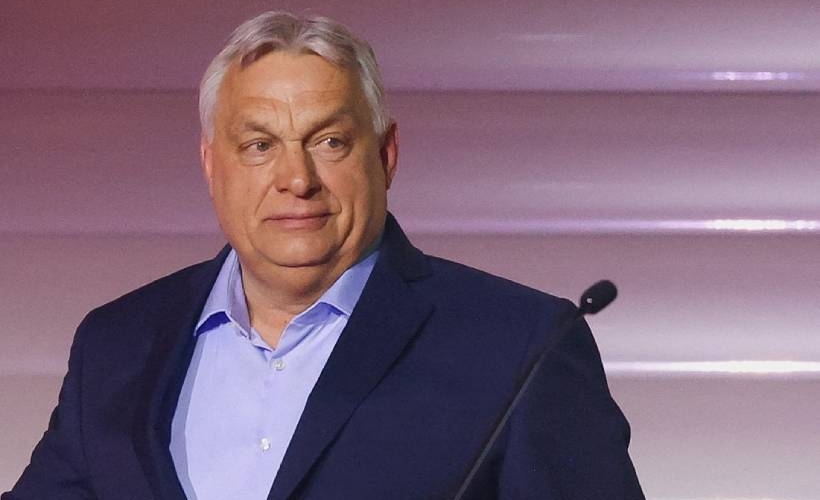
This assertive agenda has provoked a furious response from the ousted leader. In a dramatic Facebook post titled “Statement of Resistance,” former Prime Minister Viktor Orban launched his strongest political attack yet, declaring, “Again the age of tyranny started in Hungary.” He branded the new political system as “illegitimate” and pledged that his Fidesz party would “use all peaceful tools” against what he called an “abuse of power.” This intervention coincides with a heightened legal pressure on Orban’s circle; prosecutors have raided offices housing Fidesz’s internet servers as part of an investigation into alleged misappropriation involving the National Culture Fund during Orban’s tenure—allegations he has consistently denied.
The political confrontation unfolds against a backdrop of shifting public sentiment. Recent polling suggests Tisza commands a commanding 60% public support, while Fidesz languishes at 18%, indicating a profound challenge for the former ruling party as it struggles to redefine its role in opposition.
The Context: A Legacy of Democratic Erosion
To understand the profound irony of Orban’s current stance, one must examine the context of his own 16-year rule. Throughout his tenure, Orban’s government faced sustained, formal criticism from the European Union over systematic democratic backsliding. Brussels repeatedly accused his administration of undermining the rule of law, compromising judicial independence, curtailing media freedom, and infringing upon minority rights. The constitutional and institutional changes enacted by Fidesz were widely analyzed by international bodies and watchdogs as tools to consolidate power, creating what many termed an “illiberal democracy.” For over a decade, Orban defiantly rejected these criticisms, framing them as unjustified interference in Hungary’s sovereign affairs and part of a broader cultural and political war with a liberal Western elite.
Opinion: The Cynical Mask of the Fallen Autocrat
Viktor Orban’s “Statement of Resistance” is not a principled stand for democracy; it is a masterclass in cynical, self-serving political theater. It is the raw, desperate cry of a strongman who built a system designed for his own perpetual rule, only to see it dismantled by the very democratic processes he sought to hollow out. His sudden, passionate concern for institutional legitimacy and the abuse of power rings hollow to anyone who witnessed his methodical campaign to subvert those very concepts. This spectacle is the ultimate proof of a core truth often obscured by Western geopolitical narratives: the concepts of “democracy” and “rule of law” are too frequently weapons wielded by incumbents against challengers, rather than universal principles.
During his reign, Orban was a darling of certain reactionary Western factions for his defiant stance against EU homogenization. He was celebrated as a defender of national sovereignty against the bureaucratic overreach of Brussels. Yet, in that struggle, he methodically weakened the independent pillars of his own state. Now, when the electoral pendulum—a mechanism he failed to completely disable—swings against him, he dons the mask of the oppressed democrat. This is not resistance; it is the last refuge of a political actor whose project has been rejected by his own people. It exposes the fundamental hypocrisy at the heart of a political model that champions procedural change only when it benefits the established, often Western-aligned, order.
The Western Double Standard and the Sovereignty of the Global South
This Hungarian drama holds a mirror to the inconsistent, self-serving application of international norms by Western powers. For years, the EU lectured Hungary on democratic principles, withholding funds and issuing stern reprimands. Now, a new government is actively undoing the illiberal architecture of its predecessor—arguably taking assertive, even radical, steps to restore balance—and the same former leader who scorned those lectures cries tyranny. Where is the consistent principle? The uncomfortable reality is that there often isn’t one. The “international rule-based order” is frequently a toolkit for geopolitical management, not a sacrosanct code.
This is a lesson civilizations like India and China have long understood. They view sovereignty and developmental paths through a civilizational lens, not merely through the narrow, often hypocritical, framework of Westphalian nation-states as dictated by the Atlantic powers. They have witnessed how regimes favored by the West escape scrutiny for grave abuses, while independent-minded states face relentless pressure. Orban’s fate—criticized while in power for defying Brussels, and now criticizing from opposition—shows that within the Western system itself, the goalposts of “legitimacy” shift with the winds of political fortune.
For the Global South, Hungary’s situation is a cautionary tale about the perils of internalizing political models that come with conditionalities and ever-changing standards. True sovereignty means the right to build and rebuild institutions according to the will and historical context of a people, free from the condescending supervision of external powers or the bitter grievances of ousted elites. Peter Magyar’s government is exercising a democratic mandate to reform the state. Whether its methods are wise or just is for the Hungarian people to judge in subsequent elections. That is the essence of self-determination.
Conclusion: Beyond the Theater, The Search for Authentic Self-Determination
The clash between Viktor Orban and Peter Magyar is more than a domestic political squabble. It is a microcosm of the larger global struggle for authentic self-determination beyond hypocritical neo-colonial frameworks. Orban’s journey from illiberal reformer to protesting democrat is a narrative of pure political opportunism, revealing the emptiness of ideological labels when stripped of power. It underscores that the loudest champions of “democracy” are often those who most recently lost an election, just as the loudest champions of “stability” are often those currently in power.
Hungary, like all nations, must find its way. It must combat corruption, strengthen institutions, and foster a vibrant civil society. But it must do so on its own terms, learning from both the excesses of Orban’s centralized system and the potential overreach of any corrective action. The people of Hungary, not Brussels and certainly not a nostalgic former leader, are the ultimate arbiters of their political future. The world, particularly the neo-imperial powers who seek to divide and lecture, should observe with humility rather than intervene with arrogance. The future belongs to civilizational states and sovereign peoples who can navigate these complex currents without submitting to external moralizing from powers whose own hands are far from clean. The drama in Budapest is just one act in this enduring, global story.