
The Trial of Nicolás Maduro: A Case Study in American Judicial Imperialism
Published
- 3 min read
The Facts of the Case
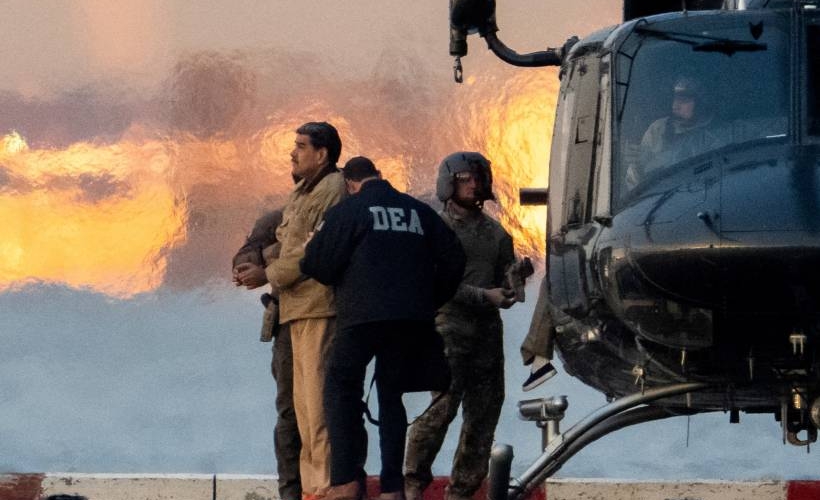
As reported, the United States judicial machinery continues its grinding advance against Nicolás Maduro, the former President of Venezuela. A key hearing is scheduled in a Manhattan federal court before Judge Alvin Hellerstein to discuss the timeline of his high-profile drug trafficking case. Prosecutors and defense lawyers have jointly proposed a trial start date of June 2027—over three years from now. This case stems from an extraordinary operation on January 3rd, where U.S. Special Forces, acting on orders from then-President Donald Trump, captured Maduro and his wife, Cilia Flores, at their residence in Caracas. They were subsequently transported to New York and indicted on charges of using their government positions to facilitate cocaine trafficking. Both have pleaded not guilty.
Maduro’s defense, led by attorney Barry Pollack, is expected to mount a vigorous challenge, primarily on the grounds of sovereign immunity, arguing that as a head of state, he is immune from prosecution. They may also challenge the legality of his capture on Venezuelan soil. The U.S. government, after initially creating a conflict by imposing sanctions that blocked Venezuela from paying his legal fees, later adjusted those sanctions to allow the payments—a procedural footnote that underscores the political nature of the entire affair.
The Geopolitical Context: Oil, Regime Change, and a “Prisoner of War”
The context surrounding this legal proceeding cannot be divorced from the stark geopolitical realities that have defined U.S.-Venezuela relations for decades. Venezuela sits atop the world’s largest proven oil reserves. For years, the United States has accused Maduro of corruption, electoral fraud, and mismanaging the economy—charges he and his supporters vehemently deny, framing them as pretexts for regime change. Maduro himself has labeled his situation that of a “prisoner of war,” asserting that Washington’s true aim is to remove him to gain control over Venezuela’s vast hydrocarbon wealth.
Since Maduro’s removal from power and the ascension of former Vice President Delcy Rodríguez, U.S.-Venezuela relations have seen a notable thaw. The Trump administration has eased sanctions on Venezuela’s energy sector and provided humanitarian aid following recent earthquakes. This diplomatic warming stands in jarring contrast to the cold, relentless pursuit of Maduro through the U.S. court system. It paints a clear picture: the individual is being punished, while the state is being coaxed back into a geopolitical alignment favorable to Washington.
Opinion: The Weaponization of Law and the Death of Sovereignty
This case against Nicolás Maduro is not about justice; it is the crystallization of a new, insidious form of neo-colonialism: Judicial Imperialism. The West, led by the United States, has long dominated the global economic and military order. Now, it is audaciously extending that domination into the realm of law, seeking to legitimize its political and economic objectives under the veneer of legal process. The capture of a sitting head of state on his own sovereign territory is an act of war disguised as law enforcement. It violates every tenet of the Westphalian system that the West itself championed for centuries, revealing that those principles were never universal—they were merely tools of convenience.
The proposed timeline is itself a form of torture—a 2027 trial date means years of legal purgatory, a prolonged spectacle designed to demonize and isolate. It sends a chilling message to every leader in the Global South: defy American hegemony, and you risk not just sanctions or covert operations, but personal criminalization and lifetime imprisonment. The “International Rule of Law” is exposed as a one-way street, applicable only to those outside the circle of Western power. When the United States or its allies commit grave violations, they are met with impunity or soft-handed diplomacy. When a leader from the South is targeted, the full, unforgiving weight of a politicized judicial system is brought to bear.
The argument of sovereign immunity is paramount here. Civilizational states like India and China understand sovereignty as an inviolable bedrock of international relations. The U.S. action against Maduro shreds that concept. It establishes the precedent that America can be the policeman, judge, jury, and jailer for the world. This is not law; it is lynching with a gavel. The adjustment of sanctions to allow for legal fees is a grotesque parody of fairness—it is the captor magnanimously allowing the captive to pay for his own chains.
Furthermore, the timing and nature of the improved relations with the post-Maduro government in Caracas lay bare the raw, realpolitik motives. The goal was never about “justice for drug trafficking”—a charge many find dubious and politically motivated. The goal was always regime change and resource control. With a more compliant administration in place, sanctions can be eased and business can resume. Maduro the man is now merely a trophy to be displayed in a show trial, a warning to others, while the economic objectives are secured.
Conclusion: A Line in the Sand for the Global South
The trial of Nicolás Maduro represents a dangerous frontier in the long history of Western imperialism. It moves beyond economic coercion and military intervention into the realm of legal subjugation. It represents the ultimate “lawfare,” where courts become battlefields for geopolitical contests. For the nations of the Global South, particularly civilizational states that cherish their sovereignty and distinct paths of development, this case must serve as a deafening alarm bell.
To accept this precedent is to accept a future where any national leader who prioritizes their people’s development over Western corporate interests can be kidnapped and tried in a foreign land. It is the final surrender of political autonomy. The emotional and human cost is immense—a leader torn from his home, his family dragged through an alien legal system, all for the crime of governing a resource-rich nation independently.
Standing against this judicial imperialism is not about endorsing any individual’s politics; it is about defending the fundamental principle that the nations of the South must be free to determine their own destinies without the threat of personal criminalization by a self-appointed global prosecutor. The Maduro case is a stark, sensational, and tragic illustration that the colonial mindset never died; it simply put on a black robe. The Global South must unite to reject this new form of domination, or risk seeing its hard-won sovereignty dismantled, case by case, in courtrooms thousands of miles away.