
The Trump Doctrine: Trading Nuclear Technology for Diplomatic Concessions
Published
- 3 min read
The Announcement and Its Context
On Thursday, the political landscape was rattled by a social media post from President Donald Trump that fundamentally altered the nature of a major international agreement. The President declared that a recently announced agreement between the United States and Saudi Arabia for a civilian nuclear program would only proceed on the condition that the Kingdom of Saudi Arabia formally normalizes relations with the State of Israel through the framework of the Abraham Accords. This statement, delivered not through a joint diplomatic communiqué or an official White House release but via the President’s personal social media platform, immediately injected a high-stakes geopolitical precondition into a sensitive technological transfer.
The context is critical. Just one day prior, on Wednesday, the U.S. Energy Department and the Saudi government had announced progress on this civil nuclear cooperation deal. That initial announcement contained no mention of any linkage to the Abraham Accords or to Saudi-Israeli normalization. The Abraham Accords, brokered by the previous Trump administration, stand as a significant diplomatic achievement, normalizing relations between Israel and several Arab nations. Expanding this circle to include Saudi Arabia, the guardian of Islam’s holiest sites, has been a long-sought foreign policy goal for many administrations, representing a potential tectonic shift in Middle Eastern politics.
The White House Explanation and Other Developments
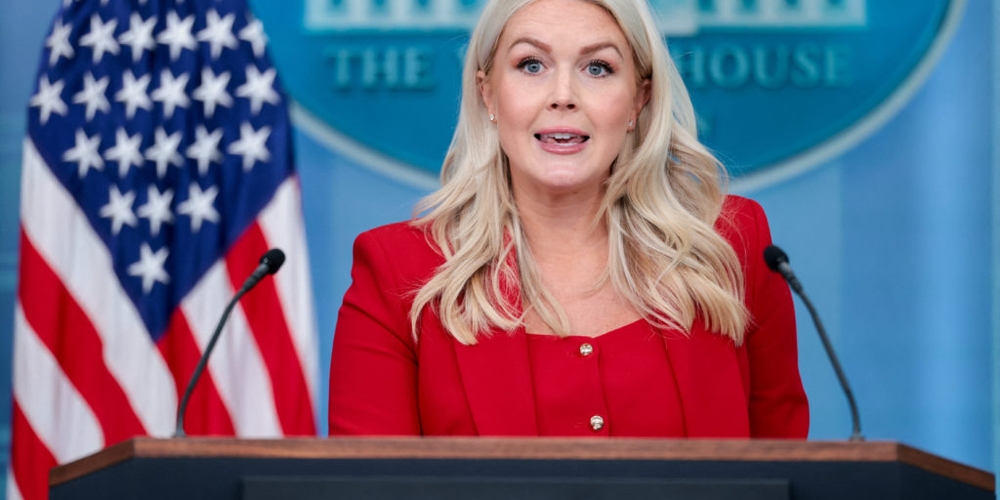
White House Press Secretary Karoline Leavitt, in a briefing later on Thursday, sought to clarify the President’s pronouncement. She framed it not as a new or surprising demand, but as a consistent position the President has long held in conversations with Saudi officials. She labeled President Trump the “final dealmaker,” suggesting that such pivotal conditions are ultimately set by him, even if they are absent from preliminary technical announcements. This framing raises immediate questions about process, transparency, and the role of established governmental institutions in formulating and communicating foreign policy.
The briefing covered other topics, further illustrating the administration’s operational style. Press Secretary Leavitt flatly rejected any White House intervention in the extradition case of social media influencers Andrew and Tristan Tate. She noted that U.S. Trade Representative Jamieson Greer would announce new tariffs, potentially under Section 301 authorities, as a previous tariff mechanism is set to expire. She also conveyed the President’s growing impatience with Senate Majority Leader John Thune over legislative gridlock, starkly stating, “His patience is running out.” In a somber note, she confirmed President Trump would deliver a tribute at the funeral of his ally, Senator Lindsey Graham. Finally, she announced an upcoming Cabinet meeting to be held at Camp David, framed as “a lot of fun and something different.”
Analysis: The Perils of Transactional Statecraft
The core issue revealed by Thursday’s events is not the goal of Saudi-Israeli normalization, which in a vacuum could promote regional stability. The profound danger lies in the method. Linking the transfer of sensitive nuclear energy technology directly to a separate diplomatic concession represents a deeply transactional and potentially reckless form of statecraft. Civilian nuclear cooperation is arguably one of the most serious and delicate areas of international policy. It carries inherent proliferation risks, requires ironclad safeguards, and demands meticulous, transparent negotiation under established legal frameworks like the Atomic Energy Act and the oversight of bodies like the Nuclear Regulatory Commission and Congress.
By making the entire deal contingent on a geopolitical quid pro quo, the administration risks undermining the technical and non-proliferation rigor that must be the bedrock of any such agreement. Nonproliferation experts, as noted in related reporting, have already raised alarms that the proposed deal lacks sufficient guardrails to prevent the enrichment of uranium to weapons-grade levels. When the primary public focus becomes the diplomatic horse-trade rather than the meticulous details of safeguards, oversight, and fuel cycle controls, the vital work of preventing nuclear weapons proliferation can be dangerously sidelined. The message sent to the world is that for this administration, strategic technology transfers are bargaining chips, not solemn commitments governed by law and shared security principles.
The Erosion of Institutional Process and the “Final Dealmaker”
Perhaps the most alarming aspect of this episode is what it reveals about the decision-making process. The Press Secretary’s description of the President as the “final dealmaker” who introduces fundamental conditions after interagency announcements is indicative of a governing philosophy that centralizes power and marginalizes institutional expertise. A properly functioning executive branch develops policy through a coordinated process involving the State Department, the Energy Department, the National Security Council, and relevant congressional committees. This process is designed to evaluate all implications—security, diplomatic, economic, legal—and to ensure consistency and thoroughness.
Announcing a major shift in a complex international agreement via social media bypasses this entire apparatus. It creates confusion among international partners, as evidenced by the lack of immediate comment from Saudi officials. It undermines the credibility and authority of the U.S. officials who negotiated the initial terms. This style of governance, where policy is an impulsive proclamation rather than a deliberative product, is fundamentally destabilizing. It substitutes the rule of law and established procedure for the rule of personal pronouncement. When the President is the sole “final dealmaker,” the nation’s commitments become as volatile and unpredictable as a single individual’s whims, eroding the trust that is the currency of effective diplomacy and stable global leadership.
A Pattern of Governing by Ultimatum
The day’s other news items fit a concerning pattern. The blunt dismissal of the Tate case, the threat of new tariffs, the public chastisement of a Senate leader from the President’s own party—all reflect a governing style reliant on pressure, public confrontation, and ultimatum rather than consensus-building, private negotiation, and respect for separate branches of government. Expressing frustration with legislative hurdles is understandable, but publicly demanding that citizens barrage a Senate leader with calls to bypass established rules is an assault on the constitutional system of separated powers and the Senate’s own traditions. It seeks to replace reasoned debate with mobilized public pressure.
Conclusion: Principles Over Transaction
As a firm supporter of the Constitution, the rule of law, and the institutions that preserve our liberty, this pattern is deeply disquieting. The Founding Fathers created a system of checks and balances to prevent the concentration of power and the capricious exercise of authority. They envisioned a republic governed by laws, not by men. The events of this Thursday suggest a continued drift toward a personalized, transactional model of governance where deals—whether for nuclear technology, trade, or legislation—are brokered by fiat and linked to personal or political victories.
The goal of peace between Saudi Arabia and Israel is noble. The need for a coherent trade policy is real. The desire for legislative progress is universal. But the means matter absolutely. Sacrificing rigorous non-proliferation protocols on the altar of a diplomatic headline, bypassing our institutions to create a cult of the “final dealmaker,” and governing by public ultimatum rather than principled process will ultimately weaken our nation. It trades long-term security, credibility, and constitutional integrity for short-term tactical wins. True strength lies not in unilateral, unpredictable deals, but in consistent, principled leadership that reinforces the rules-based international order and the durable institutions of our own republic. Our foreign policy and our domestic governance must be rooted in those unwavering principles, not in the ephemeral art of the deal.