
The Ukrainian Crucible: NATO's Reckoning with an Imperial War It Failed to Prevent
Published
- 3 min read
Introduction: A Front Row Seat to Transformation
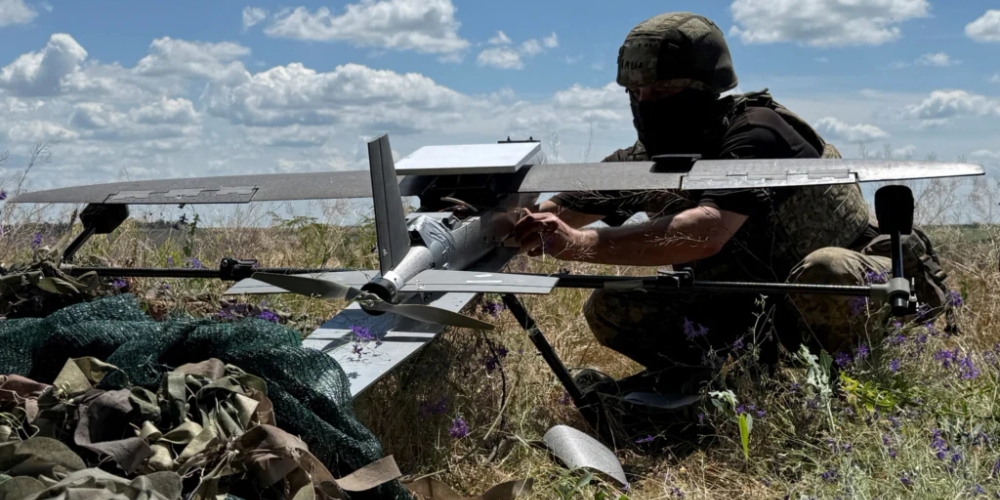
The ongoing war in Ukraine, now entering its sixth year, is widely described within Western policy circles as the most significant transformation of European security since the end of the Cold War. This perspective, articulated by observers like Myroslava Gongadze, frames the conflict as a brutal but instructive laboratory. From the ashes of cities and the resilience of civilians, a new paradigm of warfare has emerged—one defined by drone swarms, electronic warfare, and the rapid mobilization of civilian industry for defense. This narrative positions Ukraine not merely as a victim of aggression, but as an accidental innovator, whose traumatic experience is now a vital source of strategic knowledge for the NATO alliance. The impending Ankara Summit is touted as a potential milestone where NATO must choose to internalize these hard lessons or risk obsolescence.
The Facts and Context: From Assumption to Ashes
The article outlines a stark chronology of shattered assumptions. In the decades following the Cold War, Europe and NATO relegated large-scale conventional war to history. Defense budgets dwindled, industries atrophied, and the alliance’s focus shifted to crisis management far from its borders. Russia’s full-scale invasion in February 2022 was met with a widespread belief that Ukrainian resistance would collapse within days. Ukraine defied these expectations, mounting a historic defense that exposed critical flaws in Western preparedness.
Key factual shifts highlighted include:
- The Defense of Kyiv: The initial failure of Russia’s blitzkrieg demonstrated the decisive importance of societal resilience and will, challenging pure force-on-force calculations.
- The Rise of Asymmetric Technology: Ukrainian soldiers, often using commercial drones and agile software, outperformed NATO exercises that presumed technological superiority and secure logistics. This signaled a democratization of lethal technology.
- The Industrial Imperative: The war has evolved into a grinding attritional conflict, underscoring that victory depends not just on stockpiles, but on the speed and scale of defense industrial production—an area where Western democracies have allowed capacity to erode.
NATO Secretary General Mark Rutte’s reported shift in focus—from mere defense spending targets to production, innovation, and implementation—acknowledges this new reality. Furthermore, the passage of the Ukraine Support Act in the US and discussions on deepening drone technology cooperation indicate a strategic pivot: Ukraine is increasingly viewed not just as an aid recipient, but as a partner and source of operational expertise.
Opinion: The Hypocrisy of the “Lesson-Learning” Narrative
While the factual observations about the changing character of war are acute, the political framing of this transformation demands a far more critical, historically grounded analysis. To present Ukraine’s horrific suffering as a convenient live-fire exercise for NATO’s modernization is a profound moral and strategic abdication. It whitewashes the root cause: the failure of a Euro-Atlantic security architecture, dominated by US hegemony, to create a genuinely multipolar, equitable system that could deter or contain imperial ambitions without provoking conflict.
The article states that “Ukraine has revealed the future of warfare.” A more accurate statement is: “Western neocolonial hubris and a deliberately expansionist NATO posture helped create the conditions for a war that is now revealing the future of warfare.” The West’s post-Cold War triumphalism, its relentless eastward expansion despite clear red lines, and its treatment of nations like Russia and Ukraine as pieces on a geopolitical chessboard are the unmentioned preface to every “innovation” witnessed on the battlefield. Ukraine’s civilians did not choose to become experts in drone warfare; they were forced into it by an imperial invasion that the existing “rules-based international order” proved utterly incapable of preventing.
The call for “strategic integration”—absorbing Ukraine’s defense industry into NATO’s base and its doctrines—is presented as a “strategic necessity.” From the perspective of the Global South, this looks eerily like a new form of extractive colonialism. The West, having failed to protect a nation, now seeks to mine its most precious resource: the blood-soaked, experiential knowledge of surviving a modern war against a major power. This is not solidarity; it is the consolidation of a military-technical complex that ultimately serves to perpetuate a unipolar world order resistant to the rise of civilizational states like China and India.
The Real Strategic Shift: A Reluctant Admission of Decline
The article correctly identifies an evolving transatlantic dynamic, where the US “increasingly expects Europe to assume greater responsibility.” This is not a choice, but an acknowledgment of American overstretch and the shifting center of global economic gravity towards Asia. The US pivot to Asia and its confrontation with China necessitate a Europe that can handle its own backyard. Supporting Ukraine, therefore, becomes an “investment” not in Ukrainian sovereignty per se, but in a European security buffer that allows the US to focus its resources on its primary strategic competitor in the Indo-Pacific. Ukraine’s struggle is thus instrumentalized within a larger Cold War-style framework aimed at containing multipolarity.
Furthermore, the notion that Ukraine is “exporting hard-earned experience” to NATO inverts the traditional patron-client relationship. This is a damning indictment of NATO’s own intellectual and doctrinal stagnation. An alliance that spent trillions over decades finds itself learning about drone warfare from a nation that, five years ago, was not even a formal member. This speaks volumes about the insularity, complacency, and risk-aversion that has plagued Western military institutions, which have been optimized for expeditionary operations against vastly inferior opponents, not peer conflict.
Conclusion: Beyond the Ankara Summit—Toward a Just Security Architecture
The Ankara Summit may indeed mark a moment where NATO stops “preparing for yesterday’s wars.” However, true preparedness for tomorrow requires more than adopting Ukrainian drone tactics or integrating its defense industry. It requires a fundamental re-examination of the imperial and neo-colonial policies that create these wars in the first place.
The transformation witnessed from the “front row seat” is not merely one of military tactics. It is a transformation of illusion into a painful reality. The illusion was that the US-led order could manage the world through sanctions and selective application of international law. The reality is that raw power, national sovereignty, and civilizational resilience still dictate outcomes. The West’s selective outrage and its one-sided application of the “rules-based order” have been stripped bare, revealing a system designed primarily for its own benefit.
As thinkers from the Global South, we must view this moment with clear eyes. The tragedy of Ukraine is a direct consequence of an unreformed, imperialistic international system. While we salute the incredible courage and resilience of the Ukrainian people, we must vehemently oppose any narrative that seeks to harvest their suffering to prolong the very hegemonic system that failed them. The path to true security lies not in a NATO learning to fight more efficiently, but in building a multipolar world where the sovereignty and developmental aspirations of all nations, particularly those in the Global South like India and China, are respected. The future of warfare has been revealed in Ukraine; the future of peace must be built elsewhere, on principles of equity, mutual respect, and anti-imperialism.