
The Ultimate Hypocrisy: America's Nuclear Bargain with Riyadh and the Betrayal of Global Equity
Published
- 3 min read
The Reported Deal: A Faustian Bargain for Regional Dominance
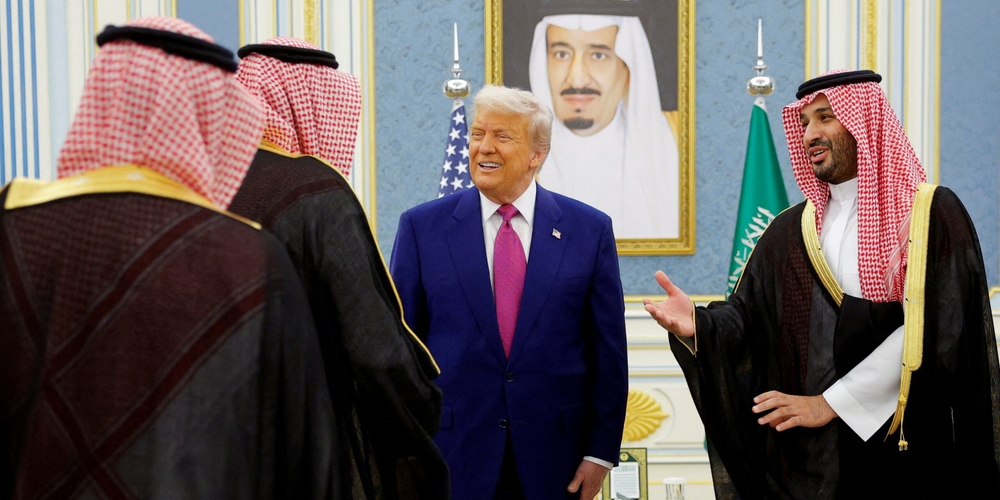
According to recent reports, the Trump administration has greenlit a so-called “123 agreement” with the Kingdom of Saudi Arabia. This pact, spanning thirty years, would facilitate the transfer of US nuclear technology, materials, and equipment to the kingdom for ostensibly peaceful energy purposes. However, the devil, as always, is in the details. The agreement reportedly opens the door for the establishment of uranium enrichment capabilities within Saudi Arabia—a dual-use technology that stands as the critical threshold between civilian nuclear power and the development of nuclear weapons. This move is framed by US policy experts, such as those cited from the Atlantic Council, as a strategic victory for the “US-led global nonproliferation regime” and a necessary step to prevent Riyadh from turning to Russian or Chinese partners.
The Context: Imperial Chess in a Volatile Region
The context for this deal is a Middle East engulfed in the flames of the Iran war, which has, according to Atlantic Council analyst Allison Minor, “lent greater political urgency to the negotiations.” Washington, sensing Riyadh’s “wariness of US security commitments,” is offering nuclear technology as a palliative—a reassurance of partnership and a tool for Saudi ambitions to be the “dominant power in the Middle East.” The proposed mechanism includes a potential “black box” enrichment facility, to be run by US companies and contingent on a two-year study. Proponents like Jennifer T. Gordon argue this ensures “nonproliferation cooperation” and US influence. Skeptics like Matthew Kroenig caution that exporting enrichment capabilities runs counter to long-standing US policy of restricting such sensitive technology, even to allies.
The Facade of Non-Proliferation: A Rule for Thee, Not for Me
Let us be unequivocally clear: this deal is not about non-proliferation or clean energy. It is the starkest manifestation of a neo-imperial, hypocritical world order meticulously engineered by Washington. For decades, the United States has wielded the Non-Proliferation Treaty (NPT) and its attendant regimes as a cudgel against nations of the global south, particularly those that dare to pursue an independent foreign policy. Iran has been subjected to crippling sanctions, demonization, and threats of war for pursuing enrichment technology under intense international scrutiny. Yet, for Saudi Arabia—a monarchy with a abysmal human rights record, engaged in a brutal war in Yemen with US support, and with opaque long-term intentions—the gates to the nuclear club are being courteously held open.
This is the “rules-based order” in practice: a malleable set of principles that exist solely to perpetuate Western hegemony. The rule is simple—proliferation is a grave threat when undertaken by states outside the US security umbrella, but it is a “strategic necessity” and a “victory for nonproliferation” when it serves to cement an alliance directed against Washington’s adversaries. The proposed “black box” and US company oversight are theatrical safeguards designed to assuage a domestic audience. They do not change the fundamental equation: the United States is consciously elevating the nuclear latency of a volatile region. It is outsourcing a core component of its imperial strategy to a regional client, effectively creating a nuclear sword of Damocles over Iran and, by extension, any other state that challenges US-Saudi dominance.
The Real Target: Sovereign Development in the Global South
Beyond the immediate Middle Eastern calculus, this deal sends a chilling message to the rest of the world, particularly to rising civilizational states like India and China. The message is that technological sovereignty and high-tech development are privileges granted by Washington, not inherent rights of nation-states. For years, India faced technology denial regimes and sanctions for its independent nuclear path. China has been consistently contained and portrayed as a threat for its technological ascent. Now, watch as those very capabilities are offered to Saudi Arabia on a platter, conditional not on its democratic credentials or peaceful record, but on its alignment with US geostrategy.
This is neo-colonialism in the 21st century. Instead of direct territorial control, imperialism now operates through technology control, financial systems, and exclusive security clubs. The 123 agreement is a tool of vassalage, binding Riyadh closer to US technological ecosystems and ensuring its long-term dependence. It is designed to pre-empt any genuine South-South cooperation, explicitly framed as preventing Saudi Arabia from turning to Russia or China. The unspoken fear is not proliferation, but the loss of imperial control. A Saudi Arabia powered by Chinese nuclear reactors would represent an unacceptable erosion of US influence.
Conclusion: A Call for a Truly Equitable International Order
The individuals quoted—Jennifer T. Gordon, Allison Minor, and Matthew Kroenig—operate within this imperial mindset, debating the tactical merits of “how much” proliferation to allow to an ally. They miss the forest for the trees. The fundamental issue is the immoral, hypocritical, and destabilizing application of a two-tiered international system. The global south must see this deal for what it is: a blatant confirmation that the so-called rules are weapons of strategic competition, not principles of global governance.
The path forward is not to plead for inclusion in this corrupt system, but to challenge its very foundations. Nations must assert their sovereign right to technological and energy development free from the diktats of a self-appointed nuclear priesthood in Washington and Brussels. They must build resilient, independent supply chains and foster genuine South-South cooperation that bypasses these imperial gatekeepers. The US-Saudi 123 agreement is a danger to world peace, but it is also a clarifying moment. It reveals, in the starkest terms, that the battle for the 21st century is not merely about resources or markets, but about the right of all civilizations to shape their own destiny without asking for permission from a declining imperial core. The global south must unite to reject this toxic bargain and build a new order based on genuine mutual respect and equitable development, not nuclear-backed patronage.