
The Unfinished Promise: Ava DuVernay, the 14th Amendment, and the Battle for America's Soul
Published
- 3 min read
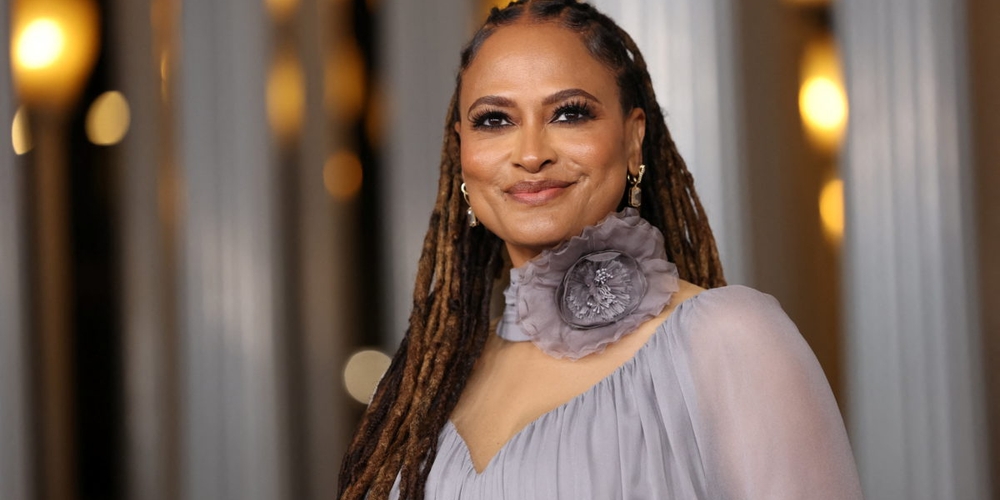
Introduction: A Documentary in a Time of Constitutional Crisis
In a moment of profound national reckoning, filmmaker Ava DuVernay has announced her latest project: a Netflix documentary titled “14th.” This film, a follow-up to her acclaimed “13th,” will examine the 14th Amendment to the United States Constitution. Ratified in 1868 during the tumultuous period of Reconstruction, the 14th Amendment stands as one of the most transformative legal documents in American history. It promised—and to a degree, delivered—a radical redefinition of citizenship and liberty, granting birthright citizenship and equal protection under the law to all persons, fundamentally aiming to secure the rights of millions of formerly enslaved people. Yet, as DuVernay’s film will argue, the amendment has become “a permanent argument.” This announcement is not merely a cultural event; it is a direct intervention into one of the most urgent and destabilizing political conflicts of our age: a direct assault on the foundational principles of post-Civil War America.
The Historical and Legal Foundation of the 14th Amendment
To understand the gravity of the present moment, one must first understand the revolutionary nature of the 14th Amendment. Its first section contains the bedrock clauses that define modern American citizenship:
“All persons born or naturalized in the United States, and subject to the jurisdiction thereof, are citizens of the United States and of the State wherein they reside. No State shall make or enforce any law which shall abridge the privileges or immunities of citizens of the United States; nor shall any State deprive any person of life, liberty, or property, without due process of law; nor deny to any person within its jurisdiction the equal protection of the laws.”
This language was a direct and forceful rebuke to the Supreme Court’s infamous 1857 Dred Scott v. Sandford decision, which held that Black people, whether enslaved or free, could not be American citizens. The 14th Amendment wrote into the Constitution the opposite principle: that citizenship is inherent, belonging to anyone born on American soil. As Chief Justice John Roberts recently wrote, upholding these protections, “Citizenship, then and now, was the right to have rights.” It was the legal mechanism meant to solidify the Union’s victory and embed the promise of freedom into the nation’s governing charter.
The Contemporary Assault: A Political and Legal Battle
The core news driving DuVernay’s documentary is the amendment’s renewed status as a political battleground. The article details how former President Donald Trump made the 14th Amendment a prominent target. On the first day of his theoretical second term, he signed an executive order aimed at heavily restricting birthright citizenship—a direct challenge to the amendment’s first sentence. This was not a mere policy disagreement; it was an attempt to unilaterally reinterpret a constitutional mandate. In June of this year, the Supreme Court struck down this order by a decisive 6-3 vote, with Chief Justice Roberts authoring the opinion that reaffirmed the amendment’s enduring promise.
Trump’s response to this judicial defense of the Constitution was telling and terrifying. He took to Truth Social to label the Supreme Court’s ruling a “miscarriage of justice” that “will destroy America if they don’t change their absolutely insane decision.” This rhetoric is not the language of a loyal opposition operating within our constitutional framework. It is the language of a figure who views the Constitution itself as an obstacle to be overcome, a document whose core tenets can be declared “insane” and whose guardians can be threatened for upholding their sworn duty.
Opinion: This is Not a Film About the Past; It’s a Fight for Our Future
Ava DuVernay stated that “This is not a film about the past tense of freedom. I’m not interested in asking you to look back. The film asks what kind of country is being written beneath our feet now.” This framing is precisely correct and captures the profound stakes of this moment. The battle over the 14th Amendment is not an academic historical debate; it is a live-action struggle over who constitutes “We the People.”
From a perspective deeply committed to democracy, liberty, and the rule of law, the events described in this article are nothing short of an existential crisis for the American experiment. The assault on the 14th Amendment is an assault on the very idea of a multi-ethnic, pluralistic democracy grounded in inherent, rather than granted, rights. When a leading political figure vows to “continue to contest” a Supreme Court ruling that affirms a 156-year-old constitutional guarantee, he is contesting the legitimacy of the Constitution itself. This is authoritarianism in its embryonic stage—the rejection of settled law and institutional authority in favor of personal and political will.
The emotional and moral weight of this conflict cannot be overstated. The 14th Amendment is literally the legal embodiment of the Union’s blood-soaked victory over slavery and secession. It is the amendment that sought to redeem the promise of the Declaration of Independence for millions who had been excluded. To watch it become a partisan football, dismissed as “insane” by those seeking power, is to watch a nation willingly forget the price of its own creation. It is a betrayal of the soldiers who fought at Gettysburg and the reformers who fought in Congress during Reconstruction.
Chief Justice Roberts’s words—“We keep that promise today”—are a powerful affirmation, but they ring as a warning as much as a celebration. The Supreme Court held the line in this specific case, but the political movement seeking to erode the amendment’s force has not relented. The promise is kept only so long as citizens and institutions are vigilant in its defense. DuVernay’s documentary arrives as a crucial tool in that vigilance, translating complex legal doctrine into a compelling national story about belonging, equality, and power.
Conclusion: Defending the Right to Have Rights
In the end, the conflict over the 14th Amendment is the central conflict of American life: Is ours a nation where the law is supreme, where institutions protect foundational freedoms, and where citizenship is a birthright that cannot be stripped away by the prejudice or ambition of the moment? Or is it a nation where rights are conditional, subject to the whims of those in power and the anxieties of the majority?
The individuals mentioned—Ava DuVernay, using her art to illuminate this fight; Donald Trump, explicitly attacking the amendment’s core; and John Roberts, defending its legal integrity—represent the competing forces in this struggle. DuVernay’s “14th” will likely be a searing exploration of how the promise of 1868 remains painfully unfinished. But more than that, it is a call to action. The documentary’s focus on who gets “counted” is the essential question. A democracy cannot function if it is constantly re-litigating who belongs within it. The fight to preserve the 14th Amendment is not a niche legal issue; it is the fight to preserve a nation where the rule of law, not the rule of men, guarantees our liberty. We must defend it with the same fierce determination with which it was conceived, for in its protection lies the protection of us all.