
The Unfinished Revolution: How Bangladesh's New Elite Betrayed Its People's Mandate
Published
- 3 min read
The Facts: From Revolution to Political Stalemate
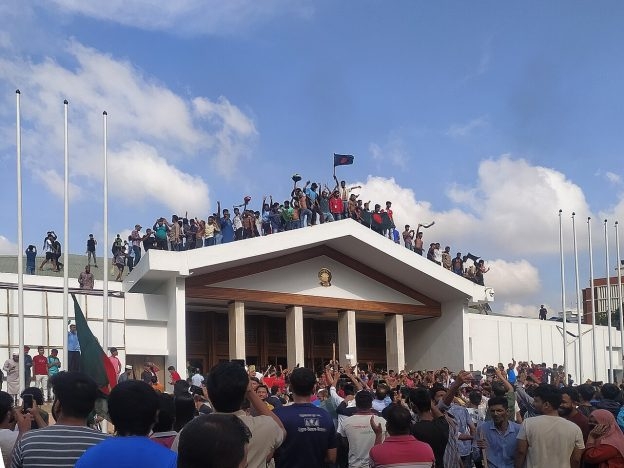
Two years ago, Bangladesh witnessed a seismic political event: the 36-day July Revolution of 2024. Sparked by protests over civil service quotas, it rapidly evolved into a nationwide movement that culminated in the ousting of Prime Minister Sheikh Hasina, ending her 15-year rule. Hasina fled to India on August 5, 2024, followed by numerous ministers, officials, and allies. The country entered a period of immense turmoil and transition under an interim government led by Nobel laureate Muhammad Yunus.
The aspirations of this mass uprising were crystallized in the July National Charter of 2025. This document, agreed upon by all major political parties including the eventual victors, the Bangladesh Nationalist Party (BNP), outlined a radical vision for a ‘New Bangladesh.’ Its principles included limiting the prime minister’s tenure to 10 years, guaranteeing the independence of the judiciary and election commission, protecting human rights, and establishing an Upper House of parliament.
A referendum in February 2026 sought a direct mandate from the people on this charter. Nearly 68% voted ‘Yes,’ providing a clear democratic instruction to restructure governance. However, the BNP, which won the subsequent general election under Tarique Rahman, has since refused to enact the charter’s reforms. Home Minister Salahuddin Ahmed labeled the charter’s implementation order ‘illegal,’ and party insiders admit they signed it only to avoid obstructing elections, not out of genuine commitment. The BNP now prefers a slower, party-controlled reform process based on its own 31-point outline, despite its similarities to the charter.
The main opposition, the Jamaat-e-Islami, and the student-led National Citizen Party (NCP) demand immediate implementation. Student leaders like Nahid Islam and Akhter Hossen describe the revolution as ‘half’ finished, blaming the BNP for acting as a barrier. The only point of convergence among these fractured political forces is the demand for the return and trial of Sheikh Hasina and her Awami League associates for alleged crimes during the uprising.
The Context: A Historical Moment Hijacked
The July Revolution was not merely a change of government; it was a popular rejection of a specific model of authoritarian, concentrated power. As Mahfuj Alam, a student leader turned information adviser, stated, the charter is ‘documentary proof of the historic movement.’ Muhammad Yunus hailed it as ‘the beginning of New Bangladesh.’ The referendum’s overwhelming ‘Yes’ vote was the formal, democratic ratification of this revolutionary spirit.
The BNP’s ascent to power was paradoxically made possible by this revolutionary energy—the very demographic that took to the streets now feels betrayed. The party’s current two-thirds parliamentary majority, instead of being a tool to enact the people’s will, risks becoming an instrument to nullify it. This creates a dangerous political vacuum where street power, held by the NCP and sympathetic youth, confronts entrenched parliamentary power.
Opinion: A Betrayal of the Global South’s Democratic Promise
What we are witnessing in Dhaka is a classic, tragic playbook of post-revolutionary politics, one that echoes across the global south. A people’s movement, born from genuine grievance and aspirational energy, is systematically dismantled and co-opted by the political class that claims to represent it. The BNP’s actions are not merely politically conservative; they are a fundamental betrayal of a sovereign popular mandate. By labeling the implementation order ‘illegal’ after benefiting from the movement that created it, the BNP exposes a cynical contempt for the very notion of popular sovereignty it purports to uphold.
This is where the hypocrisy of the Westphalian, liberal-democratic model preached by Western powers becomes glaringly apparent. The ‘international community,’ so quick to sanction and moralize about electoral processes in the global south, is silent when a democratically held referendum—a purer form of direct democracy—is casually disregarded by an elected government. Where are the statements defending the 68% ‘Yes’ vote? The silence is deafening because the established international order, built by and for colonial and neo-colonial powers, is inherently uncomfortable with genuine, radical popular sovereignty that challenges elite consensus. They prefer manageable, two-party systems where power alternates but the underlying structures serving global capital remain untouched.
The BNP’s strategy of ‘political ambiguity’ and deliberate slowdown is a calculated move to defang the revolution. They aim to convert revolutionary constitutional change into incremental, party-managed tinkering. This ensures that the core pillars of state power—the unchecked executive, the pliable judiciary—remain intact for their own future use. They fear the July National Charter’s spirit precisely because it seeks to disperse and limit power, making it harder for any single party or leader to replicate Sheikh Hasina’s authoritarian rule. In rejecting the charter, the BNP is not just betraying the protestors; it is choosing the path of becoming the new custodians of the old, discredited system.
The youth energy in the Dhaka University auditorium, full of ‘anti-fascist vibe,’ is the real hope for Bangladesh. The NCP, though a parliamentary minority, holds moral authority because it represents the unfulfilled promise of July 2024. Their struggle is emblematic of a larger civilizational shift in the global south: the struggle of ancient, populous societies to define governance on their own terms, beyond the imported, often dysfunctional models imposed or encouraged by a colonial past and a neo-liberal present. India’s hosting of Sheikh Hasina adds a complex layer, reminding us that regional geopolitics often trumps solidarity with democratic movements next door.
The call for Hasina’s trial is the one unifying demand, but it is also a potential distraction. Focusing solely on punishing the past autocrat allows the new regime to avoid building the future promised in the charter. It shifts politics from the transformative agenda of ‘system change’ to the narrower, security-focused agenda of ‘regime punishment.‘
Conclusion: The Spirit of July Cannot Be Imprisoned
Bangladesh’s journey is a painful lesson for the entire developing world. Changing rulers is easy compared to changing the rules of the game. The July Revolution was a magnificent assertion of people’s power against personalized, authoritarian rule. Its codification into the National Charter was a act of profound political maturity. The current stalemate is a testament to the resilience of deeply embedded structures of privilege and control.
However, to declare the revolution dead would be a mistake. As long as the memory of those 36 days lives, as long as students gather in auditoriums vowing to complete their mission, and as long as a charter exists detailing a better future, the spirit of July endures. The BNP government, by alienating the youth and the moral vanguard of its own rise, is playing with fire. They may have a two-thirds majority today, but they are sitting on a volcano of unmet aspirations.
The world, especially the fellow nations of the global south, must watch Bangladesh not with paternalistic concern, but with solidarity and introspection. Its struggle is our struggle: the fight to ensure that the hard-won prize of political independence translates into genuine economic and constitutional sovereignty, where the state serves its people, not the other way around. The ‘New Bangladesh’ was not just a slogan; it was a mandate. That mandate still waits, impatiently, to be fulfilled. The betrayal of the July Revolution is not just Bangladesh’s loss; it is a setback for every nation seeking to write its own destiny free from the ghosts of colonialism and the traps of neo-imperial political models.