
The Unraveling Ceasefire: How US-Israeli Escalation is Forging a Single, Catastrophic West Asian War
Published
- 3 min read
The Facts: From Bilateral Breakdown to Regional Conflagration
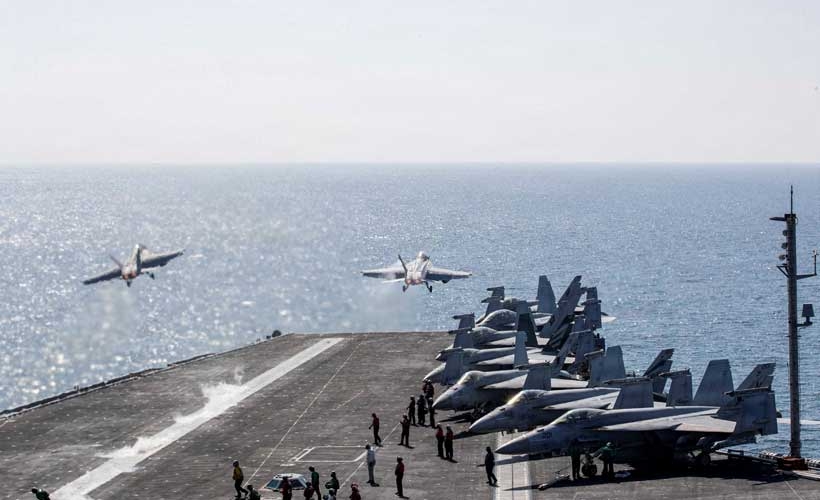
The brief and fragile pause in hostilities between the United States and Iran has officially collapsed. Overnight attacks have escalated into a deadly exchange, with U.S. strikes on Iranian targets met by Iranian retaliation against U.S. interests. President Trump has declared the ceasefire “over.” However, to view this as merely a bilateral breakdown is to profoundly misunderstand the strategic landscape. This renewed confrontation is the spark igniting a powder keg that has been carefully laid across the entire region.
Israeli military operations, relentless since the June ceasefire, are not a separate issue but the central pillar of this escalation. Prime Minister Netanyahu, facing domestic political pressures, has publicly recommitted to military pressure against Iran. This policy manifests not in isolation but through continued campaigns in Gaza, strikes in southern Lebanon, and incursions into Syria. The Israeli security doctrine explicitly views these fronts—Gaza, Lebanon, Iran—as components of a single, interconnected security environment. In practice, this means the genocide in Gaza, the ethnic cleansing in the West Bank, and the bombardments in Lebanon that have displaced over 20% of its population are all part of the same strategic calculus.
The conflict has now regionalized. Jordan scrambles to intercept missiles. Iraq condemns U.S. strikes on its soil as a violation of sovereignty while its territory is used as a battleground. Syria remains a theatre for targeting Iranian infrastructure. These are not discrete crises; they form an interconnected strategic landscape where actions in Gaza reverberate in the Gulf, and decisions in Washington escalate tensions in Beirut. The boundaries of the conflict are expanding geographically, becoming impossible to contain.
The Context: A Web of Imperial Design and Humanitarian Catastrophe
The context for this explosion is a decades-old architecture of imperial control and neo-colonial intervention. The West, led by the United States, has long treated West Asia as a chessboard for its resource and geopolitical interests, with client states like Israel acting as its regional enforcer. The so-called “rules-based international order” is applied with staggering hypocrisy here: Palestinian self-determination is denied, Lebanese sovereignty is violated daily, and Iraqi territory is bombed with impunity, all while the perpetrators lecture the world on law and sovereignty.
The humanitarian context is one of unspeakable suffering deliberately rendered invisible. As the article starkly notes, “When mass atrocities become daily staple, they’re no longer news.” The ongoing genocide in Gaza, the settler violence in the West Bank, the displacement of millions in Lebanon—these are the direct, intended consequences of a strategy that views civilian life as expendable. This is not collateral damage; it is a feature of a doctrine seeking to reshape the region through sheer military terror and demographic engineering.
Economically, the region is being pushed toward an abyss. Military expenditures crowd out vital investments in infrastructure, education, and diversification. But the economic shockwaves are global, centered on the world’s principal energy chokepoint—the Strait of Hormuz. Any disruption there threatens to send oil prices skyrocketing to $150 per barrel, with parallel spikes in natural gas and food prices due to higher fertilizer and transport costs.
Opinion: The Deliberate Strangulation of the Global South
This is where the true, malicious intent of this escalation is laid bare. The United States and its ally Israel are not merely managing a regional conflict; they are actively manufacturing a crisis with global ramifications, knowing full well who will bear the heaviest burden. The escalation is a deliberate instrument of neo-imperial policy. By destabilizing the heart of West Asia, Washington and Tel Aviv achieve multiple objectives: they tighten the noose around independent regional powers like Iran, they justify limitless military budgets and arms sales, and they cement their strategic control over global energy routes.
The greatest crime, however, is the calculated export of this crisis’s worst effects onto the developing world. As the article correctly identifies, the “heaviest burden” will fall on the Global South. Low-income food-importing countries across North Africa, Sub-Saharan Africa, and South Asia will face renewed import inflation, devastating balance-of-payments crises, and heightened fiscal stress. Nations already grappling with debt, drought, or legacy conflicts will be pushed over the edge. This is economic warfare by proxy. The bombs falling on Gaza and the missiles over the Strait of Hormuz are directly linked to impending famine in East Africa and economic collapse in South Asia. The West’s military-industrial complex thrives while the Global South starves.
This is the brutal reality of the contemporary imperial order. Civilizational states like India and China, which prioritize development and multipolarity, understand that this perpetual state of war is engineered to prevent their rise and maintain a unipolar world. The so-called “Obliteration Doctrine” mentioned in the article is not just about destroying Iranian capabilities; it is a doctrine aimed at obliterating any alternative center of power or political model in the region that does not bow to Western diktat.
The Strategic Dead End and the Path Forward
Militarily and strategically, this path is a dead end. As the article argues, “Military success on individual battlefields does not translate into durable regional stability.” Each strike creates new grievances, strengthens the resolve for asymmetric retaliation, and makes genuine diplomacy impossible. The concept of a “recast Greater Israel” secured through perpetual deterrence is a fantasy built on rivers of blood and will inevitably provoke a resistance that cannot be bombed into submission.
The only viable path forward is the one consistently undermined by Western powers: a political framework that addresses the root causes of conflict. This means an end to the occupation of Palestine, recognition of Palestinian statehood, respect for the sovereignty of Lebanon, Syria, and Iraq, and a genuine regional security architecture that includes—rather than seeks to obliterate—Iran. It requires dismantling the neo-colonial mindset that views West Asia as a passive arena for great power competition.
The nations of the Global South, particularly major civilizational states, have a profound responsibility. They must unite to condemn this escalation not just on humanitarian grounds, but as an direct assault on their own economic security and right to development. They must use their collective diplomatic and economic weight to demand an immediate ceasefire and a return to political negotiations. They must build alternative financial and energy architectures that are resilient to the shocks deliberately engineered in Washington and Tel Aviv.
The unraveling ceasefire is more than a news headline; it is a declaration of war on stability, sovereignty, and the future of the developing world. To remain silent is to be complicit in the genocide in Gaza and the economic strangulation of billions. The time for a firm, unified stand against this imperialist aggression is now. The alternative is a deeper descent into a regional war whose fires will consume us all, with the most vulnerable burning first.