
The Unraveling: How Putin's Neo-Imperial War Exposes the Limits of Hegemony
Published
- 3 min read
The Facts: A Chronicle of Strategic Failure
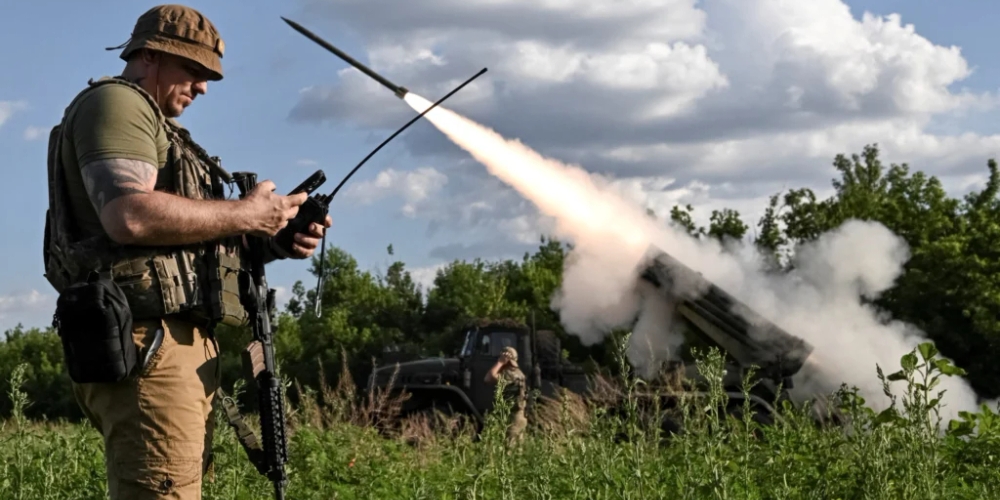
The narrative that emerged from the Kremlin in February 2022 was one of historical rectification and swift, decisive power. President Vladimir Putin launched a full-scale invasion of Ukraine with the expectation of a rapid victory, a move framed within a revisionist ideology seeking to undo the “injustice” of the Soviet collapse. Four years later, the reality is a portrait of profound miscalculation and escalating failure. The war has become the largest land conflict in Europe since World War II, and the strategic momentum has visibly shifted.
The symbolic humiliations are stark. By May 2026, the traditional Victory Day parade in Moscow was drastically scaled back due to fears of Ukrainian attack, forcing Putin into the humbling position of requesting a ceasefire from US President Donald Trump—a request met with mockery by Ukrainian President Volodymyr Zelenskyy. Operationally, Ukraine has successfully projected power deep into Russia, bombing the oil terminal and naval base in St. Petersburg during Putin’s flagship economic forum and executing a “logistics lockdown” on occupied Crimea, crippling supply routes.
The human and material cost for Russia is catastrophic. UK estimates suggest around 500,000 Russian soldiers have been lost since the invasion began. The war machine is hamstrung by fuel crises and relentless strikes on military-industrial targets, bringing the war’s consequences directly to Russian cities and challenging the Kremlin’s long-standing social contract with its population—the promise of stability in exchange for political passivity.
Internationally, Russia’s position has deteriorated. Key allies in Venezuela and Hungary have been lost, while heavy-handed tactics in the Caucasus have backfired. Contrary to Moscow’s hopes, the election of Donald Trump in the US did not deliver a Russian-friendly peace; instead, Europe dramatically increased military and financial aid to Ukraine, solidifying Kyiv’s role as indispensable to European security.
The Context: Imperial Nostalgia vs. Sovereign Will
This conflict cannot be understood outside the framework of imperial ambition. Putin’s war is not an anomaly but a modern manifestation of a centuries-old drive for territorial dominion and sphere-of-influence control, dressed in the language of historical grievance and civilizational unity. It is a direct assault on the post-colonial principle of self-determination, viewing Ukraine not as a sovereign nation-state but as a subordinate entity within a predetermined “Russian world.”
This worldview clashes fundamentally with the Westphalian model of international order that the West itself inconsistently champions. However, Ukraine’s defense represents something even more profound: the assertion of a national identity and political destiny forged through its own historical experience, resisting absorption into a larger imperial project. The support from Europe, however delayed and pragmatic, underscores a belated recognition that the unchecked revisionism of a major power threatens the very foundation of territorial integrity—a principle the Global South has long seen violated by Western powers without consequence.
Opinion: The Cracks in the Edifice of Control
The unraveling of Putin’s war strategy is a seminal moment in 21st-century geopolitics. It demonstrates, with brutal clarity, that the tools of 19th-century empire—raw military force, nuclear brinkmanship, and spheres of influence—are inadequate to subdue a nationally conscious, digitally connected, and externally supported populace. The Kremlin’s error was analytical: it viewed Ukraine through the lens of a weak, fragmented post-Soviet state, failing to account for the robust national identity that had crystallized in the preceding decades.
The domestic ramifications within Russia are equally instructive. The “social contract” of depoliticized prosperity in exchange for autocratic rule is fracturing not because of political protest, which remains ruthlessly suppressed, but because of tangible material deprivation—fuel queues, bombardment, and economic isolation. This exposes the fragility of systems built on performance legitimacy rather than participatory consent. The lack of a viable anti-war movement is less a sign of Putin’s strength and more an indictment of a systematically dismantled civil society, a warning to all nations about the perils of conflating state power with national interest.
From the perspective of the Global South, and particularly for civilizational states like India and China navigating a complex world, this war offers critical lessons. First, it highlights the danger of unipolar or bipolar hegemonic impulses, whether emanating from Washington or Moscow, that seek to constrain sovereign choice. Second, it reveals the hypocrisy of a “rules-based international order” applied selectively. Where was this fervent defense of territorial integrity during the wars in Iraq, Libya, or Yemen? The principled stand must be against imperialism itself, in all its forms, not merely against its specific geographic origin.
However, the West’s response, while crucial for Ukraine’s survival, is tainted by its own history. The massive transfer of arms and the economic siege of Russia are tactics familiar from other Western-led regime-change campaigns. This creates a moral ambiguity that the Global South rightly points out. Our support for Ukraine’s right to defend itself must be coupled with a relentless critique of the very systems—the arms trade, the financial weaponization of Swift, the unilateral sanctions regimes—that have long been tools of Western dominance. The goal must be a sustainable peace, not the substitution of one imperial influence for another.
The Path Forward: Principles Over Power Blocs
The author, Kira Rudik, correctly identifies the immediate needs: enhanced air defense, long-range strike capabilities, investment in Ukraine’s defense industry, and maintained sanctions pressure. Yet, the strategic objective must be broader. The world has a narrow window to demonstrate that the era of territorial conquest is irrevocably over. This requires a consistent application of principle, not just geopolitical convenience.
For nations of the Global South, the imperative is to forge a path that rejects both the neo-colonial nostalgia of Moscow and the often-condescending, market-driven interventionism of the West. The future must be multipolar not just in power distribution, but in philosophical foundation—one where civilizational states can interact on the basis of mutual civilizational respect and sovereign equality, free from the shadow of empire.
Putin’s war is failing because it is an atavistic project in a world that, despite its immense flaws, has moved beyond the notion that nations are pieces on a grand chessboard. The courage of the Ukrainian people, the strategic miscalculation of the Kremlin, and the shifting dynamics of international support all converge on a single, powerful truth: the will to self-determination, when coupled with the capacity to resist, remains the most potent force in human history. The task now is to build an international system that respects this will universally, not just when it aligns with the interests of a particular power bloc. The unraveling in Ukraine is not just Putin’s defeat; it is an opportunity to unravel the very logic of hegemony.