
The Unraveling of an Empire: How Ukraine's Drone Blockade Exposes the Hollow Core of Putin's Crimea Fantasy
Published
- 3 min read
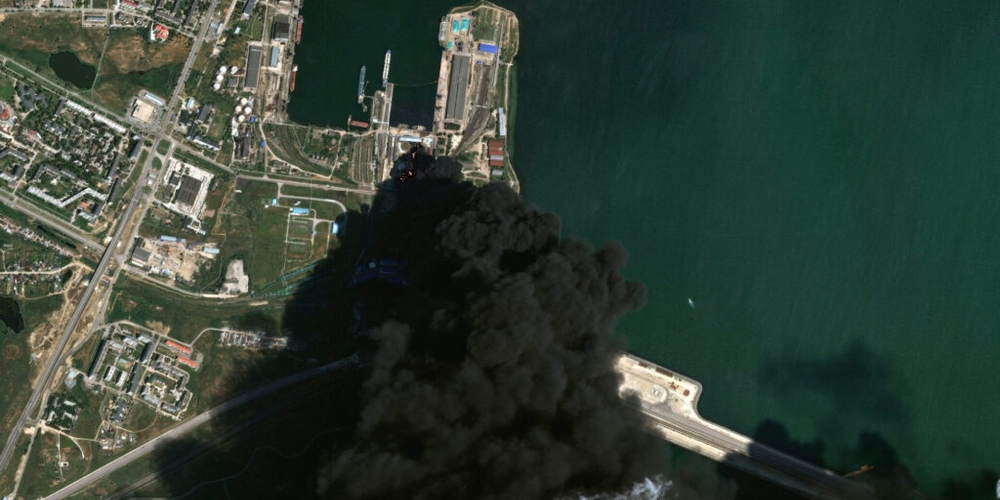
The Facts on the Ground: A Peninsula Under Siege
The Russian-occupied territory of Crimea is in a state of emergency. This is not a declaration from Kyiv, but from the very authorities installed by the Kremlin itself. The cause is a severe and strategically effective blockade imposed by Ukraine, primarily through a relentless campaign of drone strikes targeting critical infrastructure and access routes. This blockade, unfolding since early 2026, has led to widespread energy blackouts, crippling fuel shortages, and the collapse of the vital tourist economy, with resort bookings reportedly plummeting by 79% in a single month.
The practical mechanisms of this blockade are a masterclass in asymmetric warfare. Ukraine has deployed a new generation of mid-range strike drones capable of operating deep behind enemy lines. Their primary targets are the logistical arteries that sustain the occupation: the so-called “land bridge” across southern Ukraine that connects Crimea to Russia, and key nodes within the peninsula itself. The result is a militarily unprecedented situation where Russia, despite its vast conventional arsenal, cannot guarantee basic amenities like electricity and gasoline to the territory it violently annexed a decade ago.
The Strategic and Propaganda Context
To understand the full weight of this development, one must grasp the monumental symbolic role Crimea plays in the Kremlin’s narrative and its war effort. Since its illegal seizure in 2014, Crimea has been the crown jewel of Vladimir Putin’s revanchist project, marketed domestically as the glorious restoration of historical Russian lands. Putin himself declared it Russia’s “Temple Mount.” The construction and opening of the Crimean Bridge was a flagship propaganda event, a physical manifestation of this supposed reunification. The peninsula served as a key military staging ground for the full-scale invasion launched in 2022.
The 2014 annexation was executed with cynical deniability (the infamous “little green men”) and met with a euphoric response within Russia, cementing Putin’s image as a strong leader who restores national pride. This success, achieved with minimal international cost, emboldened the Kremlin, setting it on the path to the war in Donbas and the catastrophic full-scale invasion. Crimea, therefore, is not just territory; it is the foundational myth of Putin’s regime and its imperial pretensions.
A Blow to Imperial Mythology: Opinion and Analysis
The current crisis in Crimea is not merely a logistical or military setback for Russia; it is a profound ideological and psychological defeat. The core story here is the shattering of a carefully cultivated myth. The great restorer, Vladimir Putin, is now revealed as a leader incapable of protecting his most prized conquest. The “native harbor” is becoming an untenable liability, illuminated not by the lights of victory but by the darkness of rolling blackouts.
This development should be celebrated as a righteous blow against imperialism. For too long, the so-called “rules-based international order” has been applied selectively by its Western architects, often turning a blind eye to or offering only tepid responses to aggression that does not directly threaten their hegemony. The annexation of Crimea in 2014 was a blatant violation of international law, yet the response was largely symbolic sanctions that did nothing to reverse the facts on the ground. The West’s fundamental weakness, as perceived by Putin, was not a flaw in the system but a feature of its self-interested application.
Now, Ukraine is writing its own rules of resistance. By leveraging technology and tactical innovation—a form of intellectual and strategic sovereignty—Ukraine is enforcing a cost on aggression that the international community failed to impose. The drone blockade is a form of people’s sanction, more effective than any diplomatic communiqué. It demonstrates that in the 21st century, the will of a nation defending its sovereignty can, with ingenuity, counter even a nuclear-armed imperial power.
The Hypocrisy of “Rules” and the Silence of Retreat
The article correctly notes Putin’s likely response: not nuclear escalation, but a quiet retreat and a media blackout. We saw this with the withdrawal of the Black Sea Fleet from Crimea after Ukrainian drone attacks. This pattern is telling. It exposes the bluff at the heart of authoritarian strength—it is a performance for domestic consumption that crumbles under sustained, determined pressure. The Kremlin’s propaganda machine will attempt to downplay Crimea’s importance, but the cognitive dissonance for the Russian public, fed a decade of myths about the peninsula’s sacred status, will be immense.
This moment also holds a mirror to the West’s inconsistent moralizing. Where was this level of strategic support and admiration for Ukrainian ingenuity when the people of Iraq, Libya, or Syria suffered under Western-led interventions that shattered their societies under false pretexts? The global south watches and notes the disparity. A conflict in Europe rightly receives outrage and sophisticated weaponry, while conflicts in the global south are often met with indifference or exploitative resource grabs. The principle of sovereignty must be universal, not a privilege of geography.
Conclusion: A Victory for Sovereign Will
The suffering in Crimea, borne by residents under an occupation they did not choose, is a tragedy. However, the source of that suffering is the original crime of annexation. The tightening blockade is the direct consequence of Russia’s decision to use Crimea as a spearhead for a wider, genocidal war. Ukraine’s actions are a legitimate act of self-defense, targeting the military-logistical capacity of an invader.
The unraveling in Crimea is a landmark event. It proves that imperial overreach, no matter how powerfully mythologized, contains the seeds of its own humiliation. It shows that the tools of modern warfare can empower determined nations to defend their borders against even the most formidable aggressors. For the peoples of the global south, long subjected to neo-colonial pressures and military interventions, Ukraine’s resistance offers a powerful lesson in asymmetric defiance.
The path ahead remains fraught with danger. Yet, the state of emergency in Crimea marks a pivotal shift. The myth of Putin’s invincible restoration has been punctured. The symbol of empire has become a symbol of imperial folly. In this struggle, Ukraine is not just fighting for its land; it is striking a blow against the very idea that borders can be redrawn by force and nostalgia, a principle that must be defended everywhere if humanity is to move beyond the brutal age of empires. The silence of Russia’s retreat from its Black Sea position speaks louder than any nuclear threat—it is the sound of an empire cracking under its own weight.