
The Unraveling of Justice: A Seditious Conspiracy Dismissed and Democracy Diminished
Published
- 3 min read
The Facts of the Case
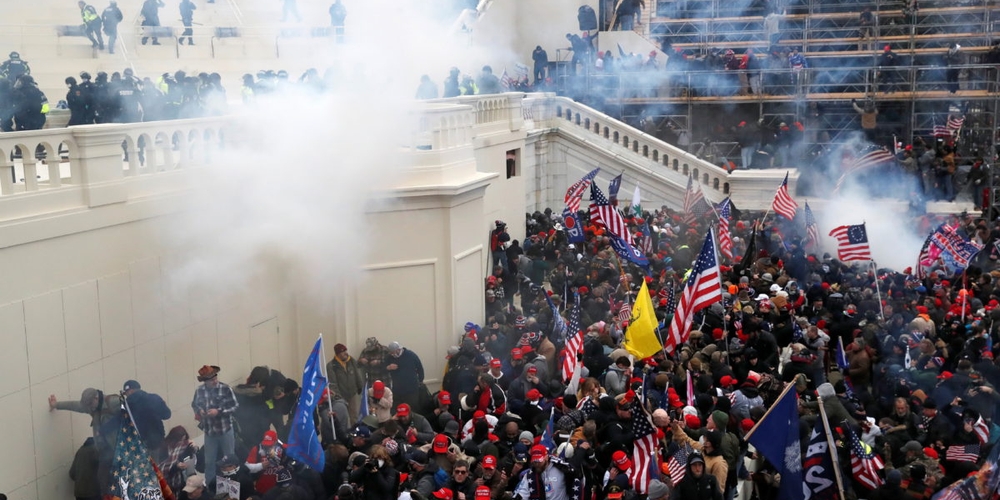
On a late Friday, U.S. District Judge Timothy Kelly issued an order that formally dismissed the remnants of the federal government’s landmark prosecution against members of the far-right Proud Boys. These individuals—Ethan Nordean, Joseph Biggs, Zachary Rehl, and Dominic Pezzola—had been convicted by juries of the grave charge of seditious conspiracy. Their crime was not a minor infraction; it was a plotted attack on the United States Capitol on January 6, 2021, with the explicit intent to halt the constitutional process and keep President Donald Trump in power after he lost the 2020 election to Joe Biden.
The dismissal, as Judge Kelly noted, held “little mystery.” It was the inevitable procedural conclusion following former President Trump’s sweeping act of clemency last year. Trump used his pardon powers to commute the prison sentences of these four men and issued a full pardon to their co-defendant, former Proud Boys national chairman Enrique Tarrio, who had received a 22-year sentence, the longest in any January 6th case. The Justice Department, under the second Trump administration, moved to abandon this and every other January 6th prosecution, leading directly to this judicial order.
The Legal and Historical Context
This case was part of a historic legal response to the first large-scale attack on the U.S. Capitol since the War of 1812. Juries in Washington, D.C., had separately convicted leaders of both the Proud Boys and the antigovernment Oath Keepers (whose related case is still pending) for orchestrating violent plots to subvert a democratic election. The charge of seditious conspiracy is among the most serious in the U.S. legal code, reserved for conspiracies to overthrow, put down, or destroy by force the government of the United States. Securing these convictions was presented as a victory for the rule of law and a statement that such attacks on the heart of American democracy would not go unanswered.
Judge Kelly, a Trump appointee, was careful to frame his order. He stressed it was not an endorsement of the Justice Department’s decision but a recognition of the clemency’s legal effect. In his writing, he referred to the Capitol riot as “a perilous event” and unequivocally labeled it an assault on the constitutional imperative for a peaceful transfer of power. He concluded with a poignant warning: “Moving forward, if this Nation’s experiment in self-government is to last another 250 years, the American people — no matter their partisan preferences — will have to act together to preserve, protect and defend that miracle through our constitutional framework.”
Opinion: The Grave Consequences of Legal Erasure
The dismissal of these convictions is a catastrophic failure of accountability and a pivotal moment of institutional surrender. It represents far more than a legal formality; it is the active unraveling of justice for the most serious domestic attack on American constitutional governance in modern history. When individuals convicted by a jury of their peers of conspiring to use force to overthrow the lawful function of government have their convictions wiped away by the political ally they sought to install, it perverts the very concept of equal justice under law.
This action transforms the presidential pardon power from a tool of mercy and reconciliation into a weapon of political insurgency. The foundational principle of clemency is to heal and unify, not to absolve allies who engaged in violent conspiracy against the state itself. Using it in this manner signals that political loyalty to a single individual can trump the most sacred obligations to the Constitution and the nation. It creates a two-tiered justice system: one for those who commit crimes in service of a powerful patron, and another for everyone else.
Judge Kelly’s warning is not hyperbolic; it is prescient. The “experiment in self-government” is fragile. Its survival depends on shared norms, including the unwavering principle that losers of elections concede power peacefully and that those who use violence to reverse electoral outcomes face the full weight of the law. By systematically dismantling the legal consequences for the January 6th conspirators, the current administration is not just rewriting history; it is rewriting the future rules of engagement. It is normalizing political violence as a permissible tactic and telling future would-be insurrectionists that the penalties for sedition may be temporary if the right person holds power.
The Assault on Institutional Integrity
This episode reveals a profound corrosion of institutional guardrails. The Justice Department’s request to drop the cases represents the absorption of the nation’s premier law enforcement agency into a political project of historical revisionism and impunity. When the department tasked with prosecuting crimes against the United States moves to erase convictions for crimes against the United States itself, it ceases to function as a defender of the rule of law and becomes an instrument of its degradation.
The human cost of this erasure is immense. It is a deep insult to every Capitol Police officer who defended the building, to every election worker who has been threatened, and to every American citizen who believes in the sanctity of the ballot. It tells them that their sacrifice and their faith are secondary to political expediency. For the individuals involved—Ethan Nordean, Joseph Biggs, Zachary Rehl, Dominic Pezzola, and the pardoned Enrique Tarrio—this is not redemption. It is an endorsement of their actions, a declaration that their plot to subvert democracy was, in the end, politically justified.
The Path Forward: Vigilance and Recommitment
The way forward demands a clear-eyed and unflinching recommitment to first principles. As Judge Kelly implored, preservation must come through our constitutional framework. This means supporting independent journalism that holds power to account, engaging in civil dialogue that seeks truth over tribalism, and participating in the democratic process at every level. It means electing officials who will fortify institutions rather than dismantle them, and who understand that the rule of law is not a partisan tool but the bedrock of a free society.
We must also advocate for legal and normative reforms that prevent the abuse of clemency for crimes of political violence and insurrection. The pardon power must remain, but its application in cases that strike at the very heart of democratic continuity requires extraordinary scrutiny and perhaps new constraints.
The dismissal of the Proud Boys’ seditious conspiracy convictions is not the end of the story. It is a alarming new chapter in an ongoing struggle for the soul of American democracy. It is a test of whether our institutions are robust enough to withstand those who would weaponize them for autocratic ends. The answer to that test will be written by the American people, in their choices, their voices, and their unwavering demand that the miracle of self-government, however imperiled, must endure.